

Monday, July 27, 2026
Science
No Result
View All Result
  • Login
  • HOME
  • SCIENCE NEWS
  • CONTACT US
  • HOME
  • SCIENCE NEWS
  • CONTACT US
No Result
View All Result
Scienmag
No Result
View All Result
Home Science News Marine

Empty seashells evolved into new habitats 470 million years ago

July 27, 2026
in Marine
Reading Time: 2 mins read
0
Empty seashells evolved into new habitats 470 million years ago

Empty seashells evolved into new habitats 470 million years ago

65
SHARES
587
VIEWS
Share on FacebookShare on Twitter
ADVERTISEMENT

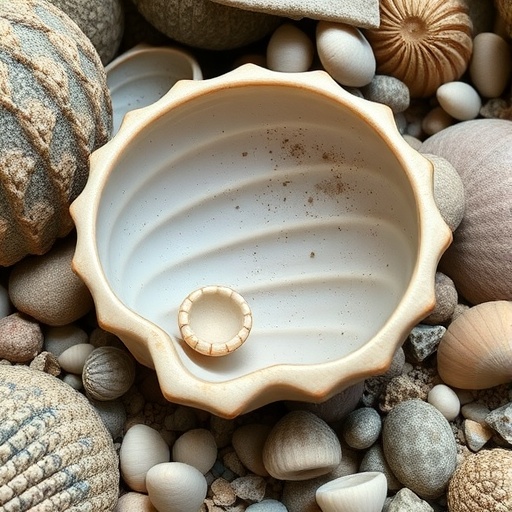
An international team led by scientists at the University of Tartu reports a striking ecological pivot in Earth’s deep past: about 470 million years ago, the interiors of empty mollusc shells began to function as living space for other organisms. This shift created a new “microhabitat within a habitat,” helping seed marine community structures that resemble those seen today.

In modern oceans, empty shells seldom remain vacant. Bryozoans, annelids, and other invertebrates commonly colonize them quickly. Yet fossil evidence indicates that during the Cambrian Period—more than 500 million years ago—shell interiors stayed largely uninhabited even though organisms able to live inside sheltered cavities were already present.

The researchers, including Olev Vinn, Oive Tinn, Liisa Lang, and Mare Isakar, compared fossils from multiple regions worldwide. Their analysis suggests that the first occupants appeared in the Middle Ordovician, roughly 460 million years ago. Early colonizers favored larger cephalopod shells (nautiloids), before expanding into the interiors of smaller snail and clam shells.

By the Late Ordovician (around 450 million years ago), many shells were densely overgrown. Attached suspension feeders—such as bryozoans, brachiopods, sponges, graptolites, and cornulids—formed tube-like structures, effectively turning former “dead architecture” into functional plumbing for filtering food from seawater.

Why did this innovation spread in the Ordovician? The study links it to a major rise in biodiversity, particularly the rapid proliferation of sessile organisms that colonize hard surfaces. The shell interior offered both physical shelter and fresh attachment space.

Crucially, shell geometry shaped water flow. Nautiloid chambers were spacious, allowing better circulation of oxygen and nutrients while also removing metabolic waste. As a result, these shells preserved the most diverse and abundant fossil assemblages.

In contrast, coiled snail shells with narrow openings exchanged water less effectively. The researchers report that organisms in these environments were generally smaller, and some taxa requiring stronger currents were absent.

The earliest documented shell interior communities were found in the Baltica region, hinting that the innovation may have begun there. However, the authors caution this could partly reflect uneven fossil study intensity across regions.

By the end of the Ordovician, similar communities occurred across Laurentia (present-day North America), southern China, and Gondwana, supporting the authors’ view of shell colonization as a global ecological event rather than a local anomaly.

Subject of Research: Not applicable
Article Title: Colonization of empty shells by cryptic fauna: a global event and important ecological innovation in Ordovician benthic ecosystems
News Publication Date: 15-Jul-2026
Web References: https://www.nature.com/articles/s41598-026-62638-5
References: 10.1038/s41598-026-62638-5
Image Credits:
Keywords: Ordovician, mollusc shells, cryptic fauna, benthic ecosystems, suspension feeders, paleoecology, fossil record, nautiloids

Tags: benthic invertebrate colonizationCambrian marine fossil recorddevelopment of marine filtering systemsearly marine symbiosisempty seashells as habitatsfossil evidence of shell habitationinvertebrate shell colonizersmarine community structure evolutionmarine microhabitat evolutionmicrohabitats in marine ecosystemsOrdovician shell colonizationshell-based ecological niches
Share26Tweet16
Previous Post

Children Become Climate Detectives to Help Cool Overheating Schools

Next Post

Sericin directs silk fibroin assembly into ordered nanofibrils, study finds

Related Posts

Great Barrier Reef Hosts Its Own Diverse Microbiome
Marine

Great Barrier Reef Hosts Its Own Diverse Microbiome

July 27, 2026
Marine Heatwaves Extend and Intensify, New Study Finds More Extreme Reality
Marine

Marine Heatwaves Extend and Intensify, New Study Finds More Extreme Reality

July 27, 2026
Orcas filmed exploding a giant fish after ramming it with force, possibly playing
Marine

Orcas filmed exploding a giant fish after ramming it with force, possibly playing

July 27, 2026
São Paulo Archipelago Acts as Breeding Haven for Endangered Sharks
Marine

São Paulo Archipelago Acts as Breeding Haven for Endangered Sharks

July 26, 2026
UMaine-Led Team Selected for DOE Genesis Mission to Advance Underground AI
Marine

UMaine-Led Team Selected for DOE Genesis Mission to Advance Underground AI

July 26, 2026
Redox Mediator Enables Bacterial Cooperation for Anammox Extracellular Electron Transfer
Marine

Redox Mediator Enables Bacterial Cooperation for Anammox Extracellular Electron Transfer

July 26, 2026
Next Post
Sericin directs silk fibroin assembly into ordered nanofibrils, study finds

Sericin directs silk fibroin assembly into ordered nanofibrils, study finds

  • Mothers who receive childcare support from maternal grandparents show more

    Mothers who receive childcare support from maternal grandparents show more parental warmth, finds NTU Singapore study

    27656 shares
    Share 11059 Tweet 6912
  • University of Seville Breaks 120-Year-Old Mystery, Revises a Key Einstein Concept

    1061 shares
    Share 424 Tweet 265
  • Bee body mass, pathogens and local climate influence heat tolerance

    682 shares
    Share 273 Tweet 171
  • Researchers record first-ever images and data of a shark experiencing a boat strike

    546 shares
    Share 218 Tweet 137
  • Groundbreaking Clinical Trial Reveals Lubiprostone Enhances Kidney Function

    531 shares
    Share 212 Tweet 133
Science

Embark on a thrilling journey of discovery with Scienmag.com—your ultimate source for cutting-edge breakthroughs. Immerse yourself in a world where curiosity knows no limits and tomorrow’s possibilities become today’s reality!

RECENT NEWS

  • KAUST Researchers Create More Precise Method for Engineering Plants
  • Tracking Flight Paths for a Greener Aviation Future
  • One in Four U.S. Workers Keep Unwanted Jobs for Health Insurance
  • USC Leads National AI Project to Speed Up Scientific Discovery

Categories

  • Agriculture
  • Anthropology
  • Archaeology
  • Athmospheric
  • Biology
  • Biotechnology
  • Blog
  • Bussines
  • Cancer
  • Chemistry
  • Climate
  • Earth Science
  • Editorial Policy
  • Marine
  • Mathematics
  • Medicine
  • Pediatry
  • Policy
  • Psychology & Psychiatry
  • Science Education
  • Social Science
  • Space
  • Technology and Engineering

Subscribe to Blog via Email

Enter your email address to subscribe to this blog and receive notifications of new posts by email.

Join 5,146 other subscribers

© 2025 Scienmag - Science Magazine

Welcome Back!

Login to your account below

Forgotten Password?

Retrieve your password

Please enter your username or email address to reset your password.

Log In
No Result
View All Result
  • HOME
  • SCIENCE NEWS
  • CONTACT US

© 2025 Scienmag - Science Magazine

Discover more from Science

Subscribe now to keep reading and get access to the full archive.

Continue reading
