


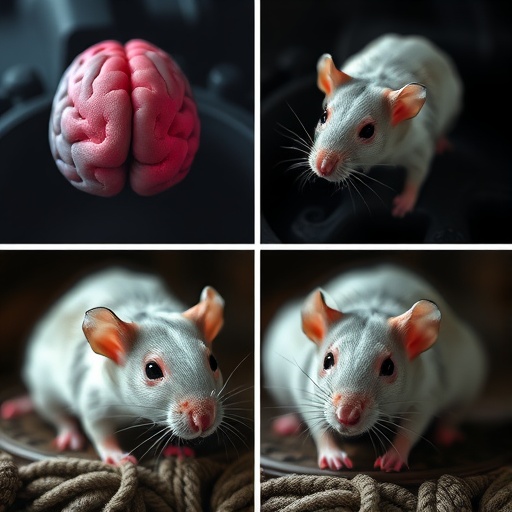
Chronic alcohol exposure and acute stress can push the brain toward maladaptive coping, yet not everyone responds the same way. In a new Translational Psychiatry study, researchers report that male and female rats show measurable neurobiological differences between susceptibility and behavioral resilience when challenged by both prolonged alcohol conditions and a sudden stressor. The work focuses on how stress circuitry and reward-related systems coordinate to determine whether animals maintain stable behavior—or shift toward persistent dysregulation.
To model this interaction, the team combined paradigms of chronic alcohol exposure with an acute stress challenge, then tracked behavioral outcomes that distinguish resilient from non-resilient patterns. Rather than treating resilience as purely behavioral, the study links those behavioral phenotypes to underlying brain signatures, suggesting that resilience is associated with a distinct neurobiological state rather than random variability.
The results emphasize sex-relevant neurobiology. By analyzing male and female subjects separately, the researchers observed that resilience corresponded to different patterns of neural activity and molecular signaling across groups. This matters because many stress-and-substance studies have historically under-sampled sex differences, potentially obscuring mechanisms that could be important for personalized interventions.
At the mechanistic level, the findings implicate stress-responsive pathways that interface with alcohol-related neuroadaptations. The investigators highlight that resilient animals appear to preserve functional regulation within networks tied to emotion processing and adaptive decision-making, even after the combined insults. By contrast, susceptible animals show neurobiological profiles consistent with heightened vulnerability, including stronger disruption of signaling dynamics.
Importantly, the study frames resilience as an emergent property of how multiple brain systems converge under pressure. Chronic alcohol likely primes synaptic and neurochemical balance, while acute stress forces rapid reconfiguration. The neurobiological correlates reported here suggest that resilience depends on the ability to re-stabilize these systems quickly and effectively.
Although the work is preclinical, its translational intent is clear: identifying neural markers that predict resilience could guide future strategies aimed at preventing relapse or improving stress coping in people with alcohol-use disorders. The paper also supports the idea that resilience may be engineered through targeted modulation of relevant circuits.
Overall, the study adds viral-science momentum to an emerging theme: resilience is not the absence of stress effects, but a measurable biological trajectory. The reported sex-specific neurobiological correlates provide a pathway toward more precise models of who is likely to withstand the combined burden of alcohol and stress—and why.
Cite Scienmag News
Cassandra Pierce. (July 18, 2026). Neurobiological Basis of Stress and Alcohol Resilience in Male and Female Rats. Scienmag. https://scienmag.com/neurobiological-basis-of-stress-and-alcohol-resilience-in-male-and-female-rats/
Cassandra Pierce. "Neurobiological Basis of Stress and Alcohol Resilience in Male and Female Rats." Scienmag, 18 July 2026, https://scienmag.com/neurobiological-basis-of-stress-and-alcohol-resilience-in-male-and-female-rats/. Accessed 4 September 2026.
Cassandra Pierce. "Neurobiological Basis of Stress and Alcohol Resilience in Male and Female Rats." Scienmag. July 18, 2026. https://scienmag.com/neurobiological-basis-of-stress-and-alcohol-resilience-in-male-and-female-rats/


