

Friday, July 17, 2026
Science
No Result
View All Result
  • Login
  • HOME
  • SCIENCE NEWS
  • CONTACT US
  • HOME
  • SCIENCE NEWS
  • CONTACT US
No Result
View All Result
Scienmag
No Result
View All Result
Home Science News Psychology & Psychiatry

Prefrontal intermittent theta-burst stimulation alters hemodynamic responses in major depression

July 17, 2026
in Psychology & Psychiatry
Reading Time: 2 mins read
0
Prefrontal intermittent theta-burst stimulation alters hemodynamic responses in major depression

Prefrontal intermittent theta-burst stimulation alters hemodynamic responses in major depression

65
SHARES
587
VIEWS
Share on FacebookShare on Twitter
ADVERTISEMENT

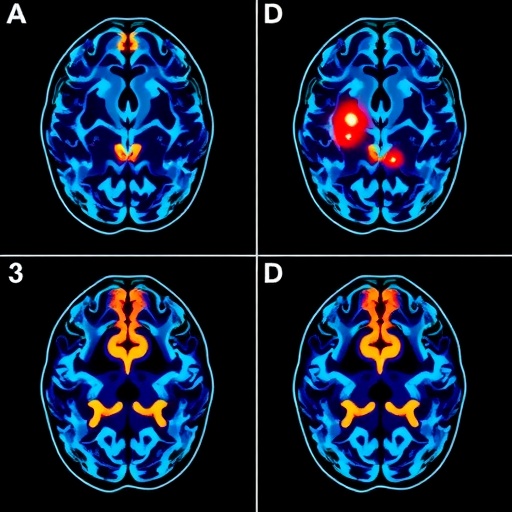
A new study published in Translational Psychiatry reports detailed brain-vascular signatures elicited by prefrontal intermittent theta-burst stimulation (iTBS) in people with major depressive disorder. The researchers examined how the treatment-driven hemodynamic response differs across individuals and how it evolves over time, using both cross-sectional snapshots and longitudinal follow-up measurements.

The key question was whether iTBS leaves consistent “blood-oxygen flow” patterns in depression—and whether those patterns could help explain why some patients respond better than others. iTBS is a patterned form of noninvasive brain stimulation designed to engage neural oscillatory mechanisms, particularly those in the theta range, which are often implicated in cognitive control and affective regulation.

To probe these effects, the team focused on prefrontal stimulation-evoked hemodynamic responses—signals that reflect changes in cerebral blood flow and oxygenation as indirect readouts of neural activity. By capturing these responses at different time points, the researchers could track stability versus change in the vascular dynamics that accompany stimulation.

The study leveraged longitudinal design elements to move beyond static comparisons. Rather than asking only whether depression patients differ from controls at a single moment, the researchers also evaluated whether stimulation-associated hemodynamic features shift as time passes, potentially reflecting adaptation in brain networks.

The findings highlight that iTBS-evoked hemodynamic responses are not merely present or absent; they show measurable structure across individuals and trajectories. Such variability may be crucial for tailoring stimulation parameters and for identifying biomarkers that anticipate treatment outcomes.

Importantly, the work underscores the value of hemodynamic readouts for interpreting neuromodulation. Since iTBS targets circuits involved in mood regulation, blood-flow responses may offer a practical bridge between electrical stimulation protocols and the brain’s functional state.

Overall, the results point toward a richer characterization of how prefrontal iTBS engages depression-relevant circuitry, combining stimulation physics with vascular imaging markers. If validated in larger cohorts, the approach could accelerate the development of viral-spreading “bench-to-bedside” strategies for next-generation, mechanism-informed depression interventions.

Subject of Research: Major depressive disorder; prefrontal intermittent theta-burst stimulation; hemodynamic responses
Article Title: Cross-sectional and longitudinal analysis of prefrontal intermittent theta-burst stimulation-evoked hemodynamic responses in major depressive disorder
Article References: Kan, R.L.D., Tang, A.H.P., Jin, M. et al. Transl Psychiatry (2026). https://doi.org/10.1038/s41398-026-04271-4
Image Credits: AI Generated
DOI: https://doi.org/10.1038/s41398-026-04271-4

Tags: biomarkers of treatment response in depressionblood-oxygen flow patterns in depressionbrain-vascular signatures in depression treatmentcerebral blood flow changes following iTBShemodynamic responses to noninvasive brain stimulationimpact of ilongitudinal brain imaging in depressionneural adaptation to brain stimulation over timeneural oscillatory mechanisms in depressionprefrontal cortex hemodynamics in psychiatric disordersPrefrontal intermittent theta-burst stimulation in major depressiontheta-range neural oscillations in affective regulation
Share26Tweet16
Previous Post

KPNA2 overexpression worsens T4 colorectal cancer prognosis by nuclear c-Myc suppression of p21

Next Post

Study Shows Adolescent Brain Remodeling Improves Memory Formation

Related Posts

How culture, tasks, and biology shape spatial-number associations
Psychology & Psychiatry

How culture, tasks, and biology shape spatial-number associations

July 17, 2026
Fish Oil Supplements in Pregnancy Shape Brain Metabolism by Mid-Childhood
Psychology & Psychiatry

Fish Oil Supplements in Pregnancy Shape Brain Metabolism by Mid-Childhood

July 17, 2026
Methylphenidate Impacts Human Vascular Endothelium, Study Finds
Psychology & Psychiatry

Methylphenidate Impacts Human Vascular Endothelium, Study Finds

July 17, 2026
Biological Markers of Cancer-Related Fatigue Found in Older Male Survivors
Psychology & Psychiatry

Biological Markers of Cancer-Related Fatigue Found in Older Male Survivors

July 17, 2026
Gamma and beta rhythms and 1/f slope shift with depression severity
Psychology & Psychiatry

Gamma and beta rhythms and 1/f slope shift with depression severity

July 17, 2026
Orienting Selective Attention Within Long-Term Contextual Memories
Psychology & Psychiatry

Orienting Selective Attention Within Long-Term Contextual Memories

July 16, 2026
Next Post
Study Shows Adolescent Brain Remodeling Improves Memory Formation

Study Shows Adolescent Brain Remodeling Improves Memory Formation

  • Mothers who receive childcare support from maternal grandparents show more

    Mothers who receive childcare support from maternal grandparents show more parental warmth, finds NTU Singapore study

    27656 shares
    Share 11059 Tweet 6912
  • University of Seville Breaks 120-Year-Old Mystery, Revises a Key Einstein Concept

    1061 shares
    Share 424 Tweet 265
  • Bee body mass, pathogens and local climate influence heat tolerance

    682 shares
    Share 273 Tweet 171
  • Researchers record first-ever images and data of a shark experiencing a boat strike

    546 shares
    Share 218 Tweet 137
  • Groundbreaking Clinical Trial Reveals Lubiprostone Enhances Kidney Function

    531 shares
    Share 212 Tweet 133
Science

Embark on a thrilling journey of discovery with Scienmag.com—your ultimate source for cutting-edge breakthroughs. Immerse yourself in a world where curiosity knows no limits and tomorrow’s possibilities become today’s reality!

RECENT NEWS

  • Satellite Observations Improve Global Mapping of Soil Moisture
  • 164 Schools Across 44 States Receive Grants to Improve Student Health
  • Soft Robotic Suit Improves Sit-to-Stand and Walking Efficiency in Older Adults
  • Disrupted cerebellar-thalamocortical connections across risk stages in first-episode psychosis

Categories

  • Agriculture
  • Anthropology
  • Archaeology
  • Athmospheric
  • Biology
  • Biotechnology
  • Blog
  • Bussines
  • Cancer
  • Chemistry
  • Climate
  • Earth Science
  • Editorial Policy
  • Marine
  • Mathematics
  • Medicine
  • Pediatry
  • Policy
  • Psychology & Psychiatry
  • Science Education
  • Social Science
  • Space
  • Technology and Engineering

Subscribe to Blog via Email

Enter your email address to subscribe to this blog and receive notifications of new posts by email.

Join 5,146 other subscribers

© 2025 Scienmag - Science Magazine

Welcome Back!

Login to your account below

Forgotten Password?

Retrieve your password

Please enter your username or email address to reset your password.

Log In
No Result
View All Result
  • HOME
  • SCIENCE NEWS
  • CONTACT US

© 2025 Scienmag - Science Magazine

Discover more from Science

Subscribe now to keep reading and get access to the full archive.

Continue reading
