

Saturday, August 8, 2026
Science
No Result
View All Result
  • Login
  • HOME
  • SCIENCE NEWS
  • CONTACT US
  • HOME
  • SCIENCE NEWS
  • CONTACT US
No Result
View All Result
Scienmag
No Result
View All Result
Home Science News Technology and Engineering

Omics and AI in Pediatric Environmental Health: Tools, Challenges, Cohort Insights

July 18, 2026
in Technology and Engineering
Reading Time: 2 mins read
0
Omics and AI in Pediatric Environmental Health: Tools, Challenges, Cohort Insights

Omics and AI in Pediatric Environmental Health: Tools, Challenges, Cohort Insights

65
SHARES
587
VIEWS
Share on FacebookShare on Twitter
ADVERTISEMENT

Early childhood is a decisive window for shaping lifelong health, yet young children are routinely exposed to a cocktail of environmental chemicals. From plastics and industrial byproducts to pesticides and indoor pollutants, these exposures rarely occur alone. Instead, they overlap across time and developmental stages—an arrangement that traditional risk assessments are not designed to interpret.

A newly published article argues that conventional frameworks often fail to capture the real-world complexity of combined chemical exposures. Those methods typically examine single agents in isolation, leaving gaps in how mixtures, variability between individuals, and interactive biological effects translate into later disease risk.

The study highlights how emerging “omics” data—such as genomics, epigenomics, transcriptomics, proteomics, and metabolomics—can reveal molecular signatures of exposure. When collected in pediatric cohorts, these layers of information can show how early environmental inputs influence biological pathways rather than relying only on external exposure measurements.

Artificial intelligence (AI) is positioned as the bridge between massive, high-dimensional omics datasets and the need to model complex exposure-response relationships. Machine-learning approaches can integrate chemical exposure profiles with multi-omics biomarkers to detect patterns that would be invisible to conventional statistical tools.

This AI-driven integration can also help address cohort-based heterogeneity: children differ by genetics, diet, microbiome, socioeconomic context, and timing of exposure. By learning from these differences, models may generate more individualized risk signals and identify subgroups more vulnerable to specific mixture effects.

The article further emphasizes that “interactive effects” are central. In biological systems, chemicals may not act independently—one exposure can amplify or suppress the molecular response to another. Advanced computational methods can, in principle, represent these non-linear relationships and mixture dynamics.

Despite the promise, the paper notes key challenges: data quality and harmonization across cohorts, limited sample sizes in certain pediatric studies, and the risk of bias if models are trained on unrepresentative populations. Interpreting model outputs in biologically meaningful ways remains essential for translating findings into public-health decisions.

Ultimately, the work frames pediatric environmental health as a systems problem—one that requires combining high-resolution molecular data with robust, transparent AI methods. If successful, such cohort-based, omics-informed approaches could transform how regulators and clinicians estimate risk in the earliest—and most sensitive—stages of life.

Subject of Research: Pediatric environmental health; integrating omics and artificial intelligence to assess combined chemical exposures.

Article Title: Integrating omics and artificial intelligence in pediatric environmental health: tools, challenges, and cohort-based insights.

Article References: Al-Saleh, I. Integrating omics and artificial intelligence in pediatric environmental health: tools, challenges, and cohort-based insights. Pediatr Res (2026). https://doi.org/10.1038/s41390-026-05254-3

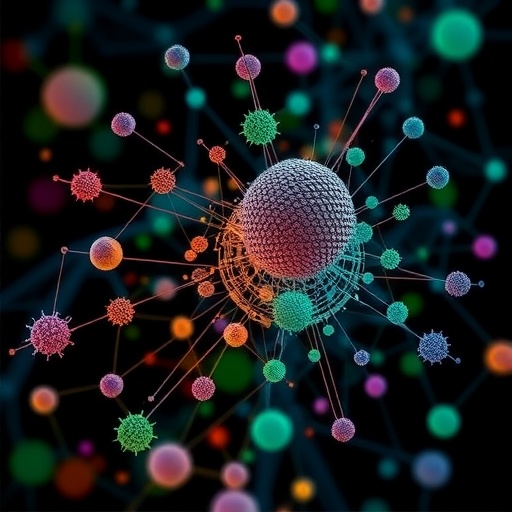
Image Credits: AI Generated

DOI: https://doi.org/10.1038/s41390-026-05254-3

Keywords:

Tags: AI in environmental exposure assessmentbiological pathways affected by early environmental exposureschallenges in cohort studies of childhood healthcomplex chemical mixtures and developmental risklimitations of traditional risk assessment methodsmachine learning for environmental health risk predictionmolecular signatures of chemical exposure in childrenmulti-omics data integration in pediatricsomics technologies in childhood diseasepediatric environmental healthpersonalized risk assessment in pediatric populationsrole of genomics and epigenomics in childhood health
Share26Tweet16
Previous Post

Neurobiological Basis of Stress and Alcohol Resilience in Male and Female Rats

Next Post

NUS Researchers Create Electronic Skin That Senses, Heals, and Thrives Underwater

Related Posts

Dissipation, Not Distance, Enables Entanglement Across Vast Separations
Technology and Engineering

Dissipation, Not Distance, Enables Entanglement Across Vast Separations

August 7, 2026
ORNL and Type One Energy advance fusion fuel cycle with innovative technologies
Technology and Engineering

ORNL and Type One Energy advance fusion fuel cycle with innovative technologies

August 7, 2026
Cadmium Contamination May Unexpectedly Enhance Biochar’s Carbon Storage in Soil
Technology and Engineering

Cadmium Contamination May Unexpectedly Enhance Biochar’s Carbon Storage in Soil

August 7, 2026
Deep learning improves communication between bionic eyes and the brain
Technology and Engineering

Deep learning improves communication between bionic eyes and the brain

August 7, 2026
Researchers advance noninvasive diagnosis of portal hypertension
Technology and Engineering

Researchers advance noninvasive diagnosis of portal hypertension

August 7, 2026
Tunable Skin Modes and Self-Healing in Photonic Floquet Lattices
Technology and Engineering

Tunable Skin Modes and Self-Healing in Photonic Floquet Lattices

August 7, 2026
Next Post
NUS Researchers Create Electronic Skin That Senses, Heals, and Thrives Underwater

NUS Researchers Create Electronic Skin That Senses, Heals, and Thrives Underwater

  • Mothers who receive childcare support from maternal grandparents show more

    Mothers who receive childcare support from maternal grandparents show more parental warmth, finds NTU Singapore study

    27656 shares
    Share 11059 Tweet 6912
  • University of Seville Breaks 120-Year-Old Mystery, Revises a Key Einstein Concept

    1061 shares
    Share 424 Tweet 265
  • Bee body mass, pathogens and local climate influence heat tolerance

    682 shares
    Share 273 Tweet 171
  • Researchers record first-ever images and data of a shark experiencing a boat strike

    546 shares
    Share 218 Tweet 137
  • Groundbreaking Clinical Trial Reveals Lubiprostone Enhances Kidney Function

    531 shares
    Share 212 Tweet 133
Science

Embark on a thrilling journey of discovery with Scienmag.com—your ultimate source for cutting-edge breakthroughs. Immerse yourself in a world where curiosity knows no limits and tomorrow’s possibilities become today’s reality!

RECENT NEWS

  • New tools revive efforts to develop less addictive opioids
  • USC Launches Center Investigating Sex Differences in Aging
  • Dissipation, Not Distance, Enables Entanglement Across Vast Separations
  • Biomarker interaction may predict breast cancer spread and treatment benefit

Categories

  • Agriculture
  • Anthropology
  • Archaeology
  • Athmospheric
  • Biology
  • Biotechnology
  • Blog
  • Bussines
  • Cancer
  • Chemistry
  • Climate
  • Earth Science
  • Editorial Policy
  • Marine
  • Mathematics
  • Medicine
  • Pediatry
  • Policy
  • Psychology & Psychiatry
  • Science Education
  • Social Science
  • Space
  • Technology and Engineering

Subscribe to Blog via Email

Enter your email address to subscribe to this blog and receive notifications of new posts by email.

Join 5,149 other subscribers

© 2025 Scienmag - Science Magazine

Welcome Back!

Login to your account below

Forgotten Password?

Retrieve your password

Please enter your username or email address to reset your password.

Log In
No Result
View All Result
  • HOME
  • SCIENCE NEWS
  • CONTACT US

© 2025 Scienmag - Science Magazine

Discover more from Science

Subscribe now to keep reading and get access to the full archive.

Continue reading
