


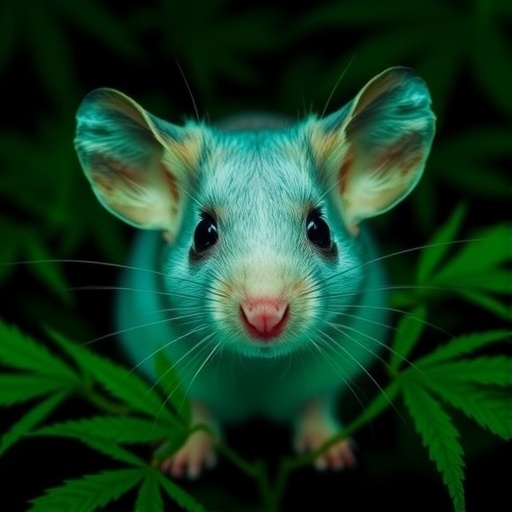
A new study in Translational Psychiatry reports that disrupting Reelin signaling may be a key link between two converging risk factors for schizophrenia in a “dual-hit” mouse model. The research focuses on how postnatal exposure to Δ9-tetrahydrocannabinol (THC)—the principal psychoactive compound in cannabis—interacts with an earlier developmental disturbance designed to mimic maternal immune activation. Together, these insults appear to reshape brain circuits involved in learning, perception, and synaptic organization.
Reelin is an extracellular signaling protein that helps orchestrate neuronal positioning and maturation during brain development, and it continues to influence synaptic plasticity in adulthood. In schizophrenia research, altered Reelin pathways have been repeatedly implicated, but the causal chain connecting specific environmental exposures to Reelin dysfunction has remained difficult to pin down.
In the new work, researchers engineered a dual-hit paradigm: an immune-based developmental challenge followed by controlled THC exposure during the postnatal period. Behavioral assays and molecular analyses were then used to assess downstream consequences. The results point to a deterioration of Reelin pathway integrity, suggesting that THC can magnify or accelerate pathway breakdown initiated by the earlier immune perturbation.
Mechanistically, the study emphasizes that Reelin signaling is not merely a developmental footnote. Instead, it acts like a molecular “wiring coordinator,” influencing how neurons form and refine connections. When this signaling is disrupted, synaptic communication can become less stable, potentially contributing to network-level abnormalities that resemble schizophrenia-like phenotypes.
The team also integrates the idea of immune-to-neurodevelopmental coupling. Maternal immune activation can alter cytokine environments and neuroimmune signaling, which may sensitize the developing brain to later pharmacological impacts. THC exposure in this context may therefore intensify vulnerability rather than operate in isolation.
Notably, the findings have translational relevance because they connect a widely discussed exposure—THC—with a concrete molecular pathway. By identifying Reelin signaling disruption as a potential convergence point, the study offers a targetable framework for future interventions.
While the work is preclinical, it strengthens the case that risk is shaped by timing, biological context, and interacting insults. For viral science news audiences, the headline is clear: cannabis-relevant THC exposure after an immune challenge can derail a schizophrenia-associated signaling system in ways that may help explain how complex environmental factors converge on brain circuitry.
Cite Scienmag News
Glenn Wilkins. (July 17, 2026). Cannabis Exposure Alters Reelin Signaling in Schizophrenia-Like Dual-Hit Mice. Scienmag. https://scienmag.com/cannabis-exposure-alters-reelin-signaling-in-schizophrenia-like-dual-hit-mice/
Glenn Wilkins. "Cannabis Exposure Alters Reelin Signaling in Schizophrenia-Like Dual-Hit Mice." Scienmag, 17 July 2026, https://scienmag.com/cannabis-exposure-alters-reelin-signaling-in-schizophrenia-like-dual-hit-mice/. Accessed 3 September 2026.
Glenn Wilkins. "Cannabis Exposure Alters Reelin Signaling in Schizophrenia-Like Dual-Hit Mice." Scienmag. July 17, 2026. https://scienmag.com/cannabis-exposure-alters-reelin-signaling-in-schizophrenia-like-dual-hit-mice/


