

Monday, July 13, 2026
Science
No Result
View All Result
  • Login
  • HOME
  • SCIENCE NEWS
  • CONTACT US
  • HOME
  • SCIENCE NEWS
  • CONTACT US
No Result
View All Result
Scienmag
No Result
View All Result
Home Science News Medicine

Boosting the Brain’s Natural Repair Mechanism for Stroke Recovery

July 13, 2026
in Medicine
Reading Time: 2 mins read
0
Boosting the Brain’s Natural Repair Mechanism for Stroke Recovery

Boosting the Brain’s Natural Repair Mechanism for Stroke Recovery

65
SHARES
587
VIEWS
Share on FacebookShare on Twitter
ADVERTISEMENT

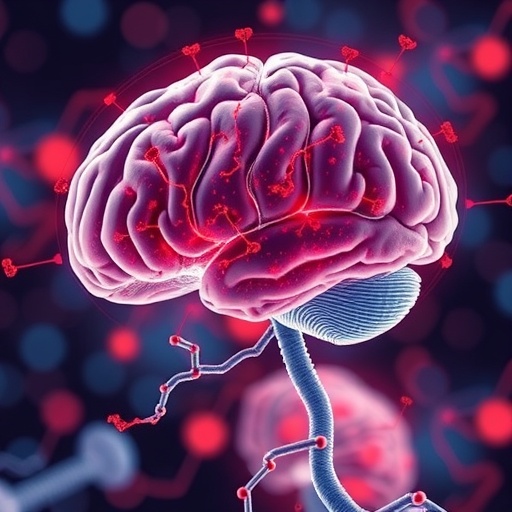
A groundbreaking study from the Institute of Science Tokyo reveals a novel molecular mechanism that limits the brain’s innate ability to recover after stroke, illuminating new therapeutic avenues to extend this critical recovery window. Stroke-induced neurological damage often leaves patients with lasting disabilities, partially due to the brain’s diminishing self-repair capacity shortly after injury. This research, published in Nature, identifies a key transcription factor that undermines microglial reparative function, offering hope for enhanced long-term recovery.

Microglia, the brain’s resident immune cells, are central players in post-stroke repair. Initially, they trigger inflammation to address injury, then swiftly shift to a reparative mode, secreting growth factors such as insulin-like growth factor 1 (IGF1). These factors support remyelination, strengthen synaptic connections, and promote neurological function restoration. However, this reparative phase typically lasts only about two months, after which the brain’s spontaneous recovery sharply declines.

The research team, led by Assistant Professor Jun Tsuyama and Professor Takashi Shichita, pinpointed the transcription factor ZFP384 as a molecular switch that curtails microglial repair activities. They demonstrated that rising levels of ZFP384 interfere with chromatin interactions mediated by the protein YY1, essential for activating genes involved in neural repair. This disruption effectively silences reparative gene programs, causing microglia to lose their healing functions precisely when recovery demands persist.

Intriguingly, genetic deletion of Zfp384 specifically in microglia in mouse stroke models preserved their reparative gene expression long past the usual timeframe. As a result, these mice exhibited enhanced remyelination of damaged nerve fibers and greater synaptic plasticity, translating to markedly improved functional recovery. This finding underscores the therapeutic potential of sustaining intrinsic microglial repair mechanisms.

Building on this, the team developed an antisense oligonucleotide (ASO) targeting Zfp384, designed to selectively inhibit its expression. Administering ASO-Zfp384 extended the reparative state of microglia and improved neurological outcomes even when treatment began one week or one month post-stroke—well beyond the conventional intervention window. Unlike traditional anti-inflammatory approaches, this strategy preserves the brain’s endogenous healing program, offering a paradigm shift in stroke therapy.

Analysis of human stroke patient tissues revealed a similar inverse relationship between ZNF384 (the human equivalent of ZFP384) and IGF1 expression, suggesting this mechanism is conserved across species and clinically relevant. These insights pave the way for translational studies aimed at harnessing ZFP384-targeting interventions to reduce stroke-related disability.

This research not only advances understanding of the molecular brakes on brain repair but also promotes a broader concept: enhancing the body’s own regenerative capacity rather than attempting to replace damaged tissue. Future investigations will evaluate the safety and efficacy of ZFP384 inhibition in larger preclinical models, setting the stage for clinical trials that may transform stroke rehabilitation and improve millions of lives worldwide.


Subject of Research: Molecular mechanisms regulating microglial reparative function post-stroke
Article Title: Sustaining microglial reparative function enhances stroke recovery
News Publication Date: July 9, 2026
Web References: http://dx.doi.org/10.1038/s41586-026-10480-0
Image Credits: Institute of Science Tokyo (Science Tokyo)
Keywords: Stroke, Microglia, Brain Repair, ZFP384, Neuroinflammation, Neural Recovery, Antisense Oligonucleotide, Neuroplasticity

Tags: brain self-healing after strokechromatin interactions in neural repairextending brain's recovery window post-strokeinsulin-like growth factor 1 (IGF1) in neuroregenerationmicroglia-mediated neuroprotectionmicroglial repair mechanismsmolecular targets for stroke therapyneural remyelination and synaptic repairneuroinflammation and repairnovel therapeutic strategies for stroke rehabilitationstroke recoveryZFP384 transcription factor
Share26Tweet16
Previous Post

Are Mental Health Crisis Lines Overlooking People Over 50?

Next Post

Integrating Multispecies Justice in Urban Tree Management

Related Posts

Universal 6iL/E4 System Enables Stem Cell Growth Across Mammals
Medicine

Universal 6iL/E4 System Enables Stem Cell Growth Across Mammals

July 13, 2026
Hypothermic Preservation Extends Function in Aging Isolated Hepatocytes
Medicine

Hypothermic Preservation Extends Function in Aging Isolated Hepatocytes

July 13, 2026
Perineurium Links Leptin to Sympathetic Response to Combat Obesity
Medicine

Perineurium Links Leptin to Sympathetic Response to Combat Obesity

July 13, 2026
Machine Learning Supports Dementia Caregivers in Managing Behavioral Symptoms
Medicine

Machine Learning Supports Dementia Caregivers in Managing Behavioral Symptoms

July 13, 2026
Predicting Outcomes for Premature Infants in Advanced NICU Respiratory Care
Medicine

Predicting Outcomes for Premature Infants in Advanced NICU Respiratory Care

July 13, 2026
Large-Scale Multi-Sequence Pretraining Enhances MRI Analysis Across Clinical Applications
Medicine

Large-Scale Multi-Sequence Pretraining Enhances MRI Analysis Across Clinical Applications

July 13, 2026
Next Post
Integrating Multispecies Justice in Urban Tree Management

Integrating Multispecies Justice in Urban Tree Management

  • Mothers who receive childcare support from maternal grandparents show more

    Mothers who receive childcare support from maternal grandparents show more parental warmth, finds NTU Singapore study

    27656 shares
    Share 11059 Tweet 6912
  • University of Seville Breaks 120-Year-Old Mystery, Revises a Key Einstein Concept

    1061 shares
    Share 424 Tweet 265
  • Bee body mass, pathogens and local climate influence heat tolerance

    682 shares
    Share 273 Tweet 171
  • Researchers record first-ever images and data of a shark experiencing a boat strike

    546 shares
    Share 218 Tweet 137
  • Groundbreaking Clinical Trial Reveals Lubiprostone Enhances Kidney Function

    531 shares
    Share 212 Tweet 133
Science

Embark on a thrilling journey of discovery with Scienmag.com—your ultimate source for cutting-edge breakthroughs. Immerse yourself in a world where curiosity knows no limits and tomorrow’s possibilities become today’s reality!

RECENT NEWS

  • Cooling Degree Days Show Opposite Temperature and Humidity Impacts on Energy Use
  • Universal 6iL/E4 System Enables Stem Cell Growth Across Mammals
  • Hypothermic Preservation Extends Function in Aging Isolated Hepatocytes
  • Early Chemistry Boosts 847 mV Voltage in Wide-Bandgap CZTS Solar Cells

Categories

  • Agriculture
  • Anthropology
  • Archaeology
  • Athmospheric
  • Biology
  • Biotechnology
  • Blog
  • Bussines
  • Cancer
  • Chemistry
  • Climate
  • Earth Science
  • Editorial Policy
  • Marine
  • Mathematics
  • Medicine
  • Pediatry
  • Policy
  • Psychology & Psychiatry
  • Science Education
  • Social Science
  • Space
  • Technology and Engineering

Subscribe to Blog via Email

Enter your email address to subscribe to this blog and receive notifications of new posts by email.

Join 5,146 other subscribers

© 2025 Scienmag - Science Magazine

Welcome Back!

Login to your account below

Forgotten Password?

Retrieve your password

Please enter your username or email address to reset your password.

Log In
No Result
View All Result
  • HOME
  • SCIENCE NEWS
  • CONTACT US

© 2025 Scienmag - Science Magazine

Discover more from Science

Subscribe now to keep reading and get access to the full archive.

Continue reading
