

Monday, August 3, 2026
Science
No Result
View All Result
  • Login
  • HOME
  • SCIENCE NEWS
  • CONTACT US
  • HOME
  • SCIENCE NEWS
  • CONTACT US
No Result
View All Result
Scienmag
No Result
View All Result
Home Science News Social Science

Integrating Multispecies Justice in Urban Tree Management

July 13, 2026
in Social Science
Reading Time: 3 mins read
0
Integrating Multispecies Justice in Urban Tree Management

Integrating Multispecies Justice in Urban Tree Management

65
SHARES
587
VIEWS
Share on FacebookShare on Twitter
ADVERTISEMENT

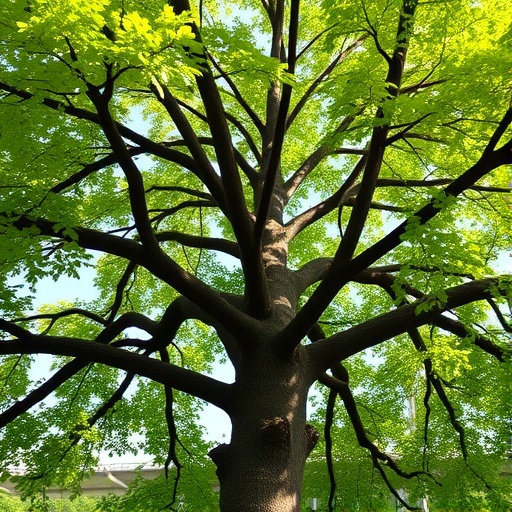
In an era marked by accelerating urbanization, the traditional paradigms of managing urban greenery are undergoing a profound transformation. A groundbreaking study published in npj Urban Sustainability introduces a pioneering framework that fuses relational values with the concept of multispecies justice to redefine how cities approach treescape management. This novel perspective not only challenges the anthropocentric lens through which urban nature has long been viewed but also proposes an inclusive, ethical approach that honors the intrinsic worth of trees as co-inhabitants of our cities.

The researchers, led by J.O. Kenter and colleagues, argue that trees hold a complex web of significances beyond mere physical or economic benefits. Urban trees contribute to human well-being, cultural identity, and ecosystem services, yet they also possess relational values—meanings and connections that emerge from human interactions and shared experiences. By integrating these relational dimensions into policy and planning, the study provides a robust platform for participatory governance, encouraging communities to actively engage in shaping their urban environments.

Crucially, the study advances the principle of multispecies justice, asserting that ethical urban planning must account for the rights and needs of non-human life forms. This approach confronts the traditional hierarchy in urban management that privileges human interests, pushing for equitable consideration of other species that rely on urban forests for habitat and survival. The framework recognizes that urban treescapes are dynamic living systems, comprised not only of trees but also of the myriad species—birds, insects, fungi—that form interdependent ecological networks.

Employing a combination of ecological data, social science insights, and ethical theory, the study illustrates practical ways to operationalize these values through policy instruments and community-led initiatives. Such integration promises to improve biodiversity conservation in cities while fostering social cohesion and resilience. For example, participatory mapping exercises can reveal the layered relationships between communities and specific trees, informing conservation priorities that resonate with local cultural narratives.

The implications of this research resonate well beyond urban forestry. As climate change intensifies, the role of trees in carbon sequestration and urban cooling becomes critical. The framework proposed by Kenter et al. suggests that achieving sustainable urban futures depends equally on nurturing social and ecological bonds. It presses urban planners and stakeholders to rethink the principle of ‘value’ in urban nature, acknowledging that trees cannot be reduced to commodities or infrastructure alone.

This study also highlights the challenges inherent in balancing competing interests among diverse urban stakeholders, necessitating innovative governance models that facilitate dialogue between humans and other species representatives, be they scientists, conservationists, or citizen advocates. By encouraging plural narratives and value systems, cities can evolve into spaces of coexistence rather than domination.

Ultimately, “Tree Value Visions” calls for a paradigm shift in urban treescape management that transcends utilitarianism, embracing a multispecies ethic that enshrines care, respect, and shared rights. This vision not only enriches human experience but secures the health of urban ecosystems integral to life on the planet.

As urban areas continue to expand globally, this study’s insights could serve as a vital blueprint for future cities striving for sustainability that inclusively respects all species making these spaces their homes.


Subject of Research: Urban treescape management integrating relational values and multispecies justice

Article Title: Tree Value Visions – integrating relational values and multispecies justice in urban treescape management

Article References:
Kenter, J.O., Wood, P., Dyke, A. et al. Tree Value Visions – integrating relational values and multispecies justice in urban treescape management. npj Urban Sustain 6, 93 (2026). https://doi.org/10.1038/s42949-026-00410-4

Image Credits: AI Generated

DOI: https://doi.org/10.1038/s42949-026-00410-4

Tags: co-inhabitation of humans and trees in citiescommunity engagement in urban forestryecosystem services and cultural identityethical urban planninginclusive urban tree managementnon-human rights in urban ecosystemsparticipatory governance in city greeneryrelational values in urban green spacerethinking urban biodiversity policiestranscending anthropocentrism in city planningtransformative approaches to urban sustainabilityUrban multispecies justice
Share26Tweet16
Previous Post

Boosting the Brain’s Natural Repair Mechanism for Stroke Recovery

Next Post

High-Resolution Mapping of Cell-Specific Gene Regulation from Bulk Sequencing

Related Posts

Compact urban high-rises intensify humid heat from vegetation transpiration
Social Science

Compact urban high-rises intensify humid heat from vegetation transpiration

August 2, 2026
Chinese Intercity Migration Network Reveals Why Migration Distance-Decay Varies Spatially
Social Science

Chinese Intercity Migration Network Reveals Why Migration Distance-Decay Varies Spatially

August 1, 2026
Unprecedented Excavation Uncovers Roman-Era Pottery Kilns in Burgenland
Social Science

Unprecedented Excavation Uncovers Roman-Era Pottery Kilns in Burgenland

August 1, 2026
Team Success Can Mask Individual Errors
Social Science

Team Success Can Mask Individual Errors

August 1, 2026
Bentham Science launches Current Artificial Intelligence journal to advance global AI innovation
Social Science

Bentham Science launches Current Artificial Intelligence journal to advance global AI innovation

August 1, 2026
Children’s speech patterns may signal future mental health risks
Social Science

Children’s speech patterns may signal future mental health risks

August 1, 2026
Next Post
High-Resolution Mapping of Cell-Specific Gene Regulation from Bulk Sequencing

High-Resolution Mapping of Cell-Specific Gene Regulation from Bulk Sequencing

  • Mothers who receive childcare support from maternal grandparents show more

    Mothers who receive childcare support from maternal grandparents show more parental warmth, finds NTU Singapore study

    27656 shares
    Share 11059 Tweet 6912
  • University of Seville Breaks 120-Year-Old Mystery, Revises a Key Einstein Concept

    1061 shares
    Share 424 Tweet 265
  • Bee body mass, pathogens and local climate influence heat tolerance

    682 shares
    Share 273 Tweet 171
  • Researchers record first-ever images and data of a shark experiencing a boat strike

    546 shares
    Share 218 Tweet 137
  • Groundbreaking Clinical Trial Reveals Lubiprostone Enhances Kidney Function

    531 shares
    Share 212 Tweet 133
Science

Embark on a thrilling journey of discovery with Scienmag.com—your ultimate source for cutting-edge breakthroughs. Immerse yourself in a world where curiosity knows no limits and tomorrow’s possibilities become today’s reality!

RECENT NEWS

  • Managing Brain Function May Help Prevent Delirium in Critically Ill Older Adults
  • Machine Learning Predicts Falls in Older Adults Using Dual-Task Gait Measures
  • How Inflammatory Markers Affect Physical Performance in Community-Dwelling Older Adults: Systematic Review
  • Older Adults’ Views on Managing Chronic Pain in Primary Care

Categories

  • Agriculture
  • Anthropology
  • Archaeology
  • Athmospheric
  • Biology
  • Biotechnology
  • Blog
  • Bussines
  • Cancer
  • Chemistry
  • Climate
  • Earth Science
  • Editorial Policy
  • Marine
  • Mathematics
  • Medicine
  • Pediatry
  • Policy
  • Psychology & Psychiatry
  • Science Education
  • Social Science
  • Space
  • Technology and Engineering

Subscribe to Blog via Email

Success! An email was just sent to confirm your subscription. Please find the email now and click 'Confirm Follow' to start subscribing.

Join 5,147 other subscribers

© 2025 Scienmag - Science Magazine

Welcome Back!

Login to your account below

Forgotten Password?

Retrieve your password

Please enter your username or email address to reset your password.

Log In
No Result
View All Result
  • HOME
  • SCIENCE NEWS
  • CONTACT US

© 2025 Scienmag - Science Magazine
