


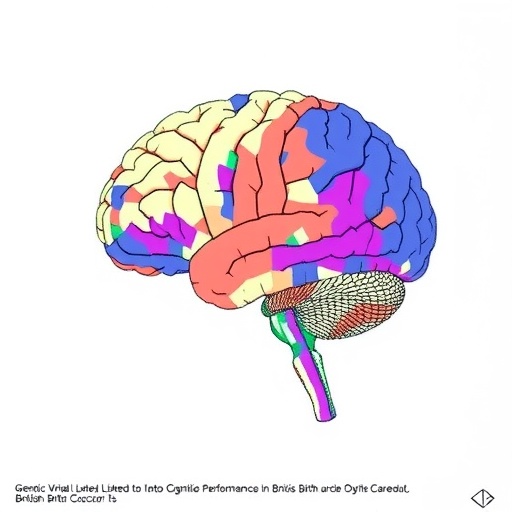
A groundbreaking study published in Nature Human Behaviour unravels the intricate genetic architecture behind cognitive performance from childhood through adulthood. By leveraging data from extensive British birth cohorts, researchers led by D.S. Malawsky and colleagues have illuminated how both common and rare genetic variants shape cognitive trajectories across development, providing new insights into the biological basis of intelligence.
The study capitalizes on a longitudinal design, tracking cognitive abilities in thousands of individuals born in Britain and assessing genetic information obtained via genome-wide genotyping. Unlike previous studies that focused primarily on common variants, this research integrates the impact of rare variants, deepening our understanding of the full spectrum of genetic contributions to cognition.
Utilizing advanced statistical models, the team identified significant associations between multiple genetic loci and cognitive performance measures collected at various developmental stages. This approach allowed the dissection of dynamic genetic influences that vary as the brain matures, revealing that some variants exert strong effects at early childhood, while others become more influential in adolescence or adulthood.
One of the study’s pivotal findings is that common variants cumulatively explain a substantial proportion of cognitive ability variance, yet rare variants, often overlooked due to their low frequency, also contribute meaningfully. These rare genetic changes, sometimes of larger effect size, may disrupt neurodevelopmental pathways, underscoring their importance in shaping individual differences.
Moreover, gene-by-age interaction analyses demonstrated that the influence of certain genetic variants is modulated over time, highlighting that cognitive development is orchestrated by a dynamic interplay of genetic factors rather than static genetic determinants. This temporal dimension of genetic influence advances the field’s perspective from a snapshot view to a more nuanced developmental framework.
The study further integrates gene set enrichment analysis, illustrating that implicated variants converge on neural processes fundamental to synaptic function, neuronal signaling, and brain plasticity. Such mechanistic insights pave the way for future targeted research into neurobiological pathways governing cognition and potential interventions in cognitive disorders.
Importantly, the research harnesses the power of large-scale biobanks and state-of-the-art genomics tools, setting a new standard for studying complex traits longitudinally. The authors emphasize that these findings highlight the necessity of inclusive genetic studies incorporating diverse variant frequencies and developmental timelines for a comprehensive understanding of cognitive phenotypes.
This pioneering work not only enriches the scientific discourse on intelligence genetics but also holds promise for informing personalized educational strategies and therapeutic approaches tailored to individuals’ genetic profiles. By charting the evolving genetic landscape behind cognitive performance, this study marks a significant leap forward in cognitive genomics.
As the field progresses, such integrative studies could ultimately unravel how environmental factors interplay with genetic architecture to mold the cognitive potential uniquely expressed by each individual through life.
Cite Scienmag News
Juliet Wilcox. (July 10, 2026). Genetic Variants Linked to Cognitive Performance in British Birth Cohorts. Scienmag. https://scienmag.com/genetic-variants-linked-to-cognitive-performance-in-british-birth-cohorts/
Juliet Wilcox. "Genetic Variants Linked to Cognitive Performance in British Birth Cohorts." Scienmag, 10 July 2026, https://scienmag.com/genetic-variants-linked-to-cognitive-performance-in-british-birth-cohorts/. Accessed 4 September 2026.
Juliet Wilcox. "Genetic Variants Linked to Cognitive Performance in British Birth Cohorts." Scienmag. July 10, 2026. https://scienmag.com/genetic-variants-linked-to-cognitive-performance-in-british-birth-cohorts/


