

Thursday, July 30, 2026
Science
No Result
View All Result
  • Login
  • HOME
  • SCIENCE NEWS
  • CONTACT US
  • HOME
  • SCIENCE NEWS
  • CONTACT US
No Result
View All Result
Scienmag
No Result
View All Result
Home Science News Psychology & Psychiatry

Reward Pursuit Linked to Anhedonia Improvement After rTMS in Depression

July 10, 2026
in Psychology & Psychiatry
Reading Time: 3 mins read
0
Reward Pursuit Linked to Anhedonia Improvement After rTMS in Depression

Reward Pursuit Linked to Anhedonia Improvement After rTMS in Depression

65
SHARES
587
VIEWS
Share on FacebookShare on Twitter
ADVERTISEMENT

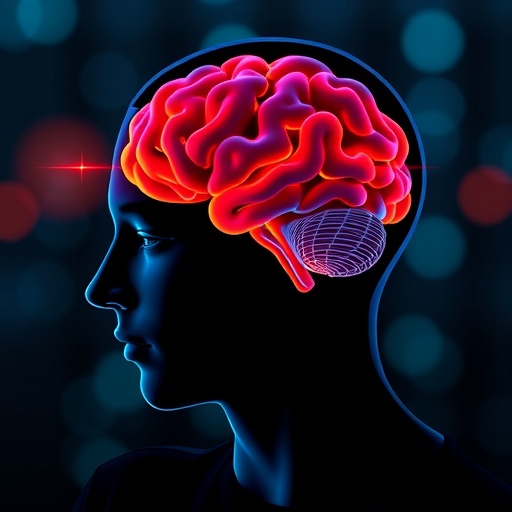
In a groundbreaking study published in Translational Psychiatry, researchers have unveiled a compelling link between reward pursuit behaviors and the alleviation of anhedonia symptoms in patients with major depressive disorder (MDD) undergoing repetitive transcranial magnetic stimulation (rTMS). This novel insight bridges behavioral neuroscience with clinical innovation, offering hope for more targeted treatments of depression.

Anhedonia, the diminished ability to experience pleasure, is a core symptom of depression that often resists conventional treatments. Understanding its neural underpinnings and identifying predictors of therapeutic response have been significant challenges for clinicians and neuroscientists alike. Abram and colleagues addressed this by examining how motivational behaviors during specific reward-related tasks correlate with clinical improvements post-rTMS therapy.

The study employed a translational reward task designed to mimic real-world scenarios where patients actively pursue rewards, thereby engaging motivational circuitry in the brain. By quantifying reward-seeking behavior before treatment, the team could assess the extent to which these behavioral markers predicted reductions in anhedonia following rTMS. Their results demonstrated a robust positive correlation: patients who exhibited greater engagement in reward pursuit tasks showed more pronounced amelioration of anhedonic symptoms after receiving rTMS.

rTMS, a non-invasive brain stimulation technique, modulates neuronal activity in targeted brain regions implicated in mood regulation. Despite its FDA approval for treatment-resistant depression, patient responses vary widely. The findings from this study suggest that behavioral assays capturing motivational drive could serve as predictive biomarkers, enabling personalized optimization of rTMS protocols for individuals with MDD.

On a mechanistic level, the research highlights the importance of mesolimbic pathways, particularly dopamine-mediated circuits, in mediating both motivational behavior and therapeutic outcomes. Engagement in reward pursuit appears to reflect the functional integrity of these circuits, which rTMS may help restore or enhance. This aligns with growing evidence that depression’s neurobiology extends beyond serotonin deficits to include complex dysfunctions in reward processing networks.

Clinically, integrating behavioral measures with neuromodulation strategies could revolutionize treatment planning. The ability to identify patients most likely to benefit from rTMS before initiating therapy promises greater efficiency and reduced trial-and-error approaches. Furthermore, adapting rTMS parameters based on reward task performance might further amplify symptomatic relief, ushering in a new era of precision psychiatry.

This research also opens avenues for future exploration into other neuropsychiatric conditions characterized by reward-processing deficits. The translational reward task paradigm and the emphasis on motivational engagement could inform interventions for disorders such as schizophrenia, addiction, and bipolar disorder, where anhedonia and reward dysfunction are prevalent.

While these findings are promising, the authors note the necessity for larger longitudinal studies to validate and refine these predictive behavioral markers. Additionally, combining neuroimaging data with behavioral assessments could elucidate the neural substrates underlying individual differences in treatment response.

In summary, the study by Abram et al. represents a significant advance in understanding how reward-related behaviors can forecast therapeutic outcomes in depression. By leveraging translational neuroscience and innovative therapeutic techniques like rTMS, this research paves the way for more effective, individualized interventions aimed at conquering one of psychiatry’s most debilitating symptoms.


Subject of Research: Reward pursuit behavior and its correlation with anhedonia reduction following rTMS treatment in major depressive disorder patients

Article Title: Reward pursuit during a translational reward task correlates with anhedonia reductions following rTMS in patients with major depressive disorder

Article References: Abram, S.V., McInnes, A.N., Sullivan, C.R.P. et al. Reward pursuit during a translational reward task correlates with anhedonia reductions following rTMS in patients with major depressive disorder. Transl Psychiatry (2026). https://doi.org/10.1038/s41398-026-04248-3

Image Credits: AI Generated

DOI: https://doi.org/10.1038/s41398-026-04248-3

Tags: depression treatmentunderstanding predictors of response remains critical; this study highlights reward pursuit behaviors as potential biomarkers for rTMS efficacy in alleviating anhedonia.
Share26Tweet16
Previous Post

Indonesian Throughflow Heat Boost Fuels Southern Hemisphere Circulation Gyres

Next Post

Türkiye Launches Light Office, New Hub for Optical Research

Related Posts

Dual immune dysregulation in adolescent-onset schizophrenia: attenuated B cell trophic support and elevated IL-23/Th17 inflammation are diagnostic and clinical biomarkers
Psychology & Psychiatry

Dual immune dysregulation in adolescent-onset schizophrenia: attenuated B cell trophic support and elevated IL-23/Th17 inflammation are diagnostic and clinical biomarkers

July 30, 2026
Attenuated PER3 amplitude in hair follicles is associated with sleep irregularity in schizophrenia
Psychology & Psychiatry

Attenuated PER3 amplitude in hair follicles is associated with sleep irregularity in schizophrenia

July 30, 2026
Disrupted hierarchical functional brain organization in affective and psychotic disorders: insights from functional brain gradients
Psychology & Psychiatry

Disrupted hierarchical functional brain organization in affective and psychotic disorders: insights from functional brain gradients

July 30, 2026
Microglial deletion induces despair-like behavior associated with astrogliosis
Psychology & Psychiatry

Microglial deletion induces despair-like behavior associated with astrogliosis

July 29, 2026
Resting-State Brain Activity Abnormalities Linked to Late-Life Depression Meta-Analysis
Psychology & Psychiatry

Resting-State Brain Activity Abnormalities Linked to Late-Life Depression Meta-Analysis

July 29, 2026
Psychological Research Rises in U.S. Policy Documents on Education, Health, Justice
Psychology & Psychiatry

Psychological Research Rises in U.S. Policy Documents on Education, Health, Justice

July 29, 2026
Next Post
Türkiye Launches Light Office, New Hub for Optical Research

Türkiye Launches Light Office, New Hub for Optical Research

  • Mothers who receive childcare support from maternal grandparents show more

    Mothers who receive childcare support from maternal grandparents show more parental warmth, finds NTU Singapore study

    27656 shares
    Share 11059 Tweet 6912
  • University of Seville Breaks 120-Year-Old Mystery, Revises a Key Einstein Concept

    1061 shares
    Share 424 Tweet 265
  • Bee body mass, pathogens and local climate influence heat tolerance

    682 shares
    Share 273 Tweet 171
  • Researchers record first-ever images and data of a shark experiencing a boat strike

    546 shares
    Share 218 Tweet 137
  • Groundbreaking Clinical Trial Reveals Lubiprostone Enhances Kidney Function

    531 shares
    Share 212 Tweet 133
Science

Embark on a thrilling journey of discovery with Scienmag.com—your ultimate source for cutting-edge breakthroughs. Immerse yourself in a world where curiosity knows no limits and tomorrow’s possibilities become today’s reality!

RECENT NEWS

  • Ancient DNA reveals Ice Age humans preferred female mammoths
  • Public research and development money unlocks private investment and lasting economic growth
  • Satellite mapping reveals global inequities in lake water quality: over one-third of lakes fail to meet good water quality standards
  • One million euros allocated to six EUniWell study programmes on the way towards the Joint European Degree Label

Categories

  • Agriculture
  • Anthropology
  • Archaeology
  • Athmospheric
  • Biology
  • Biotechnology
  • Blog
  • Bussines
  • Cancer
  • Chemistry
  • Climate
  • Earth Science
  • Editorial Policy
  • Marine
  • Mathematics
  • Medicine
  • Pediatry
  • Policy
  • Psychology & Psychiatry
  • Science Education
  • Social Science
  • Space
  • Technology and Engineering

Subscribe to Blog via Email

Success! An email was just sent to confirm your subscription. Please find the email now and click 'Confirm Follow' to start subscribing.

Join 5,147 other subscribers

© 2025 Scienmag - Science Magazine

Welcome Back!

Login to your account below

Forgotten Password?

Retrieve your password

Please enter your username or email address to reset your password.

Log In
No Result
View All Result
  • HOME
  • SCIENCE NEWS
  • CONTACT US

© 2025 Scienmag - Science Magazine
