


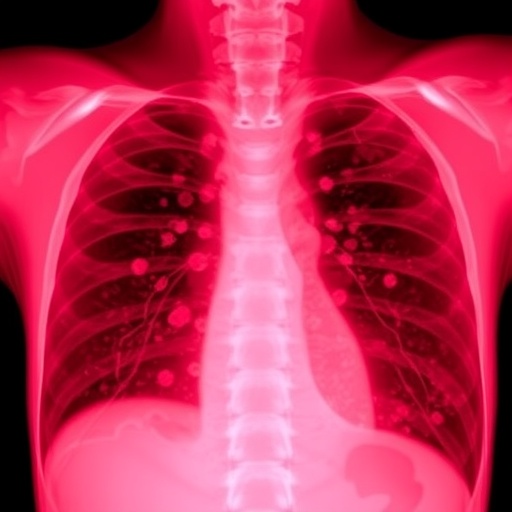
Pleural infection—one of the most feared infectious complications in thoracic medicine—has long been treated as a single clinical entity, managed with the same antibiotic strategies and drainage protocols regardless of where the infection originated. A landmark retrospective study from China now challenges that one-size-fits-all approach, revealing profound differences between hospital-acquired and community-acquired pleural infection that could reshape how clinicians around the world approach this deadly condition.
The research, conducted over eleven years at the First Medical Centre of Chinese PLA General Hospital in Beijing, analyzed 832 patients with confirmed pleural infection, making it one of the largest single-center cohorts ever assembled for this disease. Pleural infection encompasses two closely related and serious conditions: empyema, in which frank pus accumulates in the pleural space surrounding the lungs, and complicated parapneumonic effusion, in which infected fluid collects in that same space following pneumonia. Both conditions carry substantial risks of prolonged hospitalization, escalating healthcare costs, and death, particularly among elderly and immunocompromised patients. Despite decades of progress in antimicrobial therapy, diagnostic imaging, and interventional drainage techniques, delays in diagnosis and inappropriate initial antibiotic selection remain distressingly common in clinical practice.
The most striking finding of the study is the sheer dominance of hospital-acquired pleural infection, or HAPI, which accounted for a remarkable 84.9 percent of all cases, while community-acquired pleural infection, or CAPI, represented just 15.1 percent. This distribution reflects what the researchers describe as the increasingly hospital-centric nature of serious infections in modern healthcare. Large tertiary-care hospitals manage increasingly complex, critically ill populations, and the data suggest that the hospital environment itself has become the principal battleground where pleural infection develops. The implication is sobering: hospital-acquired infections typically involve more resistant pathogens, require more expensive treatments, and impose greater burdens on healthcare systems than their community-acquired counterparts.
The underlying causes of these two forms of infection diverged in ways that carry direct clinical significance. Among patients who acquired their infection in the community, the most common cause was pneumonia and pleurisy—the classical pathway by which infection spreads from the lung tissue itself into the adjacent pleural space. In stark contrast, the most frequent cause of hospital-acquired pleural infection was trauma or chest surgery. This iatrogenic signature is telling, as surgical procedures, chest tube placements, and traumatic injuries breach the body’s normal anatomical barriers and provide direct conduits for pathogens to reach the pleural cavity. In other words, in the hospital setting, medicine’s own interventions are the primary gateway for this life-threatening infection.
The study went further, identifying specific predisposing factors that significantly elevated the risk of hospital-acquired infection. Three stood out: the presence of an abdominal indwelling catheter, thoracic cavity drainage lasting ten days or longer, and prior use of broad-spectrum antibiotics. Each of these is a well-established risk factor for healthcare-associated infections in general, but their specific association with pleural infection provides clinicians with actionable targets. The findings argue forcefully for minimizing unnecessary invasive procedures, removing catheters and drains as soon as they are no longer clinically necessary, and practicing rigorous antimicrobial stewardship to limit the selective pressure that drives resistance. Other potential risk factors—including central intravenous catheters, indwelling urinary catheters, invasive mechanical ventilation, ICU admission, hemodialysis, chemoradiotherapy, and parenteral nutrition—were common among the patients but did not show statistically significant differences between the two infection categories.
Perhaps the most scientifically valuable contribution of the study lies in its microbiological analysis, which revealed sharply distinct pathogen profiles between the two patient groups. Among Gram-positive bacteria, Staphylococcus epidermidis was the most frequently isolated organism in hospital-acquired cases, accounting for 24.76 percent of isolates in that group. This finding makes biological sense: coagulase-negative staphylococci such as S. epidermidis are common inhabitants of human skin and are notorious causes of healthcare-associated infections involving indwelling devices and surgical sites. In community-acquired cases, by contrast, Streptococcus species predominated at 27.00 percent, reflecting their role as common respiratory pathogens and the principal culprits behind community-acquired pneumonia that seeds the pleural space.
Among Gram-negative bacteria, the pattern was equally distinctive. Acinetobacter baumannii was the most common Gram-negative pathogen in hospital-acquired infection at 8.61 percent of isolates, while Escherichia coli predominated in community-acquired cases at 4.38 percent. Acinetobacter baumannii has emerged in recent decades as one of the most formidable pathogens in hospital settings worldwide, and this study confirms its prominent role in pleural infection specifically.
The antimicrobial resistance data emerging from this cohort are, frankly, alarming. While virtually all Gram-positive bacteria remained susceptible to the last-line agents linezolid and vancomycin— Enterococcus faecium being the notable exception, with 9.88 percent vancomycin resistance—the Gram-negative organisms told a far darker story. Acinetobacter baumannii demonstrated resistance rates exceeding 60 percent to most antibiotics tested, including the carbapenems, a class typically reserved as the final line of defense against multidrug-resistant Gram-negative infections. Klebsiella pneumoniae and Pseudomonas aeruginosa, two other major Gram-negative pathogens, also exhibited high levels of resistance across multiple antibiotic classes. These figures underscore a critical message for clinicians: empirical antibiotic selection based on outdated or generic guidelines may fail catastrophically in hospital-acquired pleural infection, and obtaining timely cultures with susceptibility testing—and adjusting therapy accordingly—is not optional but essential.
Despite the stark microbiological differences between the two infection types, mortality outcomes were surprisingly similar. The overall 30-day mortality across the entire cohort was 13.1 percent, a figure significantly higher than the roughly 4 percent reported in many other studies, likely reflecting the severity of illness and the high prevalence of comorbidities in this tertiary-care population. Yet when the researchers compared the two groups directly, community-acquired infection carried a 30-day mortality of 11.9 percent, while hospital-acquired infection stood at 13.3 percent—a difference that did not reach statistical significance. Given that hospital-acquired cases typically involve more resistant pathogens and more medically fragile patients, this near-equivalence initially appears paradoxical.
The authors offer several plausible explanations. The hospital-acquired group contained a relatively low proportion of cases arising from pneumonia, and a high proportion caused by surgery and tumor-related factors, which may paradoxically carry lower mortality attributable to multidrug-resistant bacterial infection itself. Additionally, clinicians appeared to employ combination antibiotic therapy more aggressively in hospital-acquired cases, potentially compensating for the greater resistance challenges those infections posed. Whatever the precise mechanism, the finding suggests that with vigilant culture-guided therapy, outcomes for hospital-acquired pleural infection can approach those of community-acquired disease, even in the face of daunting resistance profiles.
The broader implications of this research extend well beyond a single Chinese hospital. As hospitals worldwide grapple with rising rates of antimicrobial resistance, this study provides a detailed epidemiological map of how pleural infection behaves differently depending on its setting of acquisition. It validates the growing consensus that infection categories should inform empirical treatment decisions: community-acquired pleural infection demands coverage of streptococci, while hospital-acquired infection requires broad regimens anticipating staphylococci, multidrug-resistant Gram-negative bacilli such as Acinetobacter, and enteric organisms like E. coli. Equally important, the identification of modifiable risk factors—prolonged drainage, indwelling catheters, and broad-spectrum antibiotic exposure—offers hospital infection-control teams concrete targets for prevention. In an era when the pipeline of new antibiotics remains perilously thin, preventing infection through better device management and antimicrobial stewardship may prove the most powerful intervention of all. This study stands as a compelling reminder that even well-known diseases still harbor secrets, and that large, carefully analyzed patient cohorts remain among the most valuable tools in modern medicine’s arsenal for uncovering them.
Cite Scienmag News
Kristina Jarvis. (September 4, 2026). Hospital-acquired pleural infection shows worse outcomes than community-acquired cases. Scienmag. https://scienmag.com/hospital-acquired-pleural-infection-shows-worse-outcomes-than-community-acquired-cases/
Kristina Jarvis. "Hospital-acquired pleural infection shows worse outcomes than community-acquired cases." Scienmag, 4 September 2026, https://scienmag.com/hospital-acquired-pleural-infection-shows-worse-outcomes-than-community-acquired-cases/. Accessed 4 September 2026.
Kristina Jarvis. "Hospital-acquired pleural infection shows worse outcomes than community-acquired cases." Scienmag. September 4, 2026. https://scienmag.com/hospital-acquired-pleural-infection-shows-worse-outcomes-than-community-acquired-cases/


