

Thursday, July 30, 2026
Science
No Result
View All Result
  • Login
  • HOME
  • SCIENCE NEWS
  • CONTACT US
  • HOME
  • SCIENCE NEWS
  • CONTACT US
No Result
View All Result
Scienmag
No Result
View All Result
Home Science News Medicine

Integrated policies may boost China’s soybean self-sufficiency and reduce land strain

July 10, 2026
in Medicine
Reading Time: 2 mins read
0
Integrated policies may boost China’s soybean self-sufficiency and reduce land strain

Integrated policies may boost China’s soybean self-sufficiency and reduce land strain

65
SHARES
587
VIEWS
Share on FacebookShare on Twitter
ADVERTISEMENT

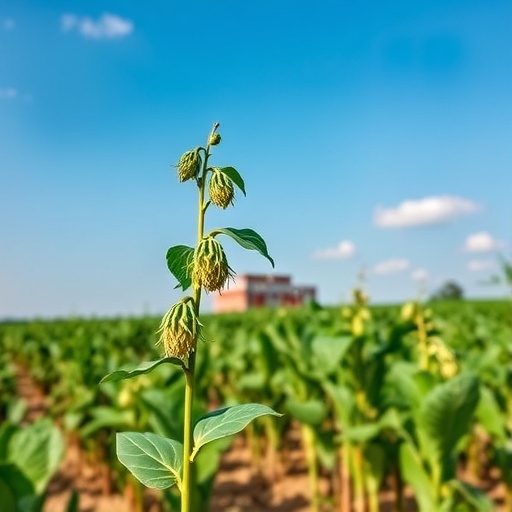
As China’s appetite for animal-sourced foods continues to surge, its dependence on soybean imports has reached unprecedented levels, placing increasing strain on global agricultural systems. Once fully self-sufficient in soybean production in the early 1960s, China’s soybean self-sufficiency rate (SSR) has plummeted to a mere 17% by 2022, with projections suggesting a further decline to 12% by 2050 if no strategic interventions are made. This decline has significant environmental consequences, as the nation increasingly relies on imports that drive deforestation and land-use change in tropical frontiers.

Addressing this challenge, a new integrated policy framework evaluated through scenario-based modeling suggests that combining three key interventions could drastically boost China’s soybean SSR. These interventions include rehabilitating salt-affected lands, adopting genetically modified (GM) soybeans for enhanced yield, and encouraging a shift towards healthier dietary patterns with reduced animal protein consumption. Importantly, each approach individually offers only modest improvements; however, their combined implementation could transform China’s soybean landscape.

Rehabilitating salt-affected soils—a degraded land category unsuitable for conventional agriculture—emerged as a promising avenue. The study estimates that for each 10% restoration of such lands, the soybean SSR could increase by approximately 1.4%. While modest on its own, this intervention represents a strategic reclaiming of otherwise marginal lands for soybean cultivation without expanding into untouched ecosystems.

Genetically modified soybeans, designed to thrive under suboptimal climatic and soil conditions or resist pests, could further raise self-sufficiency by around 1.0% per 10% adoption. The policy scenario considers regulatory approval and scaling efforts for GM crops to enhance yields sustainably, reducing the need for import reliance.

Dietary transition toward healthier consumption patterns—specifically reducing reliance on animal-sourced foods—plays a pivotal role by easing soybean demand linked to animal feed production. Notably, a 50% implementation of such dietary shifts could increase SSR to 17% independently, highlighting the intricate link between food choices and agricultural pressures.

The synergy of these three interventions, however, presents a striking prospect. Model projections show that their integrated application could elevate China’s soybean SSR to 74% by 2030 and stabilize around 80% by 2050. This outcome would not only improve national food security but also alleviate pressure on global soybean production, freeing cropland on a vast scale.

Such liberation of agricultural land has profound environmental benefits. The avoided expansion into tropical agricultural frontiers would permit reforestation efforts and enhanced carbon sequestration, contributing to climate mitigation goals. Moreover, the potential to produce enough soybeans to feed an estimated additional 1.89 billion people worldwide underscores the global ripple effects of China’s domestic policy decisions.

This research offers a compelling case for integrated, multifaceted policy strategies in tackling complex food security and environmental challenges. By aligning land restoration, biotechnology, and consumer behavior, China could reshape its soybean landscape while fostering sustainable global food systems.

As the world grapples with mounting environmental crises and burgeoning populations, such data-driven insights pave the way for holistic interventions that transcend agricultural borders—underscoring that the path to food security is as much about what we eat as where and how it is produced.


Article Title: Integrated policies could raise China’s soybean self-sufficiency and ease global land-use pressure.

Article References:
Lun, F., Sun, J., Zhou, Y. et al. Integrated policies could raise China’s soybean self-sufficiency and ease global land-use pressure. Nat Food (2026). https://doi.org/10.1038/s43016-026-01378-1

DOI: https://doi.org/10.1038/s43016-026-01378-1

Tags: China soybean self-sufficiencydietary shift towards plant-based proteinsenvironmental impact of soybean importsgenetically modified soybeansglobal food security strategiesimpact of animal-sourced food consumptionintegrated agricultural policyland use change in agriculturereducing deforestation in tropical regionssalt-affected land rehabilitationscenario-based modeling in agriculturesustainable land management practices
Share26Tweet16
Previous Post

Genetic Variants Linked to Cognitive Performance in British Birth Cohorts

Next Post

Soil Microbes’ Heterotrophic Respiration in a Changing Climate

Related Posts

Representations of the intrinsic value of information in mouse orbitofrontal cortex
Medicine

Representations of the intrinsic value of information in mouse orbitofrontal cortex

July 30, 2026
Ferroptotic propagation: from single-cell execution to tissue-scale death programs
Medicine

Ferroptotic propagation: from single-cell execution to tissue-scale death programs

July 30, 2026
Residential proximity to major roadways and prevalent diabetes in older adults: a cross-sectional study based on CLHLS
Medicine

Residential proximity to major roadways and prevalent diabetes in older adults: a cross-sectional study based on CLHLS

July 30, 2026
Overestimations in the cyclization efficiency of small, restriction enzyme-digested DNA fragments
Medicine

Overestimations in the cyclization efficiency of small, restriction enzyme-digested DNA fragments

July 30, 2026
Sulfated polysaccharides target RANK Lys97 to inhibit osteoclast differentiation and reverse osteoporosis
Medicine

Sulfated polysaccharides target RANK Lys97 to inhibit osteoclast differentiation and reverse osteoporosis

July 30, 2026
Regulation of RNA transcript elongation in metazoans and its relevance to disease
Medicine

Regulation of RNA transcript elongation in metazoans and its relevance to disease

July 30, 2026
Next Post
Soil Microbes’ Heterotrophic Respiration in a Changing Climate

Soil Microbes' Heterotrophic Respiration in a Changing Climate

  • Mothers who receive childcare support from maternal grandparents show more

    Mothers who receive childcare support from maternal grandparents show more parental warmth, finds NTU Singapore study

    27656 shares
    Share 11059 Tweet 6912
  • University of Seville Breaks 120-Year-Old Mystery, Revises a Key Einstein Concept

    1061 shares
    Share 424 Tweet 265
  • Bee body mass, pathogens and local climate influence heat tolerance

    682 shares
    Share 273 Tweet 171
  • Researchers record first-ever images and data of a shark experiencing a boat strike

    546 shares
    Share 218 Tweet 137
  • Groundbreaking Clinical Trial Reveals Lubiprostone Enhances Kidney Function

    531 shares
    Share 212 Tweet 133
Science

Embark on a thrilling journey of discovery with Scienmag.com—your ultimate source for cutting-edge breakthroughs. Immerse yourself in a world where curiosity knows no limits and tomorrow’s possibilities become today’s reality!

RECENT NEWS

  • Ancient DNA reveals Ice Age humans preferred female mammoths
  • Public research and development money unlocks private investment and lasting economic growth
  • Satellite mapping reveals global inequities in lake water quality: over one-third of lakes fail to meet good water quality standards
  • One million euros allocated to six EUniWell study programmes on the way towards the Joint European Degree Label

Categories

  • Agriculture
  • Anthropology
  • Archaeology
  • Athmospheric
  • Biology
  • Biotechnology
  • Blog
  • Bussines
  • Cancer
  • Chemistry
  • Climate
  • Earth Science
  • Editorial Policy
  • Marine
  • Mathematics
  • Medicine
  • Pediatry
  • Policy
  • Psychology & Psychiatry
  • Science Education
  • Social Science
  • Space
  • Technology and Engineering

Subscribe to Blog via Email

Success! An email was just sent to confirm your subscription. Please find the email now and click 'Confirm Follow' to start subscribing.

Join 5,147 other subscribers

© 2025 Scienmag - Science Magazine

Welcome Back!

Login to your account below

Forgotten Password?

Retrieve your password

Please enter your username or email address to reset your password.

Log In
No Result
View All Result
  • HOME
  • SCIENCE NEWS
  • CONTACT US

© 2025 Scienmag - Science Magazine
