


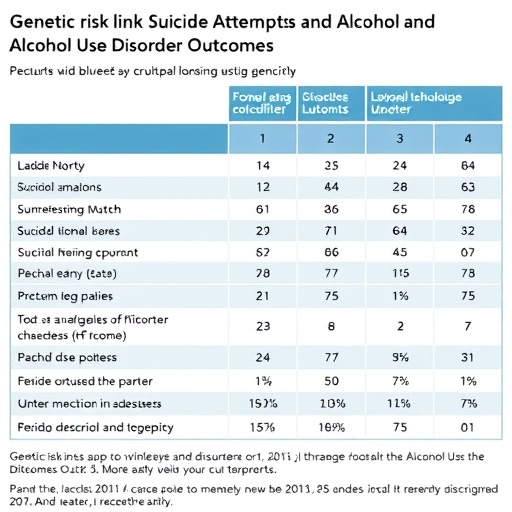
A groundbreaking new study has unveiled the intricate relationship between genetic predispositions and psychosocial outcomes related to suicide attempts and alcohol use disorder (AUD). Published in Translational Psychiatry, this research sheds light on how aggregate genetic risk factors can delineate distinct psychosocial profiles, providing a refined roadmap for future psychiatric interventions.
The study represents a significant leap forward in psychiatric genetics, as researchers combined vast genomic datasets with detailed psychosocial assessments. The team, led by Edwards, Ohlsson, and Stephenson, analyzed polygenic risk scores (PRS) to quantify the cumulative impact of multiple genetic variants associated with both suicide attempts and AUD. This comprehensive approach enabled the identification of distinctive psychosocial trajectories based on an individual’s genetic makeup.
One of the pivotal findings is the demonstration of a spectrum of psychosocial outcomes influenced by an aggregate genetic burden. People with higher genetic risk scores were more likely to exhibit complex psychosocial impairments, such as increased emotional dysregulation, impaired social functioning, and heightened vulnerability to stress. Importantly, these factors often interact synergistically, exacerbating the risk for suicidal behavior and problematic alcohol use.
By integrating polygenic risk profiling with psychosocial data, the researchers could map nuanced profiles that go beyond simple diagnostic categories. This stratification is crucial for precision psychiatry, as it allows clinicians to tailor interventions based on an individual’s genetic and psychological risk constellation rather than relying solely on symptom-based diagnosis.
Molecular mechanisms underpinning these findings suggest that genetic variants influencing neurotransmitter systems, stress response pathways, and neurodevelopmental processes collectively modulate susceptibility to suicidal behavior and AUD. This complexity underscores the need for multi-dimensional models combining genetics, environment, and psychosocial stressors to fully understand these mental health challenges.
The implications for clinical practice are profound. Identification of aggregate genetic risk scores could lead to early detection of vulnerable individuals, enabling proactive therapeutic strategies to mitigate adverse outcomes. Additionally, the study emphasizes the potential to develop personalized treatment regimens that target the specific biological and psychological pathways implicated in each patient’s unique risk profile.
This research catalyzes a shift toward a holistic model of mental health, where genetic information is integrated seamlessly with psychosocial context. It paves the way for novel biomarkers that could revolutionize risk assessment and intervention for suicidal behavior and AUD, two pressing public health concerns worldwide.
As the field advances, future studies will likely explore how such aggregate genetic risk scores interplay with environmental exposures and life events. Understanding these complex interactions holds promise for unraveling the pathophysiology of suicide and addiction, ultimately informing better prevention and treatment paradigms.
In summary, Edwards and colleagues’ work marks a seminal step in decoding the genetic architecture underlying psychiatric outcomes. Through innovative use of aggregate genetic risk models, this study illuminates the psychosocial profiles that shape the vulnerabilities to suicide attempt and alcohol use disorder, offering hope for more effective, personalized mental health care.
Cite Scienmag News
Juliet Wilcox. (July 10, 2026). Genetic Risk Links Suicide Attempts and Alcohol Use Disorder Outcomes. Scienmag. https://scienmag.com/genetic-risk-links-suicide-attempts-and-alcohol-use-disorder-outcomes/
Juliet Wilcox. "Genetic Risk Links Suicide Attempts and Alcohol Use Disorder Outcomes." Scienmag, 10 July 2026, https://scienmag.com/genetic-risk-links-suicide-attempts-and-alcohol-use-disorder-outcomes/. Accessed 3 September 2026.
Juliet Wilcox. "Genetic Risk Links Suicide Attempts and Alcohol Use Disorder Outcomes." Scienmag. July 10, 2026. https://scienmag.com/genetic-risk-links-suicide-attempts-and-alcohol-use-disorder-outcomes/


