

Thursday, July 9, 2026
Science
No Result
View All Result
  • Login
  • HOME
  • SCIENCE NEWS
  • CONTACT US
  • HOME
  • SCIENCE NEWS
  • CONTACT US
No Result
View All Result
Scienmag
No Result
View All Result
Home Science News Psychology & Psychiatry

AI Advances and Challenges in Neuropsychiatric Drug Discovery Explored

July 9, 2026
in Psychology & Psychiatry
Reading Time: 2 mins read
0
AI Advances and Challenges in Neuropsychiatric Drug Discovery Explored

AI Advances and Challenges in Neuropsychiatric Drug Discovery Explored

65
SHARES
587
VIEWS
Share on FacebookShare on Twitter
ADVERTISEMENT

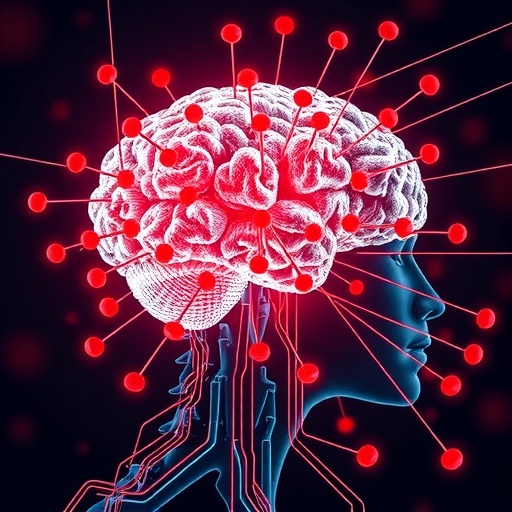
In a groundbreaking exploration of artificial intelligence’s expanding role in medicine, researchers have unveiled a comprehensive review highlighting the transformative potential of AI in neuropsychiatric drug discovery. Published in Translational Psychiatry in 2026, this paper delves into how machine learning and AI tools are reshaping the hunt for new therapies in mental health, confronting both the profound challenges and promising avenues that lie ahead.

Neuropsychiatric disorders pose unique difficulties for drug development due to the complex, multifactorial nature of brain illnesses and the intricate signaling pathways involved. Traditional drug discovery methods are often costly, time-consuming, and plagued by high failure rates. The application of AI promises to revolutionize this field by enhancing target identification, optimizing compound design, and improving clinical trial success via predictive analytics.

One of the key advantages of AI lies in its ability to analyze vast, multidimensional datasets ranging from genomics to neuroimaging and clinical records. By leveraging deep learning algorithms, researchers can identify novel biomarkers and drug targets that were previously undetectable through conventional methods. This data-driven approach aids in unraveling the complex molecular mechanisms underlying psychiatric conditions such as schizophrenia, bipolar disorder, and major depression.

Despite these advances, significant hurdles remain. The authors emphasize the challenges of integrating heterogeneous data types, ensuring model interpretability, and overcoming biases inherent in training datasets. Moreover, the complex ethics surrounding patient data privacy and algorithmic transparency require careful navigation to foster trust and regulatory approval.

Looking toward the future, the review advocates for multidisciplinary collaborations that combine AI expertise with neurobiology and psychiatry. The synergy between computational models and experimental validation holds the key to accelerating drug candidate selection and personalization of treatment strategies. Advances in explainable AI methods could also improve clinicians’ confidence in AI-driven decisions by providing clearer rationales for predictions.

The authors foresee an evolving landscape where AI models continuously refine themselves through iterative learning from clinical outcomes and real-world evidence. This dynamic feedback loop is expected to shorten the timeline from discovery to clinical application significantly. Furthermore, AI-powered virtual screening and in silico testing may reduce dependency on animal models, thus expediting regulatory pathways.

While the roadmap is ambitious, the consensus is clear: artificial intelligence stands as a powerful catalyst to untangle the mysteries of neuropsychiatric disorders and spearhead novel drug discoveries. This paradigm shift represents a convergence of cutting-edge technology and neuroscience, heralding a new era in mental health treatment possibilities.

As AI technologies mature and ethical frameworks solidify, the neuropsychiatric field is poised for unprecedented breakthroughs. This review not only charts current progress but also outlines a visionary blueprint that could transform mental health therapeutics, ultimately improving patient outcomes worldwide.


Subject of Research: Artificial intelligence in neuropsychiatric drug discovery

Article Title: The use of artificial intelligence (AI) in neuropsychiatric drug discovery: current challenges and future directions

Article References:
James, S., Bastiampillai, T., Palmer, L.J. et al. The use of artificial intelligence (AI) in neuropsychiatric drug discovery: current challenges and future directions. Transl Psychiatry (2026). https://doi.org/10.1038/s41398-026-04153-9

Image Credits: AI Generated

DOI: https://doi.org/10.1038/s41398-026-04153-9

Share26Tweet16
Previous Post

Nitrogen Retention Drives Eutrophication in US Lakes Today

Next Post

Scientists Observe Floquet-Driven Rotational Super-Radiance Phenomenon

Related Posts

Biological Causes of Different Cortical Abnormalities in Psychiatric Disorders
Psychology & Psychiatry

Biological Causes of Different Cortical Abnormalities in Psychiatric Disorders

July 9, 2026
Stochastic Models Reveal Rapid Smallpox Spread and High Indigenous Mortality Post-Colonial Contact
Psychology & Psychiatry

Stochastic Models Reveal Rapid Smallpox Spread and High Indigenous Mortality Post-Colonial Contact

July 9, 2026
MANF in the lateral septum controls ER function during chronic stress
Psychology & Psychiatry

MANF in the lateral septum controls ER function during chronic stress

July 9, 2026
Genetic Impact on Brain Activity During Emotional Face Matching Revealed by fMRI
Psychology & Psychiatry

Genetic Impact on Brain Activity During Emotional Face Matching Revealed by fMRI

July 9, 2026
Body Weight Influences Stress Response Differently in Males and Females via MeA Tac2-Nk3R
Psychology & Psychiatry

Body Weight Influences Stress Response Differently in Males and Females via MeA Tac2-Nk3R

July 9, 2026
Studying Brain Mechanisms of Irritability Through Cross-Species Reward Frustration
Psychology & Psychiatry

Studying Brain Mechanisms of Irritability Through Cross-Species Reward Frustration

July 9, 2026
Next Post
Scientists Observe Floquet-Driven Rotational Super-Radiance Phenomenon

Scientists Observe Floquet-Driven Rotational Super-Radiance Phenomenon

  • Mothers who receive childcare support from maternal grandparents show more

    Mothers who receive childcare support from maternal grandparents show more parental warmth, finds NTU Singapore study

    27656 shares
    Share 11059 Tweet 6912
  • University of Seville Breaks 120-Year-Old Mystery, Revises a Key Einstein Concept

    1061 shares
    Share 424 Tweet 265
  • Bee body mass, pathogens and local climate influence heat tolerance

    682 shares
    Share 273 Tweet 171
  • Researchers record first-ever images and data of a shark experiencing a boat strike

    546 shares
    Share 218 Tweet 137
  • Groundbreaking Clinical Trial Reveals Lubiprostone Enhances Kidney Function

    531 shares
    Share 212 Tweet 133
Science

Embark on a thrilling journey of discovery with Scienmag.com—your ultimate source for cutting-edge breakthroughs. Immerse yourself in a world where curiosity knows no limits and tomorrow’s possibilities become today’s reality!

RECENT NEWS

  • Workshop Advances Pediatric Medulloblastoma Treatment Development
  • Neuroscape and Samsung Collaborate to Study Cognitive Changes Over Time
  • Scientists identify novel hereditary prostate cancer type
  • Scientists Decode Glass-Like Properties of Epithelial Tissues

Categories

  • Agriculture
  • Anthropology
  • Archaeology
  • Athmospheric
  • Biology
  • Biotechnology
  • Blog
  • Bussines
  • Cancer
  • Chemistry
  • Climate
  • Earth Science
  • Editorial Policy
  • Marine
  • Mathematics
  • Medicine
  • Pediatry
  • Policy
  • Psychology & Psychiatry
  • Science Education
  • Social Science
  • Space
  • Technology and Engineering

Subscribe to Blog via Email

Enter your email address to subscribe to this blog and receive notifications of new posts by email.

Join 5,146 other subscribers

© 2025 Scienmag - Science Magazine

Welcome Back!

Login to your account below

Forgotten Password?

Retrieve your password

Please enter your username or email address to reset your password.

Log In
No Result
View All Result
  • HOME
  • SCIENCE NEWS
  • CONTACT US

© 2025 Scienmag - Science Magazine

Discover more from Science

Subscribe now to keep reading and get access to the full archive.

Continue reading
