

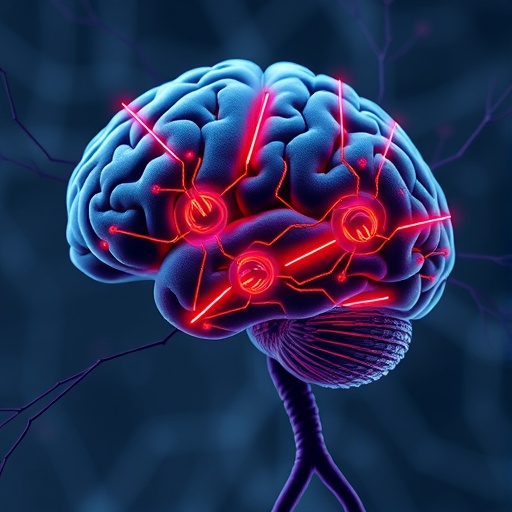
A devastating hallmark of obsessive-compulsive disorder is the brain’s inability to silence intrusive “what if” loops, trapping millions in ritualistic cycles that can consume waking life. Standard treatments like medication and psychotherapy fail a substantial fraction of patients, and even FDA-approved brain stimulation techniques leave many without relief. Now, a landmark study has mapped the precise causal circuitry underlying OCD, offering a potential bullseye for non-invasive neuromodulation therapies. By reverse-engineering the disorder from rare cases where OCD emerged suddenly after a stroke or tumour, researchers at the Champalimaud Foundation in Portugal and Massachusetts General Hospital have pinpointed a network of four deep-brain hubs that appear to drive the condition, regardless of how it begins.
The work, published in Biological Psychiatry, solves a long-standing chicken-and-egg conundrum in psychiatric neuroimaging. Traditional functional MRI studies reveal abnormal activity patterns in the brains of people with OCD, but such correlations cannot distinguish whether the activity triggers the symptom or is merely a downstream echo of the experience. “Lesional” cases, on the other hand, provide a causal window: if a focal brain injury produces new-onset OCD in a previously unaffected person, that lesion site is causally implicated. However, past attempts to map these lesions failed to find a single anatomical overlap. Strokes and tumours triggering OCD were scattered across the brain, from frontal cortices to subcortical depths, seemingly at random.
The breakthrough came when Gonçalo Cotovio and Albino J. Oliveira-Maia’s team abandoned the search for a singular location and instead interrogated the neural circuitry connecting the lesion sites. They aggregated published imaging data from 40 lesional OCD patients and mapped each lesion onto a common brain template. Using the human connectome—resting-state functional connectivity data from a thousand healthy individuals—the researchers computed each lesion’s functional “fingerprint,” the network of regions that would be secondarily disconnected or dysregulated by that damage. By comparing these maps against control lesions that did not result in OCD, they extracted a disease-specific circuit signature.
This causal network mapping converged on four core hubs: the bilateral orbitofrontal cortex (OFC) and bilateral basal ganglia. All four regions were positively connected to the lesion sites, meaning they were functionally coupled under normal conditions but became pathologically uncoupled after an OCD-causing injury. The OFC is traditionally associated with judgement and value-based decision-making. “When patients have OCD symptoms, this region is signaling ‘you need to do this, it’s very important to you,’ even in the presence of competing information suggesting that it is not,” Cotovio explains. The basal ganglia, meanwhile, underpin habit formation and action sequencing. Once a compulsive act is initiated, the circuitry reinforces its repetition through striatal-thalamo-cortical loops, making it extraordinarily difficult to interrupt—presumably because of aberrant communication with the OFC.
Crucially, the same circuit architecture was confirmed in the much larger population of non-lesional OCD. Using the NeuroSynth meta-analytic tool and independent fMRI datasets—including patient scans collected at the Champalimaud’s own facilities—the researchers showed that hot-spots of abnormal activity in classic OCD overlapped precisely with the lesional-derived hubs. In contrast, networks linked to frequently comorbid conditions such as depression or anxiety did not align with the OCD circuit, underscoring its specificity. This cross-validation establishes that the four-hub network is a fundamental neuroanatomical signature of the disorder, not an artefact of the rare lesional sample.
The findings hold immediate therapeutic promise. Currently, repetitive transcranial magnetic stimulation (rTMS) for OCD targets a standard cortical location based on group-averaged data, a one-size-fits-all approach that partially explains why many patients do not respond sufficiently. By instead guiding stimulation to the spot that maximally engages the causal OCD network in each individual, clinicians could dramatically improve efficacy. The team has already launched a clinical trial, funded by the Brain and Behaviour Research Foundation, to compare standard rTMS targeting against network-guided neuromodulation. “We may use our lesional OCD network as a tool to guide treatment, instead of relying on average places,” says Oliveira-Maia, the study’s senior author. “This could allow for more individualized targeting, picking the cortical spot that best matches the OCD circuit we describe here.”
Beyond OCD, the study illustrates a paradigm shift in biological psychiatry. Causal network mapping, previously applied by the same group to mania, leverages the brain’s own wiring blueprint to convert accidental lesions into a systematic atlas of symptom causation. Such maps move the field from descriptive neuroimaging to a mechanistic understanding of mental illness, where treatment can be designed to restore communication within a defined pathological circuit. For the millions trapped by obsessive-compulsive cycles, that shift may finally turn down the volume on the brain’s broken alarm bell.
Subject of Research: People
Article Title: Causal network mapping reveals orbitofrontal and basal ganglia hubs driving obsessive-compulsive disorder
News Publication Date: 7-Jul-2026
Web References:
Champalimaud Foundation news on mania circuit mapping: https://fchampalimaud.org/news/researchers-create-map-highlights-brain-circuits-associated-mania
Cotovio & Oliveira-Maia methodology overview: https://genomicpress.kglmeridian.com/view/journals/brainhealth/aop/article-10.61373-bh026v.0012/article-10.61373-bh026v.0012.xml
References: Biological Psychiatry (study publication, 7 July 2026)
Image Credits: Not available
Keywords: Obsessive-compulsive disorder, lesion network mapping, orbitofrontal cortex, basal ganglia, repetitive transcranial magnetic stimulation, human connectome, causal neurocircuitry, neuromodulation, biological psychiatry


