

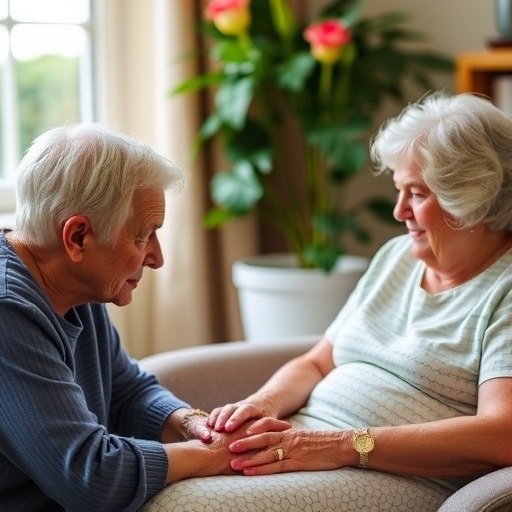
The global population is aging at an unprecedented rate, thrusting residential aged care facilities into the spotlight as the final home for millions. Yet behind the serene facades, a quiet crisis has brewed for decades: how to deliver dignified, effective palliative care to residents facing life-limiting illnesses. A comprehensive scoping review published in BMC Geriatrics now maps the chaotic landscape of care models, revealing that while evidence strongly favors a single approach, most facilities remain trapped in fragmented systems that fail dying patients. The synthesis, led by researchers de Silva, Parker, and Poon, is the most extensive examination to date of how nursing homes orchestrate end-of-life care, and its findings could ignite a global push to overhaul a sector long starved of structural reform.
Palliative care in aged care homes differs radically from the hospital-based model familiar to many. Residents typically suffer from multimorbidity, frailty, and progressive cognitive decline—often Alzheimer’s disease or other dementias—where the trajectory toward death is prolonged and unpredictable. Unlike cancer patients who may be transferred to specialist hospice units, these individuals need ongoing, layered support integrated into their daily living environment. The scoping review dissected 38 studies spanning high-income countries to understand how institutions are attempting to meet this challenge, categorizing the interventions into three dominant archetypes: integrated, consultative, and education-based models. The technical heart of the analysis lay in distinguishing not merely what services were offered, but when and how they were triggered, and who was empowered to deliver them.
Integrated palliative care emerged as the clear frontrunner, defined by embedding specialist palliative medicine directly into the facility’s routine staffing. In these settings, a dedicated nurse practitioner or physician with advanced certification in palliative medicine works alongside general practitioners, nursing assistants, and allied health professionals. The model relies on systematic early identification of residents likely to benefit from palliative support, often using validated prognostic tools such as the Supportive and Palliative Care Indicators Tool (SPICT) or the Gold Standards Framework. Once a resident is flagged—perhaps after a third hospital admission for heart failure or a significant functional decline—an interdisciplinary care planning meeting is convened, where goals of care are documented, anticipatory medications for symptoms like dyspnea and terminal agitation are prescribed, and families receive structured counseling. The review highlighted that these integrated programs consistently reduced burdensome transitions to acute care, with some data suggesting emergency department visits in the last month of life could be slashed by more than 30%.
Consultative models, in contrast, operate through external specialist teams that visit facilities on a referral basis—akin to a hospital consult service wheeled into a nursing home. While they improve symptom management for the few who are referred, the review uncovered a critical flaw: referral biases left those with non-cancer diagnoses, particularly dementia, chronically underserved. Because the consultative trigger depends on a general practitioner or nursing director recognizing “palliative need,” residents with slow declines and communication barriers were frequently overlooked until a terminal crisis erupted. The scoping review’s authors note this model inadvertently reinforces a “prognostic paralysis,” where clinicians hesitate to label someone as palliative until death is imminent, squandering months of potential comfort-directed care.
A third category, the education-based model, focuses on upskilling existing aged care staff through training programs like the Residential Aged Care End-of-Life Care Pathway. While these initiatives boost competence and confidence in managing basic symptoms, the review found they rarely altered systemic outcomes such as place of death or hospitalization rates without concurrent structural change. The starkest finding was that standalone education, no matter how intensive, could not compensate for a lack of dedicated palliative personnel or policy frameworks. The workforce in residential aged care is notoriously under-resourced; in many countries, a registered nurse may be responsible for supervising dozens of high-need residents overnight, leaving little time for the nuanced conversations and physical assessments that palliative care demands.
Emerging hybrid models are now blending telemedicine with artificial intelligence to bridge gaps. The review points to early experiments where machine-learning algorithms analyze electronic health record data—vital signs, weight loss, cognitive scores—to generate alerts that a resident’s one-year mortality risk has crossed a threshold, automatically triggering a remote palliative consultation. These systems aim to circumvent the referral barrier by removing subjective clinician judgment from the initial identification step, though their ethical implications are still being debated. Another frontier is the “palliative paramedicine” model, where specially trained paramedics respond to acute deteriorations within the facility, delivering on-site treatment and comfort measures instead of defaulting to transport to an emergency department, a protocol shown to honor advance care directives more faithfully.
The review’s policy critique is devastating in its clarity: funding mechanisms in most jurisdictions incentivize curative and restorative care, not palliative care. Residential facilities are often reimbursed based on metrics like physical therapy minutes or wound healing rates, while time spent on a family meeting or meticulous symptom titration goes uncompensated. The authors argue that without restructuring payment models to recognize the intensity of end-of-life care planning, even the most motivated facilities will struggle to sustain integrated teams. The review also identifies a glaring evidence gap regarding low- and middle-income countries, where the demographic transition is accelerating fastest yet palliative care infrastructure remains virtually nonexistent.
For families and clinicians, the message from this massive evidence synthesis is unequivocal: the integrated, in-house model with early, protocol-driven identification offers the best shot at a peaceful death. The science of dying in a nursing home is not about high-tech heroics but about the disciplined application of prognostic tools, interdisciplinary communication, and anticipatory pharmacotherapy. As the silent generation gives way to baby boomers with higher expectations for autonomy, the pressure to abandon the consultative patchwork will become seismic. The scoping review, rigorous in its mapping, ultimately serves as a roadmap out of a long-neglected labyrinth—one that, if followed, could transform the way society shepherds its oldest members through their final chapter.
Subject of Research: Models of care for palliative care in residential aged care facilities: a scoping review
Article Title: Models of care for palliative care in residential aged care facilities: a scoping review
Article References:
de Silva, I., Parker, C. & Poon, P. Models of care for palliative care in residential aged care facilities: a scoping review.
BMC Geriatr (2026). https://doi.org/10.1186/s12877-026-07915-8
Image Credits: AI Generated
DOI: 10.1186/s12877-026-07915-8
Keywords: palliative care, residential aged care, nursing homes, models of care, integrated care, end-of-life care, scoping review, prognostic indicators, emergency department avoidance, dementia


