

The presence of certain bacteria in the gut microbiota, and fluctuations in a person’s metabolism, can be seen in people who go on to develop type 2 diabetes years later. This has been shown in a large Swedish study led by researchers at Chalmers University of Technology. The discovery paves the way for identifying people at risk of developing type 2 diabetes at an early stage, enabling preventive measures to be introduced.
“Our study was able to show changes in the gut microbiota several years before the disease developed. This could indicate that the composition of the microbiome plays a role in the development of diabetes, and not the other way round,” says Gaël Toubon, a postdoctoral researcher in food science at Chalmers’ Department of Life Sciences.
The number of adults with diabetes has more than doubled since the 1990s, according to the World Health Organisation (WHO). Today, 800 million people are living with the disease, and more than 90 per cent of cases are type 2 diabetes. Studies of the human gut microbiome, namely the bacteria and other microorganisms that live in our intestinal tract, have shown that certain changes in the gut microbiota can be seen in people with type 2 diabetes.
Common denominators among diabetes patients
Now, a comprehensive study has shown that changes in the bacteria found in the gut microbiota can be seen several years before the disease develops, and could therefore predict who will go on to develop it. As part of the EU project HealthFerm, the Chalmers researchers led a large epidemiological study involving 4,685 Swedish adults, whose microbiomes were examined in stool samples. Of all the participants in the study, 383 developed diabetes after an average follow-up period of five years, and early common denominators were observed in their gut microbiota.
“We observed nine bacteria in the microbiome that are associated with the risk of developing the disease. One very interesting finding is that an individual’s dietary habits appear to play a role, determining whether certain bacteria in the gut are beneficial or harmful,” says Gaël Toubon.
Fibre intake is important
What surprised the researchers was that those who developed diabetes had high levels of the bacterium Akkermansia muciniphila in their gut microbiota. This bacterium is usually associated with health benefits.
“Under favourable conditions, this bacterium feeds on the fibre we get from our diet. But when our fibre intake is too low, it instead starts to break down the gut’s protective mucus layer. This can lead to other bacteria coming into contact with the intestinal lining, causing inflammation and other metabolic disruptions linked to insulin resistance and type 2 diabetes,” says Gaël Toubon.
One type of bacterium, Coprococcus catus, could be linked to diabetes when the bacterium was present only in very small quantities in the gut microbiota. Above a certain level, this risk was not observed.
“Research into the gut microbiota has made great strides in recent years, but the new knowledge has so far had little impact on clinical practice. In future, these bacteria could be used as biomarkers to identify people at risk of developing type 2 diabetes. Risk factors such as obesity, heredity and blood glucose levels could be supplemented with a stool sample to better predict the risk of developing the disease and enable preventive measures to be introduced, ” says Gaël Toubon.
The microbiome could become a target for treatment
The Chalmers researchers’ findings need to be validated in further large studies. If the role of the gut microbiota in the development of diabetes is confirmed, our microbiome could become a target for personalised preventive strategies, as the gut microbiota, unlike our genes, can be modified through lifestyle and diet.
“We cannot yet give that kind of dietary advice, but, at a general level, the study’s findings support current recommendations to eat foods rich in fibre from fruit, vegetables, legumes and wholegrains. Our results emphasise the importance of studying the gut microbiome together with other lifestyle factors, as together they may influence the risk of developing type 2 diabetes,” says Rikard Landberg, Professor at the Department of Life Sciences and lead author of the study.
Facts: Type 2 diabetes worldwide
• The number of adults with diabetes worldwide has more than doubled since 1990.
• In 1990, around 7 per cent of the world’s adult population had diabetes – by 2022, the figure was around 14 per cent.
• Today, more than 800 million people live with the disease globally.
• More than 90 per cent of cases are type 2 diabetes. This form of diabetes mainly affects adults and is characterised by reduced insulin sensitivity, known as insulin resistance, which can arise as a result of factors such as obesity, physical inactivity and smoking.
Sources: World Health Organisation (WHO) and Karolinska Institutet
More about the study:
The study, Gut microbiome composition and functional potential associate with incident type 2 diabetes in 4,685 adults from a Swedish prospective cohort, has been published in Cell Reports Medicine and was authored by Gaël Toubon, Fredrik Boulund, Cecilia Martinez Escobedo, Carl Brunius, Lars Engstrand, Susanna C. Larsson, Elise Nordin, Ina Schuppe-Koistinen, Alicja Wolk, Clemens Wittenbecher and Rikard Landberg.
The researchers are affiliated with Chalmers University of Technology, Karolinska Institutet and Uppsala University.
The research received funding from the EU project HealthFerm under Horizon Europe, as well as the Swiss State Secretariat for Education, Research and Innovation (SERI).
For more information, please contact:
Gaël Toubon, Postdoctoral Researcher, Division of Food and Nutrition Science, Department of Life Sciences, Chalmers University of Technology, Sweden: gael.toubon@chalmers.se
Rikard Landberg, Professor, Division of Food and Nutrition Science, Department of Life Sciences, Chalmers University of Technology, Sweden: rikard.landberg@chalmers.se, +46 (0)31 772 27 32
Gaël Toubon speaks French and English; Rikard Landberg speaks Swedish and English. At Chalmers, we have podcast studios and filming equipment on site and can assist with requests for TV, radio or podcast interviews.
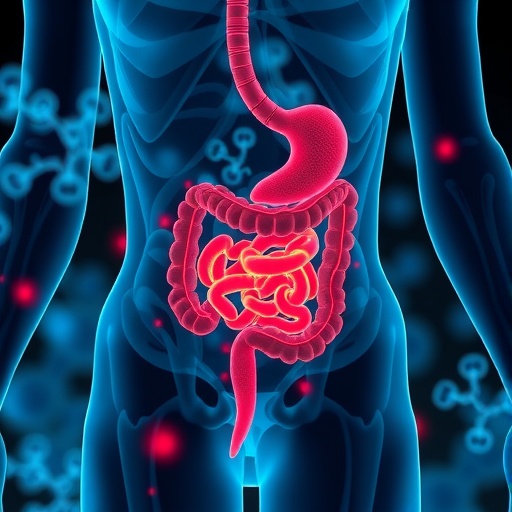
Caption: The presence of certain bacteria in the gut can be seen in people who go on to develop type 2 diabetes years later, shows a Swedish study led by Chalmers University of Technology. A bacterium usually associated with health benefits turned out to be harmful when fibre intake was too low, and the study’s findings support recommendations to eat foods rich in fibre from fruit, vegetables, legumes and wholegrains. The image showing gut bacteria was not taken from the Chalmers study.
Credit: Donny Bliss, National Institute of Health, and Wikimedia Commons
Licence: Creative Commons
Journal
Cell Reports Medicine
Method of Research
Observational study
Subject of Research
People
Article Title
Gut microbiome composition and functional potential associate with incident type 2 diabetes in 4,685 adults from a Swedish prospective cohort
Article Publication Date
16-Jun-2026
COI Statement
The authors declare no competing interests.
Karin Wik
Chalmers University of Technology
karin.wik@chalmers.se
Journal
Cell Reports Medicine
Method of Research
Observational study
Subject of Research
People
Article Title
Gut microbiome composition and functional potential associate with incident type 2 diabetes in 4,685 adults from a Swedish prospective cohort
Article Publication Date
16-Jun-2026
COI Statement
The authors declare no competing interests.
Tags
bu içeriği 600 ile 800 kelime arasında olacak şekilde ve alt başlıklar ve madde içermiyecek şekilde ünlü bir science magazine için İngilizce olarak yeniden yaz. Teknik açıklamalar içersin ve Viral science news olacak şekilde İngilizce yaz. Haber dışında başka bir şey içermesin. Haber içerisinde 8 ile 10 paragraf olsun ve toplam uzunluk 600 ile 800 kelime arasında kalsın. Cevapta sadece haber olsun. Ayrıca haberi yazdıktan sonra içerikten yararlanarak aşağıdaki başlıkların bilgisi var ise haberin altında doldur. Eğer yoksa bilgisi ilgili kısmı yazma.:
Subject of Research:
Article Title:
News Publication Date:
Web References:
References:
Image Credits:


