

In an ambitious fusion of microbiology and citizen science, researchers transformed the University of Milano-Bicocca campus into a sprawling living laboratory, enlisting students to systematically swab surfaces, scoop soil, and even donate their own skin and stool samples. The massive sampling effort, combined with hands-on metagenomics workshops, has produced one of the most detailed maps of a university’s microbial underworld, revealing an intricate network of microbial exchange between humans and their built environment. The findings, presented at the Society for Experimental Biology’s annual conference in Florence, offer a striking snapshot of how urban spaces function as dynamic reservoirs of microbial life, with people acting as both donors and recipients in an invisible ecological dance.
The project, spearheaded by Dr. Antonia Bruno, Dr. Giulia Ghisleni, and colleagues, arose from mounting evidence that urbanization is eroding microbial biodiversity and severing ancient relationships between humans and environmental microorganisms. This loss has been tentatively linked to the rise of so-called “diseases of civilization,” including allergies, asthma, and autoimmune conditions. “As cities like Milan expand, this loss of microbial exposure has been linked to health issues,” Bruno explains. The researchers saw the university campus—a dense, semi-contained urban ecosystem traversed daily by thousands of students—as the perfect model system to investigate how human and environmental microbiomes co-structure each other.
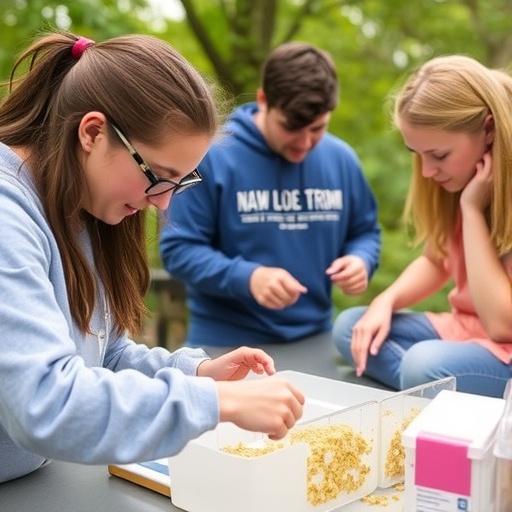
At the heart of the initiative were the Bicocca Sampling Days, a series of large-scale collection blitzes conducted across two distinct seasons. Armed with sterile swabs, collection tubes, and smartphones loaded with geolocation apps, student participants gathered over 1,100 environmental samples from indoor surfaces like desks and door handles, outdoor soils in campus green spaces, and even swabs of their own skin and stool. The dual focus on the built and biological environment was intentional: by simultaneously profiling microbial communities from surfaces and from the students themselves, the team could begin teasing apart the routes of microbial traffic, shedding light on how much of the indoor microbiome is seeded by human occupants and how outdoor environmental reservoirs contribute to the campus’s overall diversity.
Crucially, the project was not a one-way extraction of data. Bruno and Ghisleni designed a participatory framework that positioned students as genuine collaborators, involving them in every stage from hypothesis generation to data analysis. After the sampling marathons, students entered a specially designed metagenomics workshop where they processed their own samples through a streamlined bioinformatics pipeline. Using the KBase platform—a collaborative, open-source analysis environment—participants learned to interpret raw DNA sequencing reads, perform taxonomic classification, and visualize microbial community structures. “The workshop was explicitly structured to provide an accessible yet authentic research experience,” says Ghisleni, “integrating computational tools with uncertainty, collaborative problem solving, and inquiry-based learning.” This approach demystified the often-opaque machinery of metagenomics, transforming abstract sequences into tangible microbial identities.
The sequencing data unveiled a campus teeming with microbial life that varied dramatically by location and season. Indoor environments were consistently enriched in taxa typically associated with human skin and gut—genera such as Staphylococcus, Corynebacterium, and Lactobacillus—suggesting that students shed their personal microbial signatures onto surfaces at a measurable scale. Outdoor green spaces, by contrast, displayed markedly higher alpha diversity and were dominated by soil- and plant-associated microbes, including common environmental clades like Pseudomonas and Sphingomonas. These ecological signatures were not static; the team documented pronounced seasonal shifts, with certain microbial groups waxing or waning in concert with temperature, humidity, and vegetation cycles. The overall portrait is one of a campus as a patchwork of interconnected microbial habitats, where frequent dispersal events—a hand on a railing, a gust of wind carrying soil particles—constantly reshape community composition.
One of the most compelling implications is the demonstration that students both shape and are shaped by the microbiomes surrounding them. The presence of human-associated microbes on indoor surfaces is expected, but the reciprocal colonization of students by environmental strains—detected through their own skin and stool sampling—hints at a continuous, bidirectional flow. “The results reveal a complex network of microbial exchange across urban ecosystems,” Bruno notes. This kind of fine-grained mapping is rarely achieved outside of expensive, isolated studies, and it underscores the power of citizen science to generate datasets of sufficient scale and resolution to capture real-world ecological dynamics.
Beyond the scientific payoffs, the project carries a strong educational and public engagement mandate. By involving students directly, the team not only amassed a precious repository of samples but also cultivated a cohort of microbiology-literate citizens who now grasp the invisible life that coats every surface they touch. The researchers have packaged their methodology into a reproducible framework, complete with evaluation tools to quantify impacts on participants, aiming to catalyze similar living lab initiatives globally. Talks are already underway to replicate the model at the University of California, Berkeley, and the team hopes their approach will inform urban planning strategies that deliberately steward microbial diversity for public health.
The Bicocca Sampling Days stand as a testament to what can be achieved when a university turns its own campus into a Petri dish, blurring the line between education and discovery. In doing so, the project not only illuminated the hidden microbial architecture of a modern urban institution but also demonstrated that the best tools for exploring these invisible worlds might just be the curious hands of students.
Subject of Research: Human-environment microbiome interactions and microbial ecology in an urban university campus
Article Title: Students Swab Their Campus—and Themselves—to Reveal the Secret Microbial Web of a University
News Publication Date: Not provided
Web References: Not available
References: Not available
Image Credits: Giulia Ghisleni and Antonia Bruno
Keywords: Microbial ecology, Host microbe interactions, Microbial diversity, Microbial genetics, Science education, Science teaching, Science communication, Science careers


