


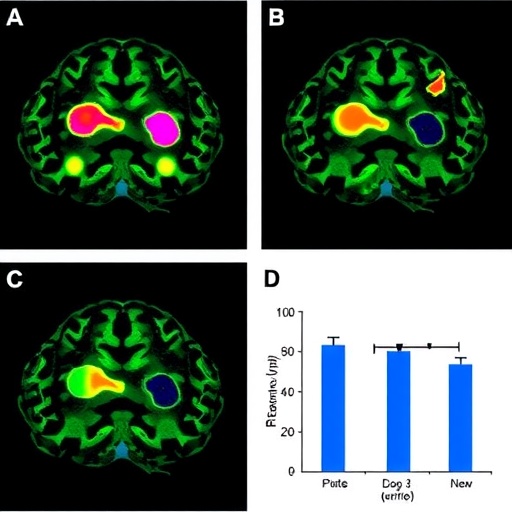
A groundbreaking new study sheds light on the complex biological mechanisms underlying sex-specific cognitive outcomes in a mouse model of 22q11.2 deletion syndrome, a genetic disorder associated with a high risk of psychiatric conditions such as schizophrenia. Researchers have identified divergent transcriptomic pathways that govern how cognitive functions are differentially rescued in males and females following developmental inhibition of the enzyme glycogen synthase kinase 3 beta (GSK3B). This discovery opens new avenues for sex-tailored therapies aimed at mitigating cognitive deficits prevalent in neurodevelopmental disorders.
At the heart of this study lies 22q11.2 deletion syndrome, a chromosomal microdeletion disorder affecting approximately 1 in 4,000 live births worldwide. This syndrome is characterized by a wide spectrum of clinical manifestations, including cognitive impairments, congenital anomalies, and a striking predisposition to neuropsychiatric disorders. Understanding the neurobiological underpinnings of cognitive dysfunction in 22q11.2 deletion syndrome has been a persistent challenge, partly due to the intricate interplay of genetics, development, and sex-specific factors that modulate disease expression.
The research team’s approach involved using a mouse model that faithfully recapitulates key aspects of the human 22q11.2 deletion. By administering a developmental inhibitor of GSK3B, a kinase implicated in numerous cellular processes and known to influence neuronal development and synaptic plasticity, the investigators sought to examine how this intervention affected cognition. Prior studies have hinted at GSK3B’s role in neurodevelopmental disorders, but this is the first detailed exploration of its sex-dependent effects in a comprehensive transcriptomic framework.
A central revelation from the transcriptomic analyses was the identification of distinct gene expression profiles triggered by GSK3B inhibition in male versus female mice. Despite the same genetic deletion and treatment regimen, the two sexes showed markedly different molecular responses within brain regions associated with learning and memory. These differential pathways suggest that male and female brains might employ alternative compensatory mechanisms to counteract developmental insults, adding a new layer of complexity to therapeutic strategies.
The significance of this sex bias cannot be overstated in the context of neuropsychiatric disorders. Historically, clinical and preclinical research has often neglected sex as a biological variable, leading to treatments that may not be equally effective across genders. This study highlights the necessity of incorporating sex-specific data to understand disease mechanisms fully and optimize intervention outcomes. In this model, cognitive rescue was demonstrably more robust or shaped by distinct molecular cascades depending on sex, indicating that a “one-size-fits-all” approach to treatment is insufficient.
Delving deeper into the transcriptomic data, key regulatory networks involved in synaptic transmission, neuroplasticity, and inflammatory responses exhibited sex-specific modulation. For instance, males displayed alterations in pathways connected to mitochondrial function and oxidative stress, while females showed pronounced changes in gene sets associated with hormone signaling and synaptic remodeling. Such findings underscore the multifaceted nature of the brain’s response to genetic and pharmacological perturbations, tailored by biological sex.
Furthermore, this investigation provides compelling evidence that timing of GSK3B inhibition during critical developmental windows is crucial for achieving cognitive improvements. The developmental period represents a milieu where dynamic gene expression changes and neuronal circuit formation occur in tandem, making the brain particularly sensitive to both pathological insults and therapeutic interventions. Properly timed modulation of GSK3B activity might thus recalibrate disrupted developmental trajectories, offering a potential window for clinical intervention.
From a translational standpoint, these findings propel the notion that small-molecule inhibitors or modulators of GSK3B could be promising candidates for targeted therapies in neurodevelopmental disorders. However, the inherent sex differences in molecular responses revealed here advocate for personalized medicine approaches. Therapeutic regimens may need to be optimized not only for the genetic background but also for sex to maximize efficacy and minimize adverse effects.
Importantly, the methodological rigor applied in this research is notable. The integration of behavioral assays, molecular biology techniques, and high-throughput sequencing provides a comprehensive multi-dimensional perspective on the neurobiological impact of 22q11.2 deletion and GSK3B inhibition. Such multifaceted approaches are essential to untangle the complex pathophysiology of cognitive dysfunction underlying neurodevelopmental syndromes.
This study also prompts broader questions about how other kinases and signaling molecules function differently between sexes in the developing brain. It paves the way for future investigations into sex-dependent molecular mechanisms across a plethora of neuropsychiatric diseases. Addressing these gaps could revolutionize our understanding of brain development and disease, shifting paradigms in neuroscience research and therapeutic innovation.
Moreover, the cognitive phenotypes observed echo clinical observations in human populations, where males and females with 22q11.2 deletion syndrome often exhibit divergent symptomatology and disease progression. The relevance of the mouse model to human pathology reinforces the translational potential of these findings and underscores the critical importance of sex as an intrinsic biological factor.
These findings also invite a reevaluation of clinical trial design, advocating for stratification of participants by sex to better detect differential therapeutic responses. This could accelerate the development of more effective, tailored treatments for cognitive impairments associated with genetic and neurodevelopmental disorders.
As we deepen our grasp of the intricate interplay between genetics, development, and sex, the prospect of precision medicine in psychiatry becomes increasingly tangible. By illuminating the molecular undercurrents that differentiate male and female brains’ capacity for cognitive recovery, this research contributes a vital piece to the puzzle of neurodevelopmental disease mechanisms.
The implications of GSK3B modulation extend beyond 22q11.2 deletion syndrome, potentially influencing broader applications in conditions marked by cognitive deficits such as autism spectrum disorders and schizophrenia. Understanding the sexually dimorphic pathways involved may thus have wide-ranging therapeutic relevance.
In conclusion, the study’s discovery of divergent transcriptomic pathways mediating sex-biased cognitive rescue via developmental GSK3B inhibition unveils pivotal mechanistic insights with profound therapeutic implications. It exemplifies the critical importance of sex-specific research in neurodevelopmental disorders and heralds a future where personalized interventions can significantly improve patient outcomes.
Taken together, these transformative findings emphasize the urgent need to integrate sex as an essential variable in neuropsychiatric research and highlight GSK3B as a promising target for reversing cognitive deficits in vulnerable populations. This work stands as a testament to the power of combining genetic, molecular, and behavioral analyses in unraveling the complexities of brain development and function.
Cite Scienmag News
Glenn Wilkins. (June 11, 2026). Sex-Specific Brain Rescue in 22q11.2 Deletion Mice. Scienmag. https://scienmag.com/sex-specific-brain-rescue-in-22q11-2-deletion-mice/
Glenn Wilkins. "Sex-Specific Brain Rescue in 22q11.2 Deletion Mice." Scienmag, 11 June 2026, https://scienmag.com/sex-specific-brain-rescue-in-22q11-2-deletion-mice/. Accessed 4 September 2026.
Glenn Wilkins. "Sex-Specific Brain Rescue in 22q11.2 Deletion Mice." Scienmag. June 11, 2026. https://scienmag.com/sex-specific-brain-rescue-in-22q11-2-deletion-mice/


