

Tuesday, July 28, 2026
Science
No Result
View All Result
  • Login
  • HOME
  • SCIENCE NEWS
  • CONTACT US
  • HOME
  • SCIENCE NEWS
  • CONTACT US
No Result
View All Result
Scienmag
No Result
View All Result
Home Science News Psychology & Psychiatry

Tactile Discrimination in Adolescents With Anorexia Nervosa: Behavioral and Brain Study

July 28, 2026
in Psychology & Psychiatry
Reading Time: 2 mins read
0
Tactile Discrimination in Adolescents With Anorexia Nervosa: Behavioral and Brain Study

Tactile Discrimination in Adolescents With Anorexia Nervosa: Behavioral and Brain Study

65
SHARES
587
VIEWS
Share on FacebookShare on Twitter
ADVERTISEMENT

Adolescents with anorexia nervosa (AN) may struggle more with how touch is interpreted than with the brain’s basic ability to detect tactile signals, according to a new behavioral and neurophysiological study. The research focuses on tactile stimulus discrimination—whether individuals can reliably tell apart different touch patterns—a function that supports stable body perception.

In the experiment, participants were challenged to differentiate tactile stimuli while researchers recorded neural responses across time. The key twist: on a neural level, tactile discrimination appeared largely intact, suggesting that fundamental sensory processing is not globally disrupted. In other words, the nervous system can still “receive” the tactile information in a way that supports early discrimination.

Yet behavior told a different story. Adolescents with AN showed clear difficulty discriminating tactile stimuli during the task, indicating that perceptual decision-making about touch is impaired. This mismatch between preserved neural discrimination and reduced behavioral performance points to dysfunction beyond raw sensation—specifically in how touch is transformed into a coherent percept.

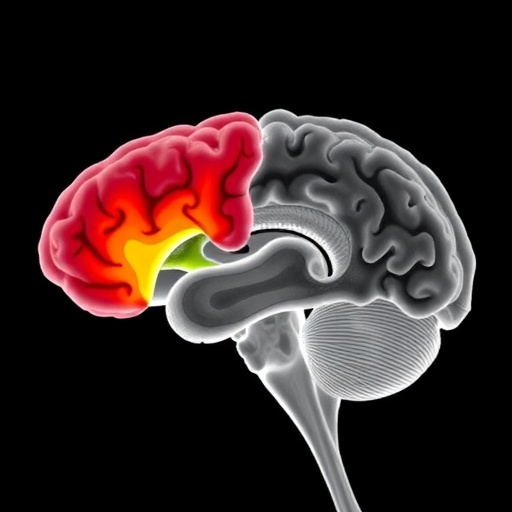
The neural data helped clarify where this impairment may emerge. Reduced activity was observed in temporal brain regions at mid- to late-latency intervals, and there was also a trend toward alterations in posterior parietal cortex (PPC) activity. These time windows are commonly associated with higher-order processing rather than immediate sensory encoding.

The authors interpret the combination of findings as evidence of aberrant multisensory integration. Such integration is essential for maintaining a unified body representation that aligns tactile input with broader bodily signals. When integration falters, the brain may fail to build or sustain the stable sense of “body coherence” that underpins normal perception.

This perceptual instability may be clinically relevant for body image disturbances in AN, including body image distortions (BID). If tactile information cannot be integrated seamlessly, the perceptual component of BID could persist or become reinforced over time.

Crucially, the study frames tactile perception as a promising target for refining body-image–focused interventions. The results suggest that treatment optimization could involve strengthening tactile body awareness and improving how tactile inputs are integrated into a multisensory body model.

One proposed direction is an adolescent AN-specific body psychotherapy approach grounded in Concentrative Movement Therapy. The concept involves training that first enhances conscious tactile, interoceptive, and proprioceptive perception, then links these experiences to the cognitive-affective aspects of body image, including openness in interpersonal contexts.

Overall, the findings add viral-level momentum to a mechanism-driven view of AN: not only “what” patients feel, but “how” their brain binds touch into a coherent self. By targeting multisensory integration, next-generation interventions may better disrupt the feedback loops sustaining distorted body representation.

Subject of Research: Tactile stimulus discrimination and neural processing in adolescents with anorexia nervosa

Article Title: Tactile stimulus discrimination in adolescents with anorexia nervosa: a behavioral and neurophysiological study

Article References: Lammers, J.R., Romero Frausto, H., Dalhoff, A. et al. Tactile stimulus discrimination in adolescents with anorexia nervosa: a behavioral and neurophysiological study. Transl Psychiatry 16, 379 (2026). https://doi.org/10.1038/s41398-026-04264-3

DOI: 10.1038/s41398-026-04264-3

Keywords: anorexia nervosa; tactile discrimination; multisensory integration; posterior parietal cortex; temporal cortex; body image distortions

Tags: adolescent body perception and sensory discriminationbehavioral versus neural responses in anorexia nervosabrain regions involved in tactile perceptionneural correlates of tactile stimulus differentiationneurobehavioral approaches to body perceptionneurophysiological study of touch processingsensory processing impairments in anorexia nervosasomatosensory system dysfunction in adolescentstactile perception andtactile perception deficits in anorexia nervosatactile sensory processing in eating disorderstemporal and parietal brain activity in tactile discrimination
Share26Tweet16
Previous Post

Upwind Land Effects Drive Soil Moisture Variability Across South America

Next Post

Rapid path to antibiotic resistance accelerates spread and treatment failures

Related Posts

Early Adversity Tunes Brain and Behavior’s Oxytocin Response in Altruism
Psychology & Psychiatry

Early Adversity Tunes Brain and Behavior’s Oxytocin Response in Altruism

July 28, 2026
Brain Networks and Peripheral Biomarkers Identified for Major Depressive Disorder
Psychology & Psychiatry

Brain Networks and Peripheral Biomarkers Identified for Major Depressive Disorder

July 27, 2026
Connectome gradient changes linked to rumination and altered in depression
Psychology & Psychiatry

Connectome gradient changes linked to rumination and altered in depression

July 27, 2026
Gut microbiome shift links anhedonia and sensation-seeking in prodromal Parkinson’s mice
Psychology & Psychiatry

Gut microbiome shift links anhedonia and sensation-seeking in prodromal Parkinson’s mice

July 27, 2026
Autism and social anxiety linked to submissive behavior and larger amygdala
Psychology & Psychiatry

Autism and social anxiety linked to submissive behavior and larger amygdala

July 27, 2026
Lifestyle Factors and BrainAGE Linked to Depression in Adults
Psychology & Psychiatry

Lifestyle Factors and BrainAGE Linked to Depression in Adults

July 27, 2026
Next Post
Rapid path to antibiotic resistance accelerates spread and treatment failures

Rapid path to antibiotic resistance accelerates spread and treatment failures

  • Mothers who receive childcare support from maternal grandparents show more

    Mothers who receive childcare support from maternal grandparents show more parental warmth, finds NTU Singapore study

    27656 shares
    Share 11059 Tweet 6912
  • University of Seville Breaks 120-Year-Old Mystery, Revises a Key Einstein Concept

    1061 shares
    Share 424 Tweet 265
  • Bee body mass, pathogens and local climate influence heat tolerance

    682 shares
    Share 273 Tweet 171
  • Researchers record first-ever images and data of a shark experiencing a boat strike

    546 shares
    Share 218 Tweet 137
  • Groundbreaking Clinical Trial Reveals Lubiprostone Enhances Kidney Function

    531 shares
    Share 212 Tweet 133
Science

Embark on a thrilling journey of discovery with Scienmag.com—your ultimate source for cutting-edge breakthroughs. Immerse yourself in a world where curiosity knows no limits and tomorrow’s possibilities become today’s reality!

RECENT NEWS

  • Vector-Based Olfactory Navigation Strategy Revealed in Drosophila Flies
  • Long COVID and ME/CFS Alter Skeletal Muscle Properties Differently Than Bed Rest
  • Tracing Mantle Plume Influence on Ni-Cu-PGE Sulfide Ore Formation
  • Chemical distance model may predict which trace elements plants absorb

Categories

  • Agriculture
  • Anthropology
  • Archaeology
  • Athmospheric
  • Biology
  • Biotechnology
  • Blog
  • Bussines
  • Cancer
  • Chemistry
  • Climate
  • Earth Science
  • Editorial Policy
  • Marine
  • Mathematics
  • Medicine
  • Pediatry
  • Policy
  • Psychology & Psychiatry
  • Science Education
  • Social Science
  • Space
  • Technology and Engineering

Subscribe to Blog via Email

Enter your email address to subscribe to this blog and receive notifications of new posts by email.

Join 5,146 other subscribers

© 2025 Scienmag - Science Magazine

Welcome Back!

Login to your account below

Forgotten Password?

Retrieve your password

Please enter your username or email address to reset your password.

Log In
No Result
View All Result
  • HOME
  • SCIENCE NEWS
  • CONTACT US

© 2025 Scienmag - Science Magazine

Discover more from Science

Subscribe now to keep reading and get access to the full archive.

Continue reading
