


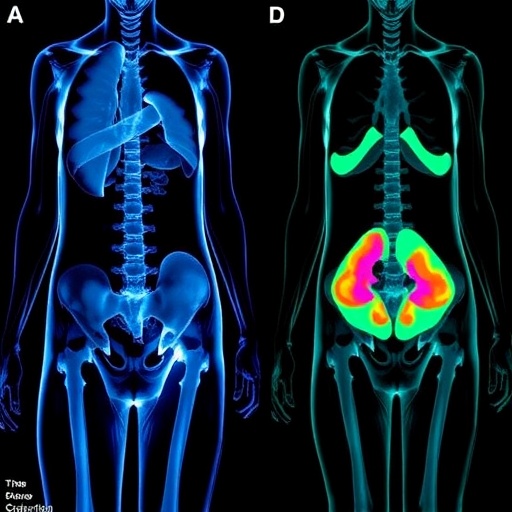
In a groundbreaking advancement in metabolic medicine, researchers at the Medical University of Vienna have utilized an innovative whole-body positron emission tomography/computed tomography (PET/CT) imaging framework to reveal the extensive metabolic transformation triggered by bariatric surgery. This state-of-the-art imaging technique, employing radiolabeled glucose analog [18F]fluorodeoxyglucose (18F-FDG), has illuminated the profound metabolic remodeling across numerous organs, offering unparalleled insights into how bariatric surgery reshapes the body’s internal metabolic landscape beyond mere weight loss.
For decades, bariatric surgery has served as a cornerstone treatment for obesity, delivering sustained weight reduction and mitigating related comorbidities such as diabetes and cardiovascular disease. However, until now, the precise systemic metabolic changes induced by these surgical interventions remained largely elusive. The advent of this novel PET/CT-based investigative approach addresses this gap by simultaneously quantifying metabolic activity across a broad spectrum of tissues, highlighting coordinated organ responses that contribute to metabolic recovery.
The study retrospectively analyzed 32 individuals diagnosed with obesity, who underwent either laparoscopic sleeve gastrectomy or one-anastomosis gastric bypass—a pair of commonly employed bariatric procedures. Whole-body 18F-FDG PET/CT scans were performed preoperatively and again at a 12-month postoperative interval. This design allowed for a comprehensive comparison of metabolic alterations in diverse tissues including subcutaneous and visceral adipose depots, liver, pancreas, spleen, adrenal glands, and skeletal muscle.
Quantitative analysis of 18F-FDG uptake demonstrated a significant decline in glucose metabolism within adipose tissue compartments—both subcutaneous and visceral—as well as in the liver, pancreas, and spleen. These reductions reflect diminishing metabolic stress and inflammatory activity, consistent with clinical improvements reported in patients’ glycemic control and lipid profiles. Intriguingly, skeletal muscle metabolism exhibited complex remodeling, potentially indicating enhanced insulin sensitivity and muscle functionality after weight loss surgery.
Perhaps most striking was the observation of an apparent increase in colonic volume at the 12-month mark, pointing to a potential compensatory adaptation in gastrointestinal anatomy and function. This expansion may influence nutrient absorption dynamics and warrants further investigation. Moreover, the network analysis of PET data revealed increased metabolic connectivity between different organs post-surgery, signifying a more synchronized, systemic metabolic state rather than isolated organ changes.
These multidimensional metabolic insights provide compelling evidence that bariatric surgery unleashes a holistic metabolic recalibration, underscoring the notion that organ systems adapt in concert to restore metabolic homeostasis. This data challenges the traditional focus on singular biomarkers and weight parameters by emphasizing integrative organ-level metrics that better capture the complexity of obesity treatment outcomes.
Clinicians stand to benefit immensely from these findings, as whole-body molecular imaging could serve as a vital tool for tailoring postoperative care. By visualizing metabolic recovery across multiple tissues, healthcare providers can optimize monitoring strategies, anticipate complications, and customize therapeutic interventions—transitioning from a one-size-fits-all paradigm toward truly personalized metabolic medicine.
While pharmacological advances, such as glucagon-like peptide 1 (GLP-1) receptor agonists, have recently gained prominence in managing obesity, many patients continue to elect bariatric surgery for its durable benefits and reduced reliance on chronic medication. The novel imaging approach described herein holds promise for enhancing the safety and efficacy of these surgical treatments by illuminating the intricate biological shifts occurring during the critical healing and adaptation periods.
From a technological perspective, relying on 18F-FDG PET/CT imaging leverages the high sensitivity of positron emission tomography combined with anatomical precision from computed tomography, enabling precise spatial localization and quantification of metabolic signals. This synergistic imaging modality opens pathways for broader applications beyond obesity, including the study of metabolic diseases, cancer metabolism, and aging.
The researchers emphasize that interpreting postoperative metabolic changes necessitates multifactorial analysis, integrating PET imaging results with comprehensive laboratory assessments of glycemic indices, lipid panels, endocrine markers, and inflammatory parameters. Such a multidisciplinary approach is essential to unravel the complex biochemical networks underpinning the observed structural and functional organ modifications.
Critically, this study’s longitudinal design allowed for the assessment of sustained metabolic impact one year following surgery, providing more reliable data on long-term physiological adaptation rather than transient postoperative fluctuations. The findings underscore the dynamic but persistent nature of the metabolic recalibration prompted by weight loss interventions.
This landmark research was detailed in Abstract 261206, titled “Evaluation of organic metabolic profiling alternation assessed by [18F]FDG PET/CT in obese patients before and after bariatric surgery,” and presented at the Society of Nuclear Medicine and Molecular Imaging’s 2026 Annual Meeting. The collaborative effort included experts in nuclear medicine, endocrinology, surgery, and biomedical imaging, reflecting the multidisciplinary challenges inherent in obesity treatment research.
In conclusion, this pioneering work spotlights the immense potential of whole-body PET/CT imaging as a transformative modality for understanding and optimizing metabolic health post-bariatric surgery. By mapping the metabolic trajectory across organ systems, clinicians and researchers gain a powerful vantage point to decipher obesity’s complex biology and tailor interventions for maximal therapeutic benefit. This integrated imaging strategy heralds a new era in metabolic medicine, one where precision and personalization drive superior patient outcomes across diverse obesity phenotypes.
News Publication Date: Not explicitly provided; related to Society of Nuclear Medicine and Molecular Imaging 2026 Annual Meeting.
Web References:
Cite Scienmag News
Ophelia Keating. (June 1, 2026). PET Imaging Reveals Whole-Body Metabolic Shifts Following Bariatric Surgery. Scienmag. https://scienmag.com/pet-imaging-reveals-whole-body-metabolic-shifts-following-bariatric-surgery/
Ophelia Keating. "PET Imaging Reveals Whole-Body Metabolic Shifts Following Bariatric Surgery." Scienmag, 1 June 2026, https://scienmag.com/pet-imaging-reveals-whole-body-metabolic-shifts-following-bariatric-surgery/. Accessed 3 September 2026.
Ophelia Keating. "PET Imaging Reveals Whole-Body Metabolic Shifts Following Bariatric Surgery." Scienmag. June 1, 2026. https://scienmag.com/pet-imaging-reveals-whole-body-metabolic-shifts-following-bariatric-surgery/


