


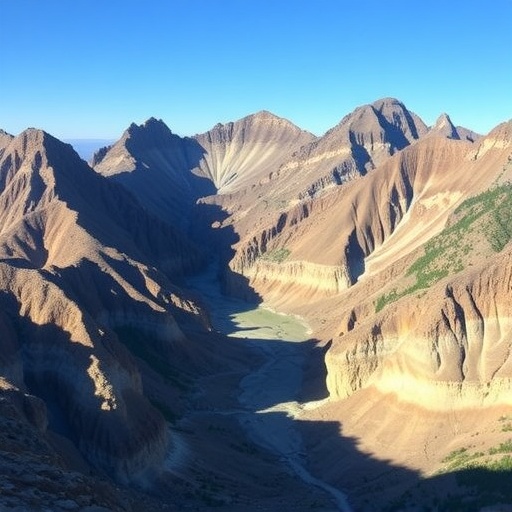
In a breakthrough study poised to reshape our understanding of natural energy sources, researchers have uncovered significant links between erosion processes and the generation of natural hydrogen gas beneath mountain ranges. This investigation, spearheaded by an international team of geoscientists from the University of Lausanne (Unil) and the GFZ Helmholtz Centre for Geosciences, reveals the complex interplay between tectonic activity, erosion dynamics, and subsurface chemical reactions leading to the formation and storage of this promising clean energy resource.
Hydrogen, an energy carrier considered pivotal in the global transition away from fossil fuels, has traditionally been produced through methods that often involve high emissions or costly renewable energy inputs. The discovery that vast quantities of natural hydrogen could be sequestered beneath well-known mountain belts such as the Alps and the Pyrenees offers a tantalizing glimpse into a future where clean energy might be sourced directly from the Earth’s geological processes. The study, published in the Journal of Geophysical Research: Solid Earth, delves deep into the geological mechanisms underpinning hydrogen generation and underscores the ambivalent role of erosion.
Mountain ranges are formed through the dynamic movements of tectonic plates, which initially involve rifting and the creation of basins, followed by compressional forces that uplift and fold rocks into towering peaks. Crucially, this geological narrative brings mantle rocks, rich in minerals reactive to water, closer to the surface over millions of years. When these ultramafic mantle rocks undergo serpentinization—a chemical transformation initiated by water-rock interactions under specific thermal conditions—they release molecular hydrogen (H₂). The accumulation of this hydrogen in porous subsurface rock formations creates reservoirs that have the potential to serve as natural hydrogen sources, much like how oil and gas accumulate in conventional hydrocarbon systems.
However, the journey from mantle upwelling to viable hydrogen reservoirs is not straightforward. The study emphasizes that erosion, the gradual wearing away of surface rock by natural agents such as wind, water, and ice, exerts a dual influence on hydrogen accumulation. On one hand, erosion facilitates the exposure of mantle rocks to the optimal pressure and temperature conditions for serpentinization by removing overlying material and promoting uplift. Yet, if erosion acts too aggressively or rapidly, it can hinder hydrogen formation by disrupting reservoir integrity or altering subsurface conditions beyond the favorable thermal window required for hydrogen-producing reactions.
This intricate balance renders erosion a critical control factor in natural hydrogen potential. Through the employment of sophisticated computational models simulating tectonic plate movements and surface processes over geological time scales, the research team was able to quantify how varying erosion rates impact hydrogen genesis in orogenic settings. Their models demonstrate that moderate erosion rates, characteristic of certain parts of the Pyrenees and the Alps, strike the right equilibrium that sustains hydrogen production and preserves subsurface reservoirs.
Furthermore, the study highlights the importance of geological history, particularly prolonged phases of tectonic extension that precede mountain building. These extension phases create rift basins and facilitate the initial emplacement of mantle rocks at shallower depths, establishing precursory conditions favorable for later hydrogen generation. Such geological timelines are crucial as they set the stage for subsequent orogenic activities and erosion to shape hydrogen accumulations effectively.
Comparative analyses provided by the research give insight into why different mountain ranges vary in their hydrogen prospects. The Pyrenees, according to the model outputs, exhibit particularly favorable conditions due to their unique tectonic and erosion history, positioning them as prime candidates for exploration. Meanwhile, the Alps also show significant potential, albeit with more complex erosion patterns that may require targeted investigation to identify optimal exploitation sites. By contrast, other ranges such as the Betic Cordillera in Spain display less promising profiles, underscoring the necessity of region-specific studies.
The implications of this research extend far beyond academic curiosity. With hydrogen poised to become a cornerstone of future clean energy systems, identifying large, natural reservoirs could revolutionize how we source hydrogen, bypassing the environmental drawbacks of current production methods. Already, small-scale hydrogen extraction is underway in places like Mali, demonstrating the feasibility of tapping into Earth-generated hydrogen. However, scaling such operations demands a thorough understanding of the geological frameworks that govern hydrogen presence and accessibility.
This pioneering study also serves as a call to the scientific community and energy sector to deepen exploration efforts in mountain systems that meet the outlined geological and erosion-related criteria. By advancing geophysical surveys, drilling programs, and refined modeling approaches, the path to harnessing natural hydrogen on an industrial scale could be significantly accelerated. Such an endeavor would align with global objectives to reduce carbon emissions and diversify the energy mix with sustainable alternatives.
Moreover, the research underscores the valuable intersection of geodynamics, geochemistry, and surface processes in shaping subsurface energy potential. It demonstrates how integrated, interdisciplinary approaches employing advanced computational tools can uncover subtle yet critical factors influencing energy resource formation. These insights advocate a shift towards more holistic exploration paradigms that consider landscape evolution as an integral component of resource evaluation.
As lead author Frank Zwaan from the University of Lausanne articulates, the findings cast new light on the complexity of natural hydrogen systems and offer strategic guidance on where to direct future exploration efforts. He emphasizes that while the current results are promising, continued research is vital to unravel the full spectrum of variables at play and to translate scientific knowledge into practical energy solutions.
Ultimately, this study charts a compelling roadmap to a cleaner energy future powered from the depths of our planet’s geological machinery. By revealing the nuanced relationship between erosion and hydrogen production in mountain belts, it opens the door to a potentially transformative source of renewable energy, hidden beneath some of the world’s most iconic landscapes. The promise of tapping natural hydrogen aligns perfectly with the urgent demands of the climate crisis, offering hope for a sustainable, low-carbon energy economy.
News Publication Date: 18-May-2026
Web References:
http://dx.doi.org/10.1029/2025JB033255
References:
F. Zwaan, A. C. Glerum, S. Brune, D. A. Vasey, J. B. Naliboff, G. Manatschal, and E. C. Gaucher, “The Impact of Erosion Efficiency on Rift‐Inversion Orogen Evolution: Implications for Serpentinization‐Derived Natural H₂ Resources,” Journal of Geophysical Research: Solid Earth, 2026.
Cite Scienmag News
Violet Maxwell. (May 18, 2026). New Study Reveals Connection Between Erosion and Natural Hydrogen Potential in Mountain Ranges. Scienmag. https://scienmag.com/new-study-reveals-connection-between-erosion-and-natural-hydrogen-potential-in-mountain-ranges/
Violet Maxwell. "New Study Reveals Connection Between Erosion and Natural Hydrogen Potential in Mountain Ranges." Scienmag, 18 May 2026, https://scienmag.com/new-study-reveals-connection-between-erosion-and-natural-hydrogen-potential-in-mountain-ranges/. Accessed 4 September 2026.
Violet Maxwell. "New Study Reveals Connection Between Erosion and Natural Hydrogen Potential in Mountain Ranges." Scienmag. May 18, 2026. https://scienmag.com/new-study-reveals-connection-between-erosion-and-natural-hydrogen-potential-in-mountain-ranges/


