


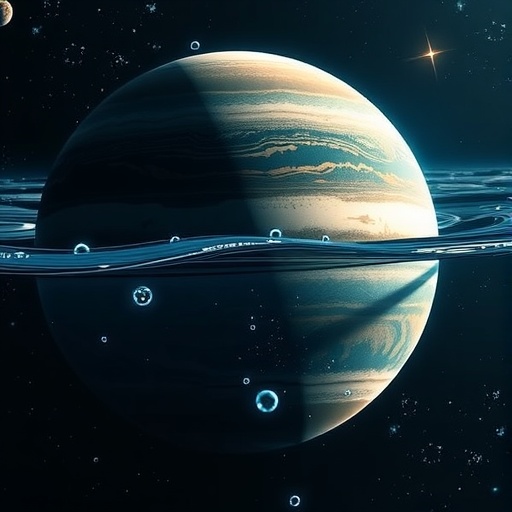
In the ongoing quest to identify habitable worlds beyond our solar system, a groundbreaking study from the University of Washington challenges long-standing assumptions about the viability of desert-like planets. This research introduces a pivotal constraint on the potential for life on Earth-sized exoplanets, highlighting how sparse water availability could unravel the geologic mechanisms vital to climate stability and habitability.
Habitability studies have traditionally focused on the “habitable zone” — the circumstellar region where conditions permit liquid surface water to exist. However, this zone encompasses a diverse array of planets differing vastly in surface water inventory. Although billions of exoplanets populate our galaxy, only a fraction aligns with life-supporting criteria. This study forces the scientific community to refine these criteria by elucidating the minimum water thresholds necessary to sustain fundamental geologic cycles.
The researchers concentrated on understanding the interplay between surface water volumes and the geologic carbon cycle, a process crucial for maintaining atmospheric equilibrium on rocky planets. The carbon cycle modulates greenhouse gases by balancing volcanic CO2 emissions with carbon sequestration through weathering reactions. This delicate equilibrium regulates surface temperature, thus sustaining liquid water and, by extension, life.
Water is central not solely as a solvent for life but as a driver of complex geochemical interactions. Rainfall facilitates chemical weathering by dissolving carbon dioxide into acidic rainwater, which interacts with silicate minerals, forming carbonate compounds transported to oceans and subducted into the mantle via plate tectonics. This cycle operates over millions of years, recycling carbon and stabilizing planetary climates. The disruption of this cycle due to insufficient surface water could spell ecological doom.
The University of Washington team employed advanced simulation models to scrutinize arid terrestrial planets with fractional oceanic coverage ranging from 20% down to near-zero equivalents of Earth’s oceanic water content. These simulations integrated finely tuned evaporation and precipitation dynamics, driven by solar irradiation and atmospheric circulation, factors often overlooked in previous models optimized for cooler, wetter planets.
Their results unveiled a critical threshold: planets retaining less than 20-50% of Earth’s oceanic water could experience a breakdown in weathering efficiency. With diminished rainfall, the carbon-sink capacity of the surface plummets, and volcanic CO2 accumulates unchecked in the atmosphere. This accumulation triggers runaway greenhouse warming, evaporating remaining surface water and rendering the planet inhospitable.
This insight recalibrates the framework within which astronomers assess nearby and distant exoplanets. While many rocky worlds reside in their star’s habitable zone, their hydration status may decisively negate biological prospects. The study posits that numerous arid planets, once considered plausible life havens, are unlikely to sustain the persistent water cycles and climate regulation essential for habitability.
A compelling terrestrial analogy reinforcing these findings is Venus, often dubbed Earth’s twin due to its comparable size and initial formation conditions. Venus’s present environment is a sweltering inferno, with surface temperatures exceeding 450 degrees Celsius and atmospheric pressures crushing enough to equal the weight of multiple large marine mammals per square inch. This extreme disparity is hypothesized to result from Venus’s inability to sustain a balanced carbon cycle owing to insufficient water inventories.
The paper suggests that Venus, positioned closer to the sun, began its existence with less surface water, perturbing its geologic carbon cycle. This imbalance led to escalating temperatures, runaway greenhouse effects, and the irreversible loss of water, eradicating any potential for life as we know it. Understanding this trajectory provides crucial insights into planetary evolution and atmospheric dynamics.
One of the most striking implications of this research is the emphasis on the geologic carbon cycle as a keystone for planetary habitability in arid environments. The carbon cycle’s role transcends basic climate control; it acts as a planetary thermostat, aligning geological, atmospheric, and hydrological processes to foster conditions amenable to life. Disrupting this cycle by moisture scarcity inherently undermines habitability.
The team’s innovative approach combined theoretical geophysics, atmospheric chemistry, and planetary science to construct a multifaceted model capturing the interplay of geological and climatic feedbacks. This model represents a significant leap forward in exoplanetary science, opening avenues for more nuanced interpretations of observational data from future space telescopes and planetary missions.
As forthcoming missions target Venus to decode its enigmatic history and assess its potential for past life, these findings offer a timely framework. By examining an accessible analog, scientists can validate simulation results and refine their understanding of terrestrial planets’ climatic pasts, thereby enhancing search strategies for habitable exoplanets.
In essence, this study forms a crucial bridge linking planetary geodynamics with astrobiology, underscoring that the mere presence of water does not guarantee life-friendly conditions. The interplay of water volumes, carbon cycling, and atmospheric processes demands careful consideration when sifting through the cosmic inventory for living worlds, reshaping our perception of habitable zones.
This research, underpinned by funding from the National Science Foundation, NASA’s Astrobiology Program, and the Alfred P. Sloan Foundation, enriches our understanding of planetary habitability and highlights the intricate boundaries between planets that foster life and those condemned to barren extremes.
News Publication Date: 15-Apr-2026
Web References:
- Study DOI: 10.3847/PSJ/ae4faa
- NASA Exoplanet Exploration: https://science.nasa.gov/exoplanets/
- Habitable Zone Information: https://science.nasa.gov/exoplanets/habitable-zone/
References:
White-Gianella, H., Krissanen-Totton, J. (2026). Carbon Cycle Imbalances on Arid Terrestrial Planets with Implications for Venus, Planetary Science Journal. https://iopscience.iop.org/article/10.3847/PSJ/ae4faa
Keywords
exoplanets, habitability, geologic carbon cycle, surface water, arid planets, Venus analog, runaway greenhouse effect, planetary climate, atmospheric CO2, carbon sequestration, planetary science, astrobiology
Cite Scienmag News
Grant Pearson. (April 15, 2026). Planets Require Greater Amounts of Water to Sustain Life, New Research Reveals. Scienmag. https://scienmag.com/planets-require-greater-amounts-of-water-to-sustain-life-new-research-reveals/
Grant Pearson. "Planets Require Greater Amounts of Water to Sustain Life, New Research Reveals." Scienmag, 15 April 2026, https://scienmag.com/planets-require-greater-amounts-of-water-to-sustain-life-new-research-reveals/. Accessed 4 September 2026.
Grant Pearson. "Planets Require Greater Amounts of Water to Sustain Life, New Research Reveals." Scienmag. April 15, 2026. https://scienmag.com/planets-require-greater-amounts-of-water-to-sustain-life-new-research-reveals/


