


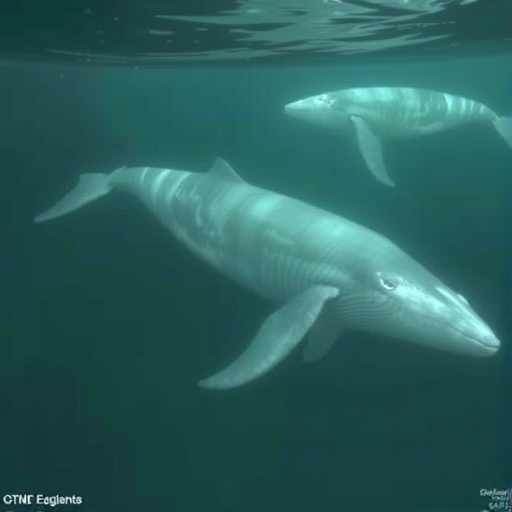
Gray whales (Eschrichtius robustus) embark on one of the longest migrations of any mammal, traveling between the productive feeding grounds of the Arctic and the warm, sheltered lagoons of Baja California, Mexico. Traditionally, their migratory route bypassed heavily trafficked regions like San Francisco Bay, where human vessel traffic is intense and environmental conditions differ significantly from their usual habitats. However, recent observations reveal a concerning new pattern: gray whales are increasingly venturing into these perilous waters, likely as a response to disruptions in their traditional feeding ecosystem. This unprecedented change has profound implications for the species, with new research underscoring a distressing increase in mortality linked directly to these altered behaviors.
Scientists from the Marine Mammal Center and the California Academy of Sciences set out to explore this alarming trend, focusing on the high death toll among gray whales detected in San Francisco Bay. Their observations paint a grim picture—nearly one-fifth of the identified whales foraging in the bay did not survive. Strikingly, vessel strikes emerged as the dominant cause of death among these animals, underscoring the lethal consequences of human activity intersecting with altered whale migratory and feeding habits. This revelation adds another dimension to the growing concern over the conservation status of gray whales, a species already impacted by rapid environmental changes.
The challenge in detecting these whales in such a busy waterway is compounded by their physical characteristics. Gray whales exhibit a low profile when surfacing, often making them hard to spot during the frequent foggy conditions prevalent in the San Francisco Bay area. This invisibility increases their vulnerability to boat strikes as vessels navigate an already congested and strategically significant maritime corridor. The Golden Gate Strait, serving as the gateway for vendors and vessels, creates a bottleneck where the paths of whales and human transportation converge dangerously.
Traditionally, gray whales sustain themselves primarily through intense feeding during their Arctic season, relying on a dense abundance of benthic invertebrates like amphipods. The warming trends and shifting oceanographic conditions associated with climate change, however, have disrupted this critical food supply. The resulting scarcity has exerted strong pressure on the whales, leading to nutritional stress and subsequent changes in migratory and foraging behaviors, as evidenced by their newfound presence within San Francisco Bay. This adaptive shift, while an attempt at survival, exposes them to new threats in an environment where they are not evolutionarily prepared to navigate.
Since 2018, sightings within the Bay have become more frequent, signaling a potential change in gray whale migratory patterns or a distress-driven exploration of alternative foraging habitats. To investigate these occurrences, researchers compiled an extensive catalogue of individual whales using both opportunistic citizen-science photographic records and systematic scientific surveys conducted between 2018 and 2025. Identification relied on unique skin markings, although natural degradation of these features posed challenges for consistent long-term tracking.
The comprehensive survey identified 114 individual gray whales within San Francisco Bay over this period. Intriguingly, the data suggest limited site fidelity; only a handful of individuals were seen repeatedly across multiple years. This low rate of return could indicate that the bay serves primarily as a temporary refuge or an emergency foraging stop for whales facing food scarcity, rather than an established alternative habitat. Observations of emaciated individuals stopping to forage in atypical environments lend credence to this theory, painting a narrative of a species struggling to adapt amid ecological uncertainty.
The mortality data are even more troubling. Over the span from 2018 to 2025, 70 gray whale carcasses were recovered in the San Francisco Bay vicinity. Of these, 30 were confirmed to have died as a result of vessel collisions, while malnutrition accounted for many other fatalities where cause of death could be determined. This high death toll among an already vulnerable population element is a stark reminder of the dire consequences linked to human-wildlife conflict in rapidly changing ecosystems.
Matching 21 of the dead whales to those catalogued alive in the Bay revealed that approximately 18% of known visiting individuals succumbed within the area, highlighting the deadly risks posed by this habitat shift. Expanding the analysis to local stranding records both inside and outside the Bay, researchers found that over 40% of deaths were associated with blunt force trauma consistent with vessel impact. These data emphasize the peril gray whales face not only from ecological shifts but also directly from anthropogenic pressures.
Addressing the conservation challenge created by this emergent threat requires urgent and multifaceted efforts. Currently, research is focused on delineating the extent of habitat usage within the Bay and identifying vessel traffic patterns that intersect with whale movements. In 2025 alone, up to 36 individual whales were documented entering the Bay, occasionally in groups exceeding ten animals. Enhanced and targeted surveys, coupled with detailed necropsy examinations, are critical to untangling the relationship between starvation and vessel collisions—whether malnourishment impairs whales’ ability to maneuver away from fast-moving boats or if these threats act independently.
Mitigation strategies range from education programs aimed at commercial vessels and ferry operators to policy measures such as adjusting ferry routes and imposing speed restrictions in high-risk areas. Previous case studies have demonstrated that such measures can significantly reduce whale mortality from vessel strikes. By integrating behavioral data with risk assessments, managers can tailor interventions to maximize protection of these majestic creatures during their unexpected sojourns in urban waters.
Scientists emphasize that while this research provides the most comprehensive analysis to date, it lacks granularity regarding daily movement patterns of individual whales within and around San Francisco Bay. Despite these limitations, the findings constitute a crucial piece of the broader puzzle concerning the rapid transformation of marine ecosystems under the influence of climate change. Gray whales are emblematic of species striving to adapt to chaotic shifts in their environments, yet their struggle reveals the fragility and complexity of this transition.
Ultimately, protecting gray whales in this newly perilous chapter of their life history demands a commitment to sustained monitoring, habitat management, and collaboration between scientists, policymakers, and maritime stakeholders. The collision of climate change effects with human maritime activity creates a perfect storm that threatens to unravel decades of conservation progress. As researchers race to understand and mitigate these evolving risks, the fate of gray whales in San Francisco Bay hangs in a precarious balance, reminding us of the intricate interconnectedness between environmental stewardship and species survival.
News Publication Date: 13-Apr-2026
Web References: https://doi.org/10.3389/fmars.2026.1775666
Cite Scienmag News
Margaret Porter. (April 13, 2026). Scientists Find That 18% of Gray Whales Entering San Francisco Bay Die There. Scienmag. https://scienmag.com/scientists-find-that-18-of-gray-whales-entering-san-francisco-bay-die-there/
Margaret Porter. "Scientists Find That 18% of Gray Whales Entering San Francisco Bay Die There." Scienmag, 13 April 2026, https://scienmag.com/scientists-find-that-18-of-gray-whales-entering-san-francisco-bay-die-there/. Accessed 4 September 2026.
Margaret Porter. "Scientists Find That 18% of Gray Whales Entering San Francisco Bay Die There." Scienmag. April 13, 2026. https://scienmag.com/scientists-find-that-18-of-gray-whales-entering-san-francisco-bay-die-there/


