


Over the past decade, European public concern for the environment has intensified, even as societies navigated migration pressures, financial shocks, and the disruptions of COVID-19. Environmental issues now rank as the third most important challenge after health and the economy, while climate change has risen from one topic among many to the dominant environmental concern across Europe.
Researchers behind a new monograph, Green European Revisited (Palgrave Macmillan Cham), analyze how attitudes evolve over time. The work extends an earlier volume by tracking whether major global “polycrises” altered what people view as urgent, and how climate change is interpreted—from abstract risk to tangible local impacts.
A central data source is the International Social Survey Programme (ISSP), comparing the 2010–2012 period with surveys collected between 2020 and 2023. The team examined whether crises diverted attention away from the environment, particularly as conflict-related information entered the data collection window after 2022.
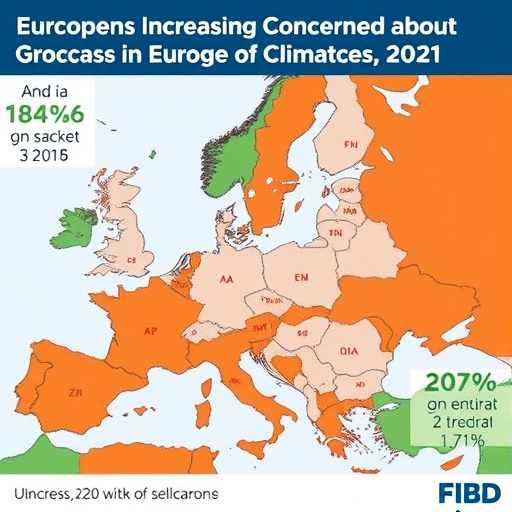
Contrary to expectations, the environment did not fall down the public agenda. Although the economy and health were top concerns in 2010, by 2020 health remained dominant while environmental salience increased, overtaking several other themes in the hierarchy of national problems. Climate change became especially prominent: about 30% of Europeans identified it as the most important environmental issue, compared with 15% in 2010.
The strongest increase in climate concern appears in Nordic countries. Iceland, in particular, shows the largest shift, rising from 13% to 43%. Elsewhere, rather than naming climate change directly, many respondents emphasized its immediate consequences—heatwaves, water shortages, and related disruptions—suggesting a shift in framing toward lived experience.
The interpretation gap helps explain cross-country differences. Climate change can be understood theoretically as a system-wide phenomenon, or empirically through observable impacts. In some regions, media and political attention increasingly connect extreme weather and ecological anomalies to climate dynamics.
Several “discourse-focusing” milestones may have sustained attention: the Paris Climate Agreement and UN Sustainable Development Goals in 2015, followed by the European Green Deal in 2019. Social mobilization—such as youth climate activism—also increased visibility, while direct exposure to heat, floods, and fires made the issue harder to ignore.
Yet awareness does not automatically translate into action. Survey evidence indicates that perceptions of personal agency matter: citizens in countries like Switzerland, the Netherlands, Austria, Germany, and Sweden more often believe they can influence outcomes and are willing to adjust behaviors. In contrast, societies such as Bulgaria, Lithuania, Czechia, Hungary, Slovakia, and Croatia show lower trust in their own agency and fewer stated intentions to change lifestyles.
Finally, the study links climate concern to broader strategic risk. It highlights economic damage through infrastructure losses, health burdens, and agricultural impacts, and notes evidence that environmental crises can raise the probability of armed conflict—especially in contexts where energy systems are still tied to fossil fuels.
Web References: https://10.1007/978-3-032-18360-6
References: 10.1007/978-3-032-18360-6
Cite Scienmag News
Sloane Callahan. (July 27, 2026). Europeans Increasingly Concerned About Climate Change. Scienmag. https://scienmag.com/europeans-increasingly-concerned-about-climate-change/
Sloane Callahan. "Europeans Increasingly Concerned About Climate Change." Scienmag, 27 July 2026, https://scienmag.com/europeans-increasingly-concerned-about-climate-change/. Accessed 4 September 2026.
Sloane Callahan. "Europeans Increasingly Concerned About Climate Change." Scienmag. July 27, 2026. https://scienmag.com/europeans-increasingly-concerned-about-climate-change/


