

Monday, July 27, 2026
Science
No Result
View All Result
  • Login
  • HOME
  • SCIENCE NEWS
  • CONTACT US
  • HOME
  • SCIENCE NEWS
  • CONTACT US
No Result
View All Result
Scienmag
No Result
View All Result
Home Science News Social Science

One in Four Teens Use Mobile Food Delivery at School

July 27, 2026
in Social Science
Reading Time: 2 mins read
0
One in Four Teens Use Mobile Food Delivery at School

One in Four Teens Use Mobile Food Delivery at School

65
SHARES
587
VIEWS
Share on FacebookShare on Twitter
ADVERTISEMENT

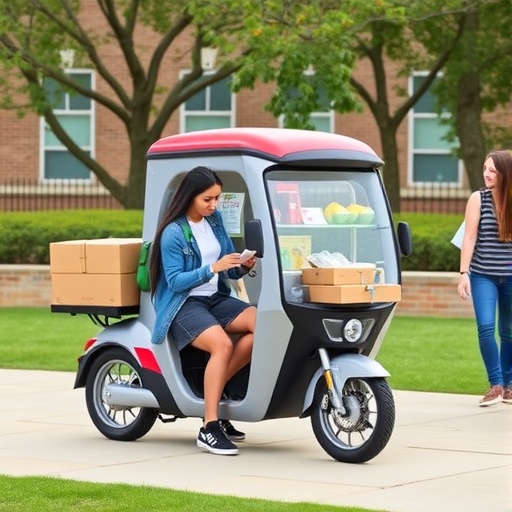
Nearly one-quarter of U.S. adolescents reported using mobile food delivery during school hours, while almost half said they use it after school, according to a national survey of 1,027 teens aged 13–17. The study, conducted online in summer 2025, suggests that smartphone-based ordering is now a routine part of how students access food and drinks around the school day.

Among teens who used delivery services, nearly 60% ordered fast foods such as pizza and burgers. More than one-third also reported purchasing sugar-sweetened beverages, including sodas. Researchers say these patterns matter because many school nutrition programs are built around healthier, regulated food options on campus.

Lead author Mika Matsuzaki, PhD, MS, MPH, argues that existing federal and state policies are designed for cafeterias and vending machines, not for foods arriving via apps from far beyond school grounds. “Technology has outpaced policy,” Matsuzaki said, describing the phone as a direct conduit between students and off-campus food outlets.

The work extends beyond national averages, revealing regional differences. Teens in the western United States were more likely to attend schools that permit mobile food delivery during school hours. Yet those students were also more likely to say they avoid using the service due to perceived high costs.

Support for allowing delivery appears relatively common: nearly half of respondents said they support the practice. However, concerns surfaced across both supporters and opponents, including potential impacts on campus learning conditions, equity, and bullying dynamics linked to app-based purchasing.

Importantly, students also flagged classroom disruption and safety risks related to increased phone use. Matsuzaki noted that adolescents rarely raise concerns about their own digital habits, and this division may indicate that students perceive delivery platforms as a “double-edged sword.”

Researchers propose a mitigation strategy focused on education and “digital nutrition navigation.” Rather than relying solely on blanket bans, schools could teach teens to plan orders, make healthier selections, and avoid impulsive purchases.

For administrators and policy makers, the study is positioned as a call for proactive conversations and guardrails that limit unhealthy influx during school hours. The authors also suggest that partnerships with delivery platforms could help nudge users toward healthier choices.

Because the findings are based on self-reported survey data, the authors emphasize limitations and call for future studies to validate the patterns in additional settings.

Matsuzaki will present the findings at NUTRITION 2026 (Food Choice, Markets, and Policy poster session) on July 27, 2026, in National Harbor, Maryland. Abstracts at the meeting are reviewed by an expert committee but are not yet equivalent to peer-reviewed publication.

Subject of Research: Mobile food delivery use among adolescents during and around school hours
Article Title: Smartphone Food Delivery Reaches the School Day, Survey Finds
News Publication Date: July 27, 2026
Web References: https://www.dropbox.com/scl/fi/7i2g66zvox6zc0c3am13h/Matsuzaki-mobile-food-delivery-abstract.pdf?rlkey=et54n89losh6izy9ecq08hl4k&dl=0; https://cdmcd.co/raWjym
References: NUTRITION 2026 meeting abstract (preliminary; not yet peer-reviewed)
Image Credits: Not provided

Keywords: adolescents, mobile food delivery, school nutrition policy, smartphones, sugar-sweetened beverages, fast food access, campus safety, digital behavior

Tags: adolescent eating habits and technologyhealth implications of mobile food delivery for teensimpact of food delivery apps on school nutritioninfluence of smartphone ordering on teen dietoff-campus food delivery to studentspolicy gaps in school nutrition regulationsregional differences in teen food delivery usageregional variations in teen food delivery usesugary beverage intake via food deliveryteen mobile food delivery during school hoursteenage dietary behaviors and technologyunhealthy fast food consumption among teens
Share26Tweet16
Previous Post

Albert Einstein World Science Award Winner Announces Breakthrough Research

Next Post

Europeans Increasingly Concerned About Climate Change

Related Posts

Anthropologists Probe Why Global Societies Once Buried the Dead at Home
Social Science

Anthropologists Probe Why Global Societies Once Buried the Dead at Home

July 27, 2026
Depression May Trap Thought: Rumination and Cognitive Disengagement Signals
Social Science

Depression May Trap Thought: Rumination and Cognitive Disengagement Signals

July 27, 2026
Reframing Late-Life Depression: Shifting Focus From Brain Damage to Plasticity
Social Science

Reframing Late-Life Depression: Shifting Focus From Brain Damage to Plasticity

July 27, 2026
Urban Mobile Green Perception Varies With Visibility and Surrounding Green Context
Social Science

Urban Mobile Green Perception Varies With Visibility and Surrounding Green Context

July 27, 2026
Extreme Weather’s Unequal Mental Health Impacts Vary Across Communities
Social Science

Extreme Weather’s Unequal Mental Health Impacts Vary Across Communities

July 27, 2026
Five Changes to Rethink Urban Heat Assessment and Action Planning
Social Science

Five Changes to Rethink Urban Heat Assessment and Action Planning

July 26, 2026
Next Post
Europeans Increasingly Concerned About Climate Change

Europeans Increasingly Concerned About Climate Change

  • Mothers who receive childcare support from maternal grandparents show more

    Mothers who receive childcare support from maternal grandparents show more parental warmth, finds NTU Singapore study

    27656 shares
    Share 11059 Tweet 6912
  • University of Seville Breaks 120-Year-Old Mystery, Revises a Key Einstein Concept

    1061 shares
    Share 424 Tweet 265
  • Bee body mass, pathogens and local climate influence heat tolerance

    682 shares
    Share 273 Tweet 171
  • Researchers record first-ever images and data of a shark experiencing a boat strike

    546 shares
    Share 218 Tweet 137
  • Groundbreaking Clinical Trial Reveals Lubiprostone Enhances Kidney Function

    531 shares
    Share 212 Tweet 133
Science

Embark on a thrilling journey of discovery with Scienmag.com—your ultimate source for cutting-edge breakthroughs. Immerse yourself in a world where curiosity knows no limits and tomorrow’s possibilities become today’s reality!

RECENT NEWS

  • Smoking Decline May Reshape Future Cancer Burden, Study Finds
  • Researchers Study Membranes to Improve Future Energy Devices
  • Survey Finds Native Americans Open to Indigenous Plant-Based Diets for Type 2 Diabetes
  • Combining phenology and temperature data to gauge overwintering wheat seedling health

Categories

  • Agriculture
  • Anthropology
  • Archaeology
  • Athmospheric
  • Biology
  • Biotechnology
  • Blog
  • Bussines
  • Cancer
  • Chemistry
  • Climate
  • Earth Science
  • Editorial Policy
  • Marine
  • Mathematics
  • Medicine
  • Pediatry
  • Policy
  • Psychology & Psychiatry
  • Science Education
  • Social Science
  • Space
  • Technology and Engineering

Subscribe to Blog via Email

Enter your email address to subscribe to this blog and receive notifications of new posts by email.

Join 5,146 other subscribers

© 2025 Scienmag - Science Magazine

Welcome Back!

Login to your account below

Forgotten Password?

Retrieve your password

Please enter your username or email address to reset your password.

Log In
No Result
View All Result
  • HOME
  • SCIENCE NEWS
  • CONTACT US

© 2025 Scienmag - Science Magazine

Discover more from Science

Subscribe now to keep reading and get access to the full archive.

Continue reading
