


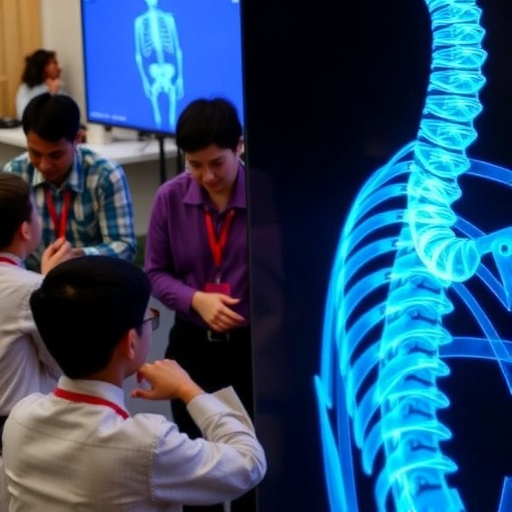
Osteosarcoma, a rare but aggressive bone cancer that most often strikes children and adolescents, is at the center of a new international effort to rethink how paediatric treatments are developed. In a report published in the British Journal of Cancer, Baxter, Montiel Equihua, Molenaar and colleagues describe a paediatric therapeutic development workshop focused on the scientific and clinical obstacles that have slowed progress against the disease. The article, dated 18 August 2026, arrives at a moment when childhood cancer researchers are increasingly questioning why advances in molecular biology have not translated into more effective therapies for relapsed osteosarcoma. Although survival for many patients with localized disease has improved through intensive multimodal care, the outlook remains far more difficult when the cancer returns or spreads, particularly to the lungs. The workshop’s central significance lies in bringing therapeutic development itself into focus: not only which drugs might work, but how researchers can move promising ideas from laboratory models into carefully designed trials for young patients.
Osteosarcoma develops when abnormal cells in bone produce immature bone tissue, and it commonly arises near the rapidly growing ends of long bones such as the femur or tibia. Its biology is unusually complex. Rather than being driven in every patient by a single dominant mutation that can be blocked with one targeted drug, osteosarcoma often carries extensive genomic instability, structural rearrangements and diverse cellular subpopulations. This heterogeneity means that two tumours that look similar under a microscope may respond very differently to treatment. Standard care generally combines chemotherapy with surgery to remove the primary tumour, and sometimes additional local treatment, but the disease can evolve under therapeutic pressure. Resistant cells may survive initial treatment, seed distant organs and later emerge as metastatic disease. For children, the challenge is compounded by the need to preserve growth, mobility, fertility, organ function and long-term quality of life. A successful paediatric therapy must therefore be effective against cancer while avoiding damage that can persist for decades.
The workshop described by the authors reflects a broader shift in oncology from simply searching for new medicines to examining the entire therapeutic development pipeline. A drug can fail to reach patients for many reasons: the biological target may not be essential in the tumour, laboratory models may not reproduce the disease accurately, clinical trials may enrol too few participants, or the chosen endpoint may not detect a meaningful benefit quickly enough. Rare cancers are especially vulnerable to these problems because individual centres see relatively few patients, making recruitment slow and international collaboration essential. In paediatric osteosarcoma, researchers must also balance urgency against caution. Children cannot be exposed casually to treatments with uncertain risks, yet delaying trials can leave families with limited options when standard therapy has failed. A workshop setting can help clinicians, laboratory scientists, trial specialists, patients and families identify these bottlenecks collectively, creating a shared framework for deciding which discoveries are ready to be tested and how they should be evaluated.
One technical issue is the translation of experimental findings into clinically relevant evidence. Traditional cancer research often relies on established cell lines grown on plastic surfaces, but these models may lose important features of the original tumour over time. Patient-derived tumour samples, three-dimensional cultures, organoids and patient-derived xenografts can preserve more of the cancer’s diversity and interactions with its surroundings. Yet every model has limitations. Organoids may not fully reproduce blood vessels or immune cells, while xenografts grown in mice may not reflect a child’s immune system or the human tumour microenvironment. The microenvironment includes stromal cells, extracellular matrix, blood vessels and immune populations that can influence invasion, metastasis and drug resistance. A credible therapeutic programme therefore requires more than a drug that kills osteosarcoma cells in a dish. It needs evidence that the treatment reaches the tumour, affects a biologically meaningful pathway, works across relevant tumour subtypes and can be combined safely with existing therapy.
The report also highlights why drug development in osteosarcoma cannot be separated from the biology of metastasis. For many patients, the primary tumour can be controlled surgically, but microscopic cancer deposits may already have travelled through the bloodstream before diagnosis. The lungs are the most common site of distant spread, and metastatic or recurrent disease remains a major cause of mortality. This creates a difficult scientific problem: a treatment may shrink the primary tumour without preventing metastatic growth, or it may show activity only in a narrow subgroup of patients. Researchers are therefore investigating immune recognition, DNA damage responses, cellular stress pathways, epigenetic regulation and the mechanisms that allow tumour cells to survive in distant tissues. Therapies may include molecularly targeted drugs, immune-based approaches, antibody-drug conjugates, cell therapies or combinations with chemotherapy and radiotherapy. Each strategy introduces new questions about dose, timing, toxicity and the biological markers that could identify children most likely to benefit.
Biomarkers are particularly important in a rare and heterogeneous cancer. A biomarker is a measurable characteristic—such as a gene alteration, protein pattern, immune signature or imaging feature—that can help predict prognosis or treatment response. Without reliable biomarkers, clinical trials may treat a biologically mixed group of patients, diluting a real effect that exists only in a smaller subset. On the other hand, requiring a highly specific biomarker can make a paediatric trial impossible if too few children qualify. The workshop’s focus on therapeutic development is therefore closely linked to trial design. Investigators need methods that can test several treatments efficiently, adapt to emerging evidence and collect high-quality biological samples without placing excessive burdens on families. Pharmacodynamic measurements, which show whether a drug is hitting its intended target, may be as important as early tumour shrinkage. In osteosarcoma, where radiographic changes can be difficult to interpret, progression-free survival, event-free survival, surgical outcomes and patient-reported quality of life may all provide complementary information.
For families, the practical meaning of this research is tied to the gap between scientific promise and available treatment. Relapsed osteosarcoma is often managed through combinations of surgery, chemotherapy and investigational therapies, but responses can be temporary and options vary between countries and institutions. Children and teenagers may also face the consequences of treatment long after a trial has ended, including impaired bone development, hearing or heart damage, reduced fertility, chronic pain and psychological effects. Paediatric therapeutic development must therefore measure more than whether a tumour disappears. It must consider function, education, independence, emotional health and the ability to participate fully in adult life. Meaningful involvement of patients and caregivers can help researchers prioritize outcomes that matter outside the clinic, improve consent materials and design less burdensome studies. Their experience can also reveal barriers that are invisible in laboratory planning, including travel, hospital time, financial pressure and the difficulty of accessing experimental treatment across national borders.
The publication arrives as precision oncology, immunotherapy and data-driven medicine generate new possibilities but also expose the limitations of conventional approaches. Osteosarcoma will not be solved by a single technology or a single laboratory, especially when its genomic landscape is so varied and the patient population is so small. Progress will depend on coordinated networks that connect tumour biology, drug discovery, surgery, imaging, pathology, statistics and long-term survivorship research. Shared databases and standardized sample collection could allow investigators to compare results across institutions rather than repeating small, disconnected studies. International cooperation may make it possible to run trials quickly enough for a rare paediatric cancer while maintaining rigorous safety monitoring. The workshop reported by Baxter and colleagues is important because it treats therapeutic development as a collective scientific problem. Its message is not that a breakthrough has already arrived, but that better coordination, stronger models and smarter trials are essential if the next generation of discoveries is to become reliable treatment for children with osteosarcoma.
Cite Scienmag News
Nathaniel Bowman. (August 18, 2026). Workshop Advances Pediatric Therapeutic Development for Osteosarcoma. Scienmag. https://scienmag.com/workshop-advances-pediatric-therapeutic-development-for-osteosarcoma/
Nathaniel Bowman. "Workshop Advances Pediatric Therapeutic Development for Osteosarcoma." Scienmag, 18 August 2026, https://scienmag.com/workshop-advances-pediatric-therapeutic-development-for-osteosarcoma/. Accessed 3 September 2026.
Nathaniel Bowman. "Workshop Advances Pediatric Therapeutic Development for Osteosarcoma." Scienmag. August 18, 2026. https://scienmag.com/workshop-advances-pediatric-therapeutic-development-for-osteosarcoma/


