


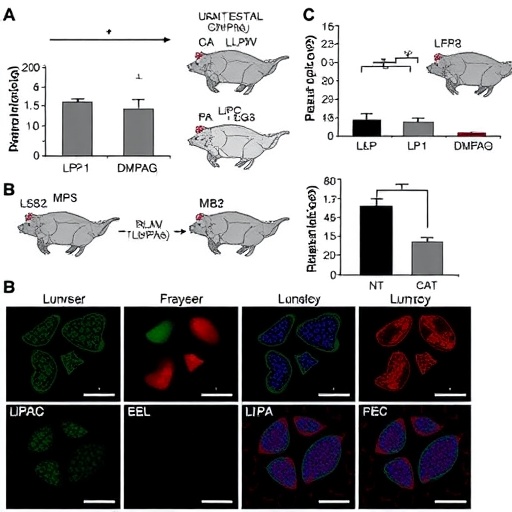
A new study in mice suggests that GLP-1 receptors, best known for their role in appetite control and metabolic regulation, may also influence one of the brain’s most intense behavioral states: defensive aggression. Researchers Y. Liu, X. Liu, X. Yin and colleagues report that activating these receptors suppresses pathological defensive aggression through a brain region called the dorsomedial periaqueductal gray, or DMPAG. The findings, published in Translational Psychiatry, point to an unexpected connection between the biological systems that regulate feeding, stress, threat responses and aggression.
Defensive aggression is not simply ordinary anger. In animals, it is a survival response that can appear when an individual perceives danger, experiences repeated threat or becomes trapped in a stressful environment. In healthy circumstances, defensive behavior is usually proportionate to the situation and fades when the threat disappears. Pathological defensive aggression, by contrast, can become excessive, poorly controlled or triggered by relatively minor stimuli. Understanding how the brain switches this response on and off is a major goal in neuroscience because abnormal aggression is associated with several psychiatric and neurological conditions.
The study focuses on glucagon-like peptide-1, commonly known as GLP-1, a signaling molecule produced in the body and brain. GLP-1 receptors are widely recognized because medications that activate them can reduce appetite, slow digestion and improve blood-glucose control. However, GLP-1 signaling is not limited to the gut or pancreas. Receptors for the molecule are also found in neural circuits involved in motivation, reward, stress, learning and emotional regulation. This broader distribution has led scientists to investigate whether GLP-1-based treatments might affect behavior as well as metabolism.
At the center of the reported mechanism is the periaqueductal gray, a column of gray matter surrounding the midbrain aqueduct. The region is a critical command center for defensive behaviors, pain control and responses to threat. Different subdivisions of the periaqueductal gray can organize distinct behavioral programs, including freezing, escape, defensive postures and aggressive reactions. The DMPAG, or dorsomedial periaqueductal gray, is particularly associated with defensive and confrontational responses. By identifying this area as part of the pathway affected by GLP-1 receptor activation, the researchers connect a metabolic signaling system with a core neural circuit for survival behavior.
The study’s central finding is that stimulating GLP-1 receptors suppresses pathological defensive aggression in mice through the DMPAG. In functional terms, the result suggests that GLP-1 signaling can act as a brake on an overactive threat-response circuit. Rather than eliminating defensive behavior altogether, the pathway may help regulate its intensity, preventing the response from escalating beyond what the situation requires. That distinction is important. An effective treatment for pathological aggression would ideally reduce maladaptive reactions without impairing an animal’s ability to detect danger or protect itself.
The discovery is especially notable because GLP-1 drugs have become some of the most visible medicines in modern biology. Originally developed for diabetes and later used for weight management, GLP-1 receptor agonists influence neural activity through several routes. Some act directly on receptor-bearing neurons, while others alter communication between peripheral organs and the brain through hormonal and vagal signals. The new findings raise the possibility that selected GLP-1-sensitive circuits could influence emotional states independently of the drugs’ effects on appetite and body weight. They also reinforce the idea that metabolism and behavior are not separate systems, but parts of a deeply interconnected biological network.
The DMPAG may be a particularly important point of convergence. Threat-related information arrives in the midbrain from networks that evaluate sensory signals, context and emotional meaning. The periaqueductal gray then helps transform that information into coordinated defensive actions by communicating with regions controlling movement, autonomic function and stress hormones. If GLP-1 receptor activation dampens activity within the DMPAG or changes its communication with upstream and downstream regions, it could reduce the neural drive underlying excessive aggression. The study therefore provides a circuit-level framework for explaining how a receptor associated with energy balance might modify a complex social and emotional behavior.
Still, results in mice cannot be translated directly into human treatment. Aggression in humans is shaped by language, social learning, trauma, personality, culture and conscious decision-making, factors that have no simple equivalent in animal models. Mouse defensive aggression is valuable for studying conserved brain mechanisms, but it represents only one component of human aggression. The specific distribution and function of GLP-1 receptors may also differ across species. Any clinical implications will require careful investigation of dose, timing, side effects, psychiatric history and the possibility that altering threat responses could affect motivation, anxiety or emotional reactivity in unexpected ways.
The findings also raise questions for future research. Scientists will need to determine which cell types in the DMPAG carry GLP-1 receptors, how their activity changes during defensive encounters and whether the pathway interacts with neurotransmitters such as serotonin, dopamine, glutamate or gamma-aminobutyric acid. It will also be important to test whether GLP-1 receptor activation affects other forms of aggression, including offensive aggression, and whether its effects depend on sex, age, stress exposure or previous experience. For now, the study offers a striking new perspective: a receptor best known for controlling hunger may also help the brain decide when a defensive response has gone too far.
Cite Scienmag News
Drew Townsend. (August 18, 2026). GLP-1 Receptor Activation Suppresses Pathological Defensive Aggression Through DMPAG in Mice. Scienmag. https://scienmag.com/glp-1-receptor-activation-suppresses-pathological-defensive-aggression-through-dmpag-in-mice/
Drew Townsend. "GLP-1 Receptor Activation Suppresses Pathological Defensive Aggression Through DMPAG in Mice." Scienmag, 18 August 2026, https://scienmag.com/glp-1-receptor-activation-suppresses-pathological-defensive-aggression-through-dmpag-in-mice/. Accessed 3 September 2026.
Drew Townsend. "GLP-1 Receptor Activation Suppresses Pathological Defensive Aggression Through DMPAG in Mice." Scienmag. August 18, 2026. https://scienmag.com/glp-1-receptor-activation-suppresses-pathological-defensive-aggression-through-dmpag-in-mice/


