


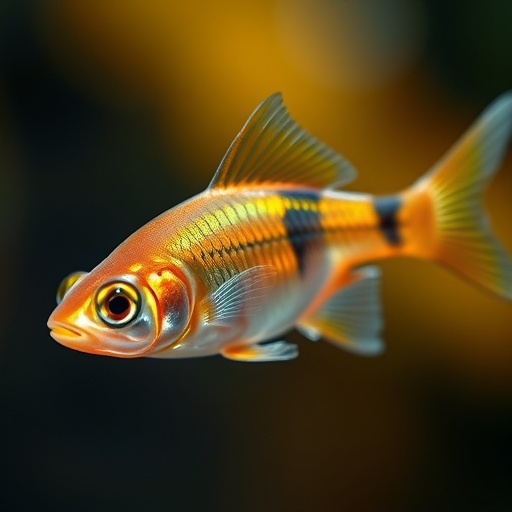
Zebrafish, a small freshwater species that has become one of biomedical science’s most versatile laboratory models, may be poised for a new role: helping scientists predict how emerging contaminants will affect wild animals and entire ecosystems. A new perspective published in New Contaminants argues that the extraordinary biological detail generated by zebrafish experiments will have limited value for environmental protection unless researchers can reliably translate laboratory observations into ecological consequences. The paper focuses on a central problem in modern toxicology: a chemical may alter genes, cells, organs or behavior in a controlled experiment, yet determining whether those changes will reduce survival, reproduction or population stability in nature remains difficult.
The challenge is becoming increasingly urgent as environmental monitoring reveals a growing range of contaminants that were not traditionally included in chemical risk assessments. Per- and polyfluoroalkyl substances, widely known as PFAS, can persist for years or decades and have been detected in water, sediment and wildlife. Microplastics may transport chemical additives and other pollutants through food webs, while pharmaceuticals released through wastewater can affect organisms at concentrations far below those associated with immediate toxicity. Nanomaterials introduce additional uncertainty because their size, surface chemistry and ability to interact with biological molecules can produce effects that differ from those of conventional chemicals. Together, these pollutants create a moving target for regulators and ecologists.
Raymond W.M. Kwong of York University, author of the perspective, describes zebrafish as an exceptionally powerful system for investigating the mechanisms through which contaminants interfere with living organisms. Zebrafish embryos develop rapidly outside the mother and are transparent during early life stages, allowing researchers to observe organ formation, blood circulation and behavioral responses in real time. Their genome is well characterized, and genetic tools can be used to disable, modify or track the activity of specific genes. Because large numbers of embryos can be studied under carefully controlled conditions, investigators can compare multiple concentrations, exposure periods and chemical mixtures while collecting data that would be difficult or impossible to obtain from larger vertebrates.
Modern zebrafish toxicology goes far beyond recording whether an animal survives. High-throughput sequencing can reveal changes in gene expression, while proteomics and metabolomics can identify disturbances in proteins and biochemical pathways. Functional imaging can show how contaminants alter neural activity, heart performance or movement. Electrophysiological measurements can detect disruptions in nerve and muscle signaling, and gene-editing techniques can help establish whether a particular molecular pathway is responsible for an observed effect. These methods allow scientists to build mechanistic chains that connect exposure to a molecular initiating event, cellular dysfunction, organ impairment and, potentially, altered behavior.
Yet the same experimental precision that makes zebrafish valuable can also create a misleading sense of certainty. Toxicological outcomes may vary according to genetic strain, developmental stage, sex, nutritional condition and prior exposure history. A chemical that produces a strong response in embryos may behave differently in juveniles or adults. The route of exposure also matters: laboratory animals may absorb contaminants directly from water, while wild fish encounter pollutants through water, sediments, prey and maternal transfer. Differences in metabolism, immune function and life-history strategy can further separate the response of zebrafish from that of other species, including fish that occupy the same ecosystems.
Natural environments add another layer of complexity. Laboratory studies generally isolate variables such as temperature, oxygen concentration, acidity and salinity, enabling researchers to identify the effects of a single chemical under stable conditions. Wild organisms, by contrast, experience fluctuating conditions and simultaneous exposure to many substances. Heat stress can change metabolic rate and increase the toxicity of a contaminant. Low oxygen may make it harder for an exposed fish to compensate for impaired heart or gill function. Mixtures can interact in additive, synergistic or antagonistic ways, meaning that the combined effect may be greater than, equal to or less than the sum of individual exposures. These environmental factors can determine whether a molecular disturbance remains harmless or becomes a threat to survival and reproduction.
To help close the gap between laboratory evidence and ecological prediction, Kwong proposes a framework called Zebrafish Predictive Assessment for Translational Health, or Z-PATH. The four-tiered strategy begins with methodological standardization, encouraging researchers to report experimental conditions in sufficient detail and to reduce unnecessary variation between laboratories. The next tier involves mechanistic characterization, in which molecular and cellular changes are connected to physiological functions. Environmental calibration then places laboratory concentrations and exposure scenarios in the context of levels actually measured in water, sediment, food or tissues. The final tier focuses on cross-species extrapolation, using comparative biology, ecological information and computational models to estimate how findings may apply beyond zebrafish.
A key feature of the proposed approach is its emphasis on biological performance rather than isolated molecular signals. Changes in gene activity can be early warnings, but they do not automatically indicate ecological harm. To become meaningful for risk assessment, they must be linked to outcomes such as impaired swimming, altered feeding, delayed development, reduced fertility or diminished ability to escape predators. These individual effects can then be incorporated into population models that examine recruitment, growth and long-term persistence. Computational tools, including toxicokinetic and toxicodynamic models, can help describe how contaminants move through an organism and how internal concentrations produce biological responses. Such models may also reduce the need for extensive animal testing by identifying the most informative experiments.
The perspective calls for environmental toxicology to move beyond simply asking whether a substance causes an effect in a laboratory species. The more important question is when, and under what conditions, that effect can be trusted as a predictor of damage in the real world. Zebrafish are unlikely to replace field studies, monitoring programs or experiments involving ecologically relevant species. Instead, their greatest value may lie in serving as a mechanistic bridge: revealing the biological pathways affected by emerging contaminants, identifying sensitive stages of development and guiding targeted studies in other organisms. If Z-PATH can be implemented consistently, the model could help transform vast amounts of molecular data into more defensible predictions about ecological risk. The work was supported by the Canada Research Chairs Program.
News Publication Date: 21-Jul-2026
Web References: New Contaminants: https://www.maxapress.com/newcontam; DOI: https://doi.org/10.48130/newcontam-0026-0018
References: Kwong RWM. 2026. Functional toxicology of emerging contaminants: translating zebrafish models to ecological risk prediction. New Contaminants 2: e022. doi: 10.48130/newcontam-0026-0018
Keywords
Zebrafish, emerging contaminants, environmental toxicology, ecological risk assessment, PFAS, microplastics, pharmaceuticals, nanomaterials, toxicogenomics, Z-PATH, aquatic ecosystems, cross-species extrapolation
Cite Scienmag News
Denise Maddox. (August 18, 2026). Zebrafish Toxicology Needs Clearer Links to Real-World Environmental Risks. Scienmag. https://scienmag.com/zebrafish-toxicology-needs-clearer-links-to-real-world-environmental-risks/
Denise Maddox. "Zebrafish Toxicology Needs Clearer Links to Real-World Environmental Risks." Scienmag, 18 August 2026, https://scienmag.com/zebrafish-toxicology-needs-clearer-links-to-real-world-environmental-risks/. Accessed 3 September 2026.
Denise Maddox. "Zebrafish Toxicology Needs Clearer Links to Real-World Environmental Risks." Scienmag. August 18, 2026. https://scienmag.com/zebrafish-toxicology-needs-clearer-links-to-real-world-environmental-risks/


