


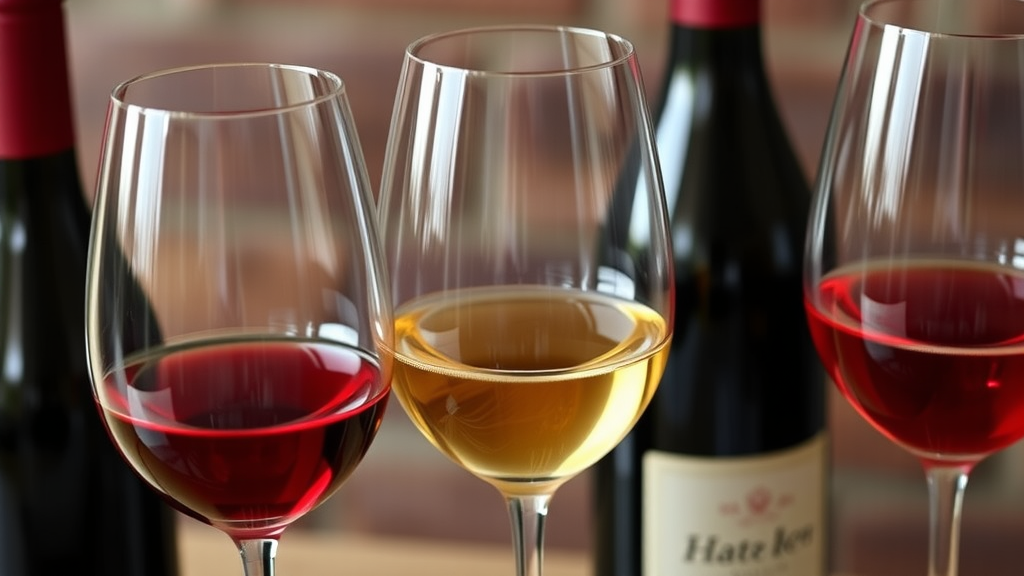
When a glass of red wine arrives at the table, most drinkers make a snap judgment before the first sip. Is the color deep enough? Does the hue signal quality, or raise a quiet red flag? For years, that visual scrutiny has weighed heavily on an emerging category of wine grapes: interspecific hybrid varieties, cultivars bred by crossing multiple Vitis vinifera species to withstand disease, cold and the mounting pressures of a changing climate. Winemakers and sommeliers have long worried that wines made from these grapes simply do not look the part, and that consumers would reject them on sight. New research from Cornell University suggests those concerns may be largely overblown.
The study, published in the American Journal of Enology and Viticulture, found that consumers showed no consistent bias against the color of wines made from hybrid grape varieties. When evaluated alongside pinot noirs from Burgundy, Oregon and the Finger Lakes, several hybrid wines ranked among the most visually appealing in the entire panel. More striking still, color, regardless of variety, turned out to be a weak predictor of whether drinkers actually enjoyed what was in the glass. The statistical relationship between how much panelists liked a wine’s appearance and how much they liked it after tasting explained only about eight percent of the variation in their responses, leaving taste and aroma to dominate the verdict.
For Anna Katharine Mansfield, associate professor of enology at Cornell AgriTech and lead author of the work, the question had been nagging at her for years. Prior to coming to Cornell, she worked with breeders at the University of Minnesota, where there was a persistent assumption that consumers would reject a wine if its color did not look sufficiently Vitis vinifera-like. Yet, as she notes, no one had ever actually studied that question directly. The research was also motivated by wine chemistry, according to co-author Catherine Dadmun, a food science doctoral student. In Europe, historic restrictions govern certain chemical color compounds that appear uniquely in hybrid grapes, and that regulatory history has fed an assumption that the compounds must produce low-quality color. The team set out to clarify what is and is not important for consumer perception of color quality from a chemical composition standpoint.
The stakes extend well beyond academic curiosity. As winemaking regions across North America and Europe grapple with more erratic weather, late frosts and increasing fungal disease pressure, hybrid cultivars offer a compelling alternative to the European grapes that have dominated fine wine for centuries. Varieties such as marquette, Maréchal Foch and St. Croix can be grown with far fewer pesticide applications and can survive winters that would devastate conventional vineyards. For growers confronting shorter windows for spraying, shifting pest pressures and unseasonable cold, that resilience is not a niche advantage but an increasingly central part of vineyard economics. Commercial adoption, however, has been slowed by persistent doubts about whether consumers will accept the resulting wines, doubts that often center on appearance rather than flavor.
To test one of those doubts directly, the research team recruited 82 regular red wine drinkers through the Cornell Sensory Evaluation Center. Panelists were asked to evaluate eight commercial red wines: five made from hybrid cultivars sourced from New York, Wisconsin, Tennessee and Iowa, plus pinot noirs from three regions, all presented without any indication of which was which. The design separated three distinct judgments. First, panelists rated how much they liked each wine’s appearance. Second, they rated how much they expected to enjoy the wine based on color alone. Finally, after tasting, they rated how much they actually liked it. This structure allowed the researchers to disentangle the visual halo effect, in which appearance shapes expectation, from the lived experience of aroma, texture and flavor on the palate.
The results cut in two directions at once. Color did matter, but mostly as a prelude. Wines that appeared lighter or showed more yellow and brown tones scored lower for visual appeal and generated weaker expectations before tasting. Three wines clustered at the bottom of the visual rankings: a Finger Lakes pinot noir, a Norton from Tennessee and a corot noir from near Albany, New York. Notably, that bottom tier was not exclusively hybrid; a pinot noir from a prestigious viticultural region sat alongside the two hybrids, suggesting that pale or brown-tinged color is a general vulnerability rather than a hybrid-specific flaw. The critical finding came when panelists tasted all eight wines: color’s predictive power largely evaporated, and the wines that looked least promising did not consistently taste worst.
The chemistry behind wine color helps explain why the industry’s assumptions deserve scrutiny. Red wine color derives primarily from anthocyanins, the pigments extracted from grape skins during fermentation, and hybrid grapes carry distinctive anthocyanin profiles that differ from those of pure Vitis vinifera varieties. European regulators historically restricted certain of these compounds, and that regulatory posture hardened into a market prejudice: if the compounds are treated differently, the reasoning went, the color they produce must be inferior. The Cornell data challenge that chain of logic. When the researchers evaluated hue-liking and overall appearance-liking, Dadmun observed, the pinot noirs and hybrid grapes were largely in the same pool, meaning that consumers responded to the visual qualities of the wines themselves rather than to any detectable hybrid signature.
The finding holds an implicit challenge to long-standing wine industry assumptions. Darker wines have been associated with higher quality for so long that the bias has shaped marketing, criticism and even breeding priorities, making some winemakers reluctant to promote hybrids at all. But the Cornell data showed no meaningful correlation between color intensity and actual liking. What seemed to drive the lower visual scores for the three least-liked wines was not lightness per se, but a tendency toward brownish, yellow-tinged hues rather than the deep red-purple that consumers associate with a young, well-made red. In other words, drinkers are not reading depth of color as a quality signal so much as reading hue as a freshness signal, and a wine that leans brick or amber risks reading as old or oxidized regardless of what is actually in the bottle.
Mansfield also points to a practical wrinkle in how color judgments are made in the real world: evaluations typically happen in the glass, not the bottle. Because green glass is more protective against light damage, wine is rarely sold in clear bottles, which means most consumers never see the color until the wine is already poured. By that point, the purchase decision has been made, and the sensory experience of tasting is about to overtake any visual impression. Color, she suggests, is a non-issue in some ways, and her hope is that people breeding hybrids can simply worry less about it. That message lands at a pivotal moment, as breeders across cold-climate regions continue releasing new cultivars designed for sustainability as much as for style.
For an industry navigating climate disruption, the implications are considerable. If consumer acceptance of hybrid wines hinges far more on flavor than on hue, then growers and producers can invest in viticultural and enological quality, aroma development and site expression rather than chasing pigment targets bred from Vitis vinifera expectations. The study, conducted as an observational sensory trial with regular red wine drinkers rather than trained experts, offers a consumer-grounded counterweight to decades of anecdote. It suggests that the visual gatekeeping that has kept hybrid wines out of premium conversations rests on a shaky empirical foundation, and that the palette, in the end, matters far less than the palate.
Subject of Research: Consumer perception of red wine color and quality in interspecific hybrid grape varieties
Article Title: Hue cares? Cornell study says wine color isn't the whole picture
Article References: Hue cares? Cornell study says wine color isn't the whole picture. (n.d.). Original publication
Image Credits: AI Generated
DOI: Not provided
Keywords: wine color, hybrid grapes, Vitis vinifera, enology, anthocyanins, sensory evaluation, consumer perception, climate change, pinot noir, Cornell University, viticulture, American Journal of Enology and Viticulture
Cite Scienmag News
Russell Cooper. (September 25, 2026). Wine Color Fails to Predict What Drinkers Actually Enjoy, Cornell Study Finds. Scienmag. https://scienmag.com/wine-color-fails-to-predict-what-drinkers-actually-enjoy-cornell-study-finds/
Russell Cooper. "Wine Color Fails to Predict What Drinkers Actually Enjoy, Cornell Study Finds." Scienmag, 25 September 2026, https://scienmag.com/wine-color-fails-to-predict-what-drinkers-actually-enjoy-cornell-study-finds/. Accessed 4 October 2026.
Russell Cooper. "Wine Color Fails to Predict What Drinkers Actually Enjoy, Cornell Study Finds." Scienmag. September 25, 2026. https://scienmag.com/wine-color-fails-to-predict-what-drinkers-actually-enjoy-cornell-study-finds/


