


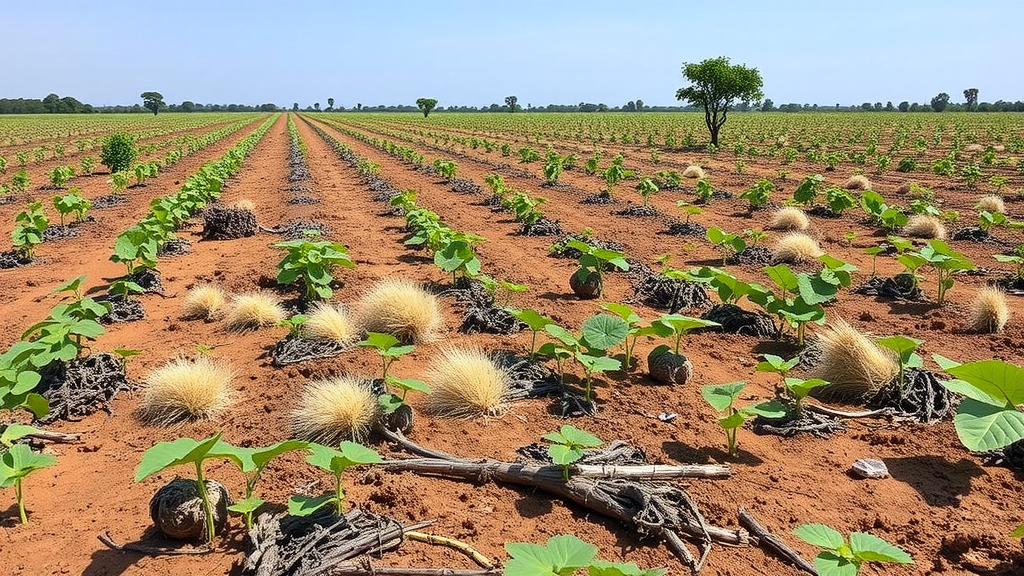
Deep in the semiarid backlands of northeastern Brazil, where cracked soils and scorching temperatures test the limits of plant life, an invisible treasure is being unearthed from the roots of wild peanut relatives. A team of Brazilian researchers has cataloged a strikingly diverse community of Bradyrhizobium bacteria living in the root nodules of three wild Arachis species and shown that some of these microbes can dramatically boost the growth of cultivated peanut. The findings, published in Plant Biosystems, suggest that the wild ancestors and cousins of one of the world’s most important legume crops may hold the key to more sustainable peanut farming, potentially reducing the need for synthetic nitrogen fertilizers in some of the harshest agricultural environments on Earth.
The research focused on Arachis batizocoi, Arachis duranensis, and Arachis magna, wild species that grow naturally in South American drylands and represent part of the genetic reservoir from which cultivated peanut, Arachis hypogaea, ultimately descended. Wild relatives of crops are increasingly recognized as valuable sources of traits that were lost during domestication, from disease resistance to drought tolerance. The new study extends that logic below ground, asking whether the symbiotic bacteria that partner with wild peanuts in their native habitats might outperform the rhizobia that currently colonize agricultural fields. These bacteria, members of the genus Bradyrhizobium, infect legume roots and trigger the formation of nodules, specialized organs in which the microbes convert atmospheric nitrogen into a form the plant can use, a process known as biological nitrogen fixation.
To characterize this hidden diversity, the researchers isolated bacteria from root nodules collected at distinct sites across the Brazilian Drylands, a region characterized by prolonged droughts, nutrient-poor soils, and high temperatures that impose strong selective pressures on both plants and their microbial partners. The team then applied phylogenetic analysis based on the 16S rRNA gene, the standard molecular tool for mapping bacterial evolutionary relationships. Rather than revealing a single homogeneous population, the analysis clustered the wild Arachis bradyrhizobia into five distinct genetic groups, a clear signal that these soils harbor multiple evolutionary lineages of peanut-associated symbionts. Notably, the sequencing did not identify clonal strains, meaning that the isolates were not duplicates of one another or of previously cataloged strains, underscoring how underexplored this microbial resource remains.
This kind of genetic diversity matters for practical reasons as much as for evolutionary ones. Rhizobial symbiosis is highly specific: particular bacterial strains pair effectively with particular host genotypes, and compatibility is governed by an intricate molecular dialogue involving signaling molecules exchanged between root and microbe. Peanut is especially interesting in this regard because it is a crack-entry legume, meaning that its bacteria invade the root through breaches at the base of lateral roots rather than through the classic infection threads seen in legumes such as clover or soybean. That distinctive infection route, highlighted in transcriptomic studies of the peanut symbiosis, suggests that the rules governing which Bradyrhizobium strains succeed in nodulating peanut may differ from those in other legumes, and that wild Arachis species may maintain symbiont communities shaped by millions of years of coevolution with their local soil conditions.
The decisive question, of course, was whether any of this wild diversity translates into benefits for the crop. The researchers inoculated cultivated peanut plants with the wild strains under controlled conditions and compared their performance against uninoculated controls and nitrogen-fertilized plants. The results were striking. Wild strains significantly enhanced root and shoot dry biomass, promoted heavier nodulation, increased nitrogen accumulation in plant tissues, and improved overall plant responsiveness compared with unfertilized, uninoculated plants. In other words, bacteria harvested from the nodules of wild peanut cousins growing in neglected dryland soils proved capable of forging highly productive partnerships with a modern crop variety.
One strain stood out from the pack. ESA 584, isolated from Arachis batizocoi, consistently outperformed the other isolates, delivering the highest values for nodule biomass, total nitrogen content, and biomass allocation across the inoculated plants. That a single wild-derived strain could dominate such a broad set of performance metrics is significant for inoculant development, where consistency across traits is a prized but rare quality. Commercial inoculants must be registered and must meet stringent guarantees of efficacy, and candidate strains typically undergo years of screening before reaching farmers’ fields. ESA 584 now joins a short list of elite Brazilian Bradyrhizobium strains with documented agronomic promise for peanut, several of which have already been shown in earlier studies to enhance peanut drought tolerance and yield in tropical drylands.
Perhaps the most commercially compelling result concerns the comparison with mineral fertilizer. While shoot nitrogen concentration remained highest in the fertilized treatments, the plants inoculated with strains derived from Arachis batizocoi accumulated total nitrogen at levels comparable to the nitrogen-fertilized plants. This distinction between concentration and total accumulation is technically important: a fertilized plant may carry a higher percentage of nitrogen in its leaves, but an inoculated plant can fix enough atmospheric nitrogen to build an equivalent overall nitrogen pool while also channeling more resources into growth and nodule function. For farmers, that translates into the possibility of obtaining much of the crop’s nitrogen budget from the air rather than from purchased fertilizer, cutting input costs and reducing the environmental footprint associated with nitrogen production and runoff.
The Brazilian Drylands are an ideal hunting ground for such microbes precisely because their environmental stresses act as natural filters. Bradyrhizobia surviving in soils that cycle between severe drought and intense rainfall, and that are often acidic or nutrient-poor, must tolerate conditions that would defeat more delicate strains. Previous surveys of rhizobia across Brazilian ecosystems, from the semi-arid peanut regions of the northeast to the Amazon savanna and the dry forests of Caatinga, have repeatedly revealed that wild and native legumes harbor unexpectedly diverse and effective bacterial communities. The new study reinforces the pattern and adds a specific, economically important target: the wild gene pool of peanut itself. Because wild Arachis species already contribute resistance traits to modern peanut breeding, including resistance to root-knot nematode and stem rot, pairing below-ground microbial resources with above-ground genetic improvements could compound the benefits.
The implications extend beyond peanut. Biological nitrogen fixation is one of agriculture’s most valuable ecosystem services, and the search for elite rhizobial strains is a global enterprise, with researchers cataloging highly adapted Bradyrhizobium species nodulating diverse legumes across Africa and the Americas. The Brazilian team’s work demonstrates a template that can be replicated for other orphaned or underappreciated crop wild relatives: sample the nodules of wild populations across their native range, resolve their phylogenetic diversity, and test their symbiotic performance against the cultivated form. In doing so, scientists can convert biodiversity surveys into concrete tools for sustainable intensification, particularly in regions where fertilizer access is limited and soils are marginal.
For now, the wild bradyrhizobia of the Brazilian Drylands remain primarily a research resource, with their DNA sequences deposited in GenBank for the wider community to examine. But the trajectory is clear. ESA 584 and its relatives offer a glimpse of a peanut crop that feeds itself, drawing nitrogen from the atmosphere through partnerships forged in the wild and refined by evolution under some of the toughest conditions the tropics can offer. As the researchers conclude, wild peanut-associated Bradyrhizobium strains are both diverse and efficient in association with cultivated peanut, making them a promising source of new inoculants. In the race to feed a growing population while shrinking agriculture’s environmental bill, the humble bacteria of wild root nodules may prove to be among the most valuable allies yet discovered.
Subject of Research: Diversity and symbiotic efficiency of Bradyrhizobium strains from wild Arachis species in the Brazilian Drylands and their potential as peanut inoculants
Article Title: Wild Arachis bradyrhizobia from distinct sites in the Brazilian Drylands: biodiversity and symbiosis with peanut (Arachis hypogaea, Fabaceae) crop
Article References: Wild Arachis bradyrhizobia from distinct sites in the Brazilian Drylands: biodiversity and symbiosis with peanut (Arachis hypogaea, Fabaceae) crop. (n.d.). https://doi.org/10.1007/s44473-026-00252-z
Image Credits: AI Generated
DOI: 10.1007/s44473-026-00252-z
Keywords: Bradyrhizobium, Arachis hypogaea, wild peanut relatives, biological nitrogen fixation, rhizobia, Brazilian Drylands, root nodules, peanut inoculants, 16S rRNA phylogeny, sustainable agriculture, Arachis batizocoi, symbiosis
Cite Scienmag News
Alan Morgan. (September 23, 2026). Wild Peanut Relatives in Brazil’s Drylands Harbor Nitrogen-Fixing Bacteria That Could Supercharge Crops. Scienmag. https://scienmag.com/wild-peanut-relatives-in-brazils-drylands-harbor-nitrogen-fixing-bacteria-that-could-supercharge-crops/
Alan Morgan. "Wild Peanut Relatives in Brazil’s Drylands Harbor Nitrogen-Fixing Bacteria That Could Supercharge Crops." Scienmag, 23 September 2026, https://scienmag.com/wild-peanut-relatives-in-brazils-drylands-harbor-nitrogen-fixing-bacteria-that-could-supercharge-crops/. Accessed 5 October 2026.
Alan Morgan. "Wild Peanut Relatives in Brazil’s Drylands Harbor Nitrogen-Fixing Bacteria That Could Supercharge Crops." Scienmag. September 23, 2026. https://scienmag.com/wild-peanut-relatives-in-brazils-drylands-harbor-nitrogen-fixing-bacteria-that-could-supercharge-crops/


