


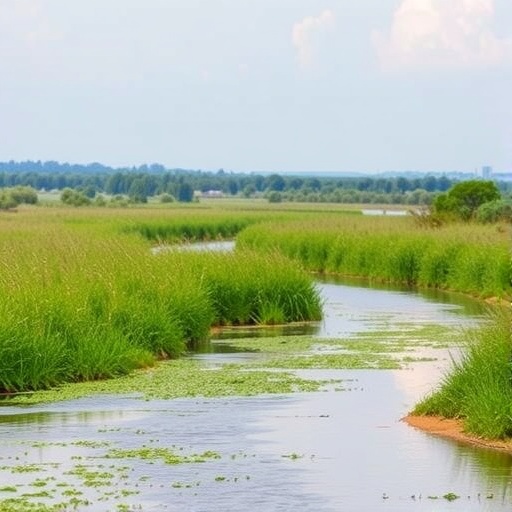
A new study led by Swansea University suggests that the future of Iraq’s Mesopotamian Marshes hinges far more on upstream river management than on changes in local rainfall. The findings, published in Nature Scientific Reports, draw on more than two decades of satellite observations to quantify how wetland conditions have evolved since large-scale restoration began.
The Mesopotamian Marshes—designated a UNESCO World Heritage Site—support distinctive ecosystems and long-standing cultural landscapes. After the marshes were reflooded in 2003, researchers expected recovery to be influenced mainly by climate variability. Instead, the study points to human-controlled water dynamics upstream as the main lever controlling marsh health.
Using satellite-derived measures of vegetation and surface water from 2000 to 2023, the team integrated multiple Earth observation sources, including NASA MODIS, EU Copernicus Sentinel-2, and the JRC Global Surface Water dataset. These remotely sensed indicators were evaluated alongside streamflow and precipitation records, allowing the researchers to separate rainfall-driven effects from hydrological impacts linked to dam operations and regional management.
The analysis reveals that vegetation and water generally increased over the study period, but recovery was repeatedly interrupted by steep declines. The most severe drops occurred during 2008–2009 and again in 2022–2023, aligning with periods of regional drought and altered upstream operations.
Critically, river flow emerged as the dominant factor. Higher streamflow was strongly associated with healthier vegetation, while local precipitation did not show a measurable influence on wetland extent. This suggests that the marsh system responds primarily to whether enough water actually arrives from the Tigris and Euphrates, rather than to how much rain falls directly over the wetlands.
The study also uncovers a feedback mechanism involving temperature. Marsh vegetation correlated with cooler land surface temperatures, while vegetation loss was followed by warming. The authors interpret this as a positive feedback loop: when vegetation declines, the wetland surface warms, which can further stress the ecosystem and hinder regrowth.
Overall, the results strengthen the case for transboundary water cooperation among countries sharing the Tigris–Euphrates river system. During droughts, maintaining environmental flows may be essential to prevent cascading ecological losses and preserve the marshes’ climate-moderating role.
Lead author Akram Alqaraghuli emphasizes that sustaining river flows is vital for both ecosystem conservation and regional temperature regulation. Co-author Peter North notes that long-term satellite records make it increasingly possible to distinguish human intervention from climate effects, providing evidence directly relevant to management decisions.
Cite Scienmag News
Russell Cooper. (July 27, 2026). Why River Management Is Vital to Protecting a World-Important Wetland. Scienmag. https://scienmag.com/why-river-management-is-vital-to-protecting-a-world-important-wetland/
Russell Cooper. "Why River Management Is Vital to Protecting a World-Important Wetland." Scienmag, 27 July 2026, https://scienmag.com/why-river-management-is-vital-to-protecting-a-world-important-wetland/. Accessed 4 September 2026.
Russell Cooper. "Why River Management Is Vital to Protecting a World-Important Wetland." Scienmag. July 27, 2026. https://scienmag.com/why-river-management-is-vital-to-protecting-a-world-important-wetland/


