


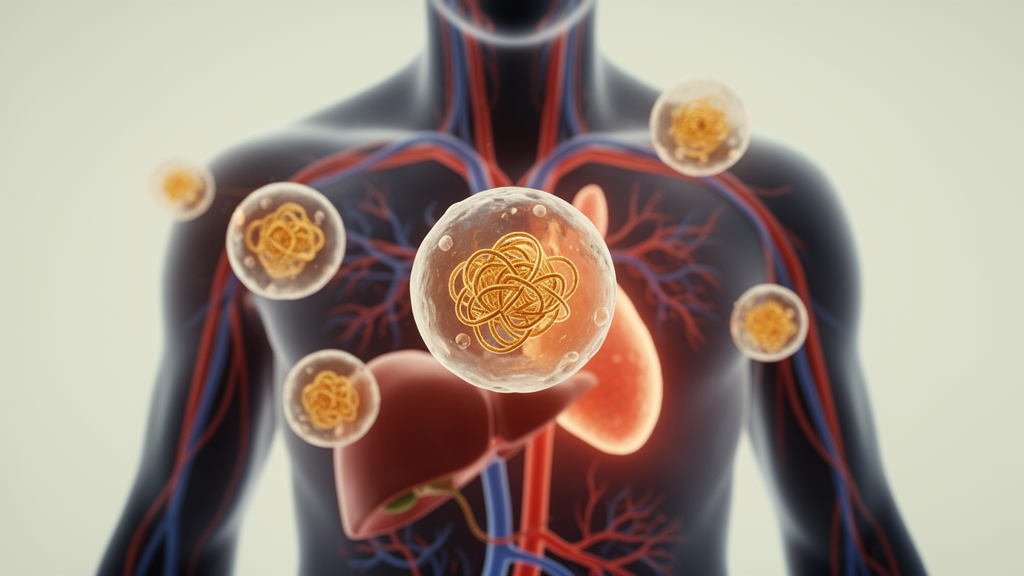
Messenger RNA therapeutics have transformed medicine at breathtaking speed, yet a fundamental question has remained surprisingly difficult to answer: once a lipid nanoparticle is injected, where does it actually go, and does its presence in a tissue mean anything biologically? A comprehensive new review published in Bioengineering & Translational Medicine tackles this question head-on, synthesizing hundreds of preclinical and clinical studies to argue that the field has too often conflated three very different outcomes: tissue exposure to nanoparticle lipids, persistence of intact mRNA, and functional production of the encoded protein. According to the authors, distinguishing these endpoints is essential for predicting efficacy, off-target effects, and clearance as mRNA platforms move beyond single-dose vaccines toward systemic, repeat-dose therapies.
The review lays out five interconnected processes that govern the fate of mRNA-lipid nanoparticles in the body: route-dependent transport and initial tissue distribution, interactions with blood proteins that form the so-called protein corona, receptor-mediated cellular uptake and organ tropism, endosomal escape and intracellular trafficking, and finally metabolic degradation and immune-mediated clearance. These pathways act sequentially, meaning that a change at any stage ripples through the entire pharmacokinetic profile. Crucially, the authors emphasize that the localization of LNP-associated lipids, intact mRNA, and encoded protein follows distinct spatial and temporal patterns, so detecting one component cannot be assumed to demonstrate the presence or activity of another. Apparent contradictions between studies using radiolabeling, molecular quantification, imaging, or protein-based readouts often reflect differences in the biological endpoint measured rather than genuinely conflicting results.
Administration route emerges as one of the most powerful determinants of biodistribution. Intramuscular and subcutaneous injection favor retention at the injection site followed by drainage to regional lymph nodes, with peak tissue concentrations typically occurring within two to eight hours; subcutaneous delivery produces similar patterns but with slower kinetics and prolonged persistence. Intravenous administration bypasses local lymphatics entirely, producing immediate systemic exposure with predominant accumulation in the liver. Respiratory delivery via intranasal, intratracheal, or nebulized routes deposits nanoparticles throughout the airway epithelium according to aerodynamic diameter, bypassing first-pass hepatic clearance and enabling mucosal immunity characterized by secretory IgA and tissue-resident memory T cells. The review notes, however, that intranasal delivery is not straightforward, as animal studies suggest some formulations may be reactogenic.
Perhaps the most striking examples of route-driven tropism come from less conventional approaches. Intraperitoneal administration of ionizable LNPs has been shown to deliver mRNA to pancreatic beta cells through an indirect mechanism in which peritoneal macrophages internalize the particles before transferring functional mRNA to pancreatic islets, largely avoiding the hepatic dominance seen after intravenous injection. More recently, researchers identified a pancreas-selective delivery mechanism based on organ capsule filtration, in which arginine-histidine-modified LNPs undergo protein-induced size enlargement after systemic administration, allowing preferential accumulation within the pancreatic capsule. This platform achieved efficient delivery of Cas9 mRNA and therapeutic cytokine mRNAs in rodents and non-human primates, demonstrating that particle size, protein association, organ anatomy, and administration route act synergistically to determine organ selectivity rather than lipid chemistry alone.
Intrathecal injection, which introduces nanoparticles directly into cerebrospinal fluid, bypasses the blood-brain barrier and enables widespread distribution across the brain and spinal cord. Biodegradable brain-targeting LNPs have achieved reporter expression in the cortex, hippocampus, and cerebellum, transfecting both neurons and astrocytes, while related work delivered CRISPR genome-editing components throughout the central nervous system with limited peripheral exposure. Notably, formulation chemistry remained a critical determinant even within this route, with ionizable lipid structure influencing both cellular uptake and regional distribution. Subretinal injection likewise places formulations directly adjacent to the retinal pigment epithelium and photoreceptors, enabling robust local transfection for inherited retinal disorders while minimizing systemic exposure. Even the choice of limb for sequential vaccine doses matters: murine studies showed enhanced early germinal center B-cell responses and higher-affinity antibodies following ipsilateral boosting, although these differences diminished over time, with comparable long-term protection regardless of injection side.
Once nanoparticles reach biological fluids, they rapidly adsorb plasma proteins to form a protein corona that replaces the synthetic surface as the interface recognized by cells. Apolipoprotein E is the best-characterized component, promoting uptake through low-density lipoprotein receptor family members and explaining the intrinsic hepatic tropism of many formulations. But quantitative proteomics reveals a far more complex picture: the corona is a dynamic mixture of high-density lipoproteins, albumin, vitronectin, complement proteins, immunoglobulins, fibrinogen, prothrombin, C-reactive protein, and alpha-2-macroglobulin, whose composition depends on lipid chemistry, administration route, and host physiology. HDL has been associated with enhanced uptake and transfection, albumin prolongs circulation by improving colloidal stability, and complement proteins and immunoglobulins accelerate clearance by the mononuclear phagocyte system, potentially contributing to complement activation-related pseudoallergy and anti-PEG immune responses during repeated dosing. Formulations with nearly identical physical properties can therefore exhibit markedly different tissue tropism because organ selectivity is determined by the integrated corona composition rather than any single protein.
Even successful cellular uptake does not guarantee productive delivery. The review identifies endosomal escape as the principal intracellular bottleneck, with only a small fraction of internalized nanoparticles releasing intact mRNA into the cytoplasm before lysosomal degradation. Ionizable lipids facilitate escape by becoming protonated within acidifying endosomes, destabilizing the endosomal membrane, but recent in vivo LysoTag and lysosomal barcoding studies have provided the first quantitative measurements of escape kinetics, showing that relatively small improvements in escape efficiency produce disproportionately large increases in protein expression. This finding shifts the focus of formulation optimization from maximizing tissue uptake toward improving intracellular trafficking and cytosolic release. Once released, mRNA undergoes ribosomal translation before rapid degradation by endogenous ribonucleases, while the encoded protein frequently persists considerably longer, creating a temporal dissociation between nanoparticle localization, mRNA persistence, and biological activity that explains why different analytical methods yield different pharmacokinetic profiles for the same formulation.
The human evidence, though less comprehensive, broadly supports the preclinical picture. After intramuscular vaccination, vaccine-derived mRNA and encoded spike protein can be transiently detected in plasma within the first few hours, consistent with systemic dispersion of a small fraction of the dose. Lymph node biopsies confirm local expression in germinal-center B cells and dendritic cells, correlating with strong antibody and T-cell responses. One study using RT-qPCR detected vaccine mRNA in lymph nodes, liver, spleen, and myocardium from recently vaccinated individuals, with persistence up to 30 days in some axillary lymph nodes, but the authors of that work concluded that observed cardiac changes likely reflected pre-existing conditions rather than direct vaccine effects. Quantitative imaging in non-human primates has found no evidence of significant mRNA or lipid presence in brain tissue, and examination of gonadal tissues reveals only trace, fragmented RNA species without functional translation. The placenta, meanwhile, appears to be selectively targetable: optimized ionizable LNPs efficiently transfected placental trophoblasts with minimal fetal transfer in pregnant mice and ex vivo human placental perfusion systems, opening possibilities for treating pre-eclampsia and fetal growth restriction.
Clearance kinetics are now better characterized as well. In most models, mRNA persists for less than 48 hours before enzymatic breakdown, while lipid components are metabolized more slowly through hepatic and biliary routes; PEG-lipids and cholesterol derivatives may remain for several days, particularly within macrophages, but are gradually cleared without significant histopathological changes. Mass spectrometry studies of a biodegradable ionizable lipid showed complete hepatobiliary and renal clearance by 168 hours despite rapid systemic distribution of lipid-derived radioactivity. Repeated exposure to PEG-containing formulations may induce anti-PEG antibodies and complement activation, leading to accelerated blood clearance and altered biodistribution after subsequent administrations, a phenomenon driving the development of PEG-free alternatives. Cross-species comparisons reveal that rodents tend to overestimate hepatic accumulation relative to humans, while non-human primates better replicate human plasma kinetics but differ in immune activation thresholds, prompting growing interest in organ-on-chip systems, organoids, and humanized models to improve translational accuracy.
Looking forward, the review argues that rational, data-driven engineering is replacing empirical formulation. Selective organ targeting (SORT) lipids redirect expression from liver to spleen, lung, or bone marrow in a charge-dependent manner; biodegradable ionizable lipids with ester or ketal linkages reduce long-term retention while maintaining delivery efficiency; and barcode-based screening now enables high-throughput evaluation of hundreds of formulations within a single animal. Artificial intelligence and machine learning are accelerating lipid design, with graph neural networks predicting blood-brain barrier permeability and generative models proposing novel ionizable structures, though the authors caution that most models are trained on small, heterogeneous datasets and require rigorous external validation. Physiologically based pharmacokinetic and quantitative systems pharmacology models are increasingly integrating these diverse data streams to predict tissue exposure and protein expression across species. The overarching message is clear: biodistribution cannot be defined by a single analytical signal, and progress toward clinically predictable mRNA therapeutics will depend on determining not only where each formulation distributes, but which cells receive intact cargo, whether functional expression occurs, and how long its effects persist.
Subject of Research: Biodistribution and pharmacokinetics of mRNA lipid nanoparticle delivery systems
Article Title: Mechanisms and determinants of mRNA Lipid Nanoparticle biodistribution: From pharmacokinetics to clinical translation
Article References: Alhareth, Z., & López‐Camacho, C. (2026). Mechanisms and determinants of mRNA Lipid Nanoparticle biodistribution: From pharmacokinetics to clinical translation. Bioengineering & Translational Medicine, Article e70183. https://doi.org/10.1002/btm2.70183
Image Credits: AI Generated
DOI: 10.1002/btm2.70183
Keywords: mRNA therapeutics, lipid nanoparticles, biodistribution, protein corona, endosomal escape, pharmacokinetics, drug delivery, SORT lipids, intrathecal delivery, placental transfer, PBPK modeling, clinical translation
Cite Scienmag News
Denise Maddox. (October 9, 2026). Where mRNA Vaccines Really Go: New Review Maps the Journey of Lipid Nanoparticles Through the Body. Scienmag. https://scienmag.com/where-mrna-vaccines-really-go-new-review-maps-the-journey-of-lipid-nanoparticles-through-the-body/
Denise Maddox. "Where mRNA Vaccines Really Go: New Review Maps the Journey of Lipid Nanoparticles Through the Body." Scienmag, 9 October 2026, https://scienmag.com/where-mrna-vaccines-really-go-new-review-maps-the-journey-of-lipid-nanoparticles-through-the-body/. Accessed 9 October 2026.
Denise Maddox. "Where mRNA Vaccines Really Go: New Review Maps the Journey of Lipid Nanoparticles Through the Body." Scienmag. October 9, 2026. https://scienmag.com/where-mrna-vaccines-really-go-new-review-maps-the-journey-of-lipid-nanoparticles-through-the-body/


