


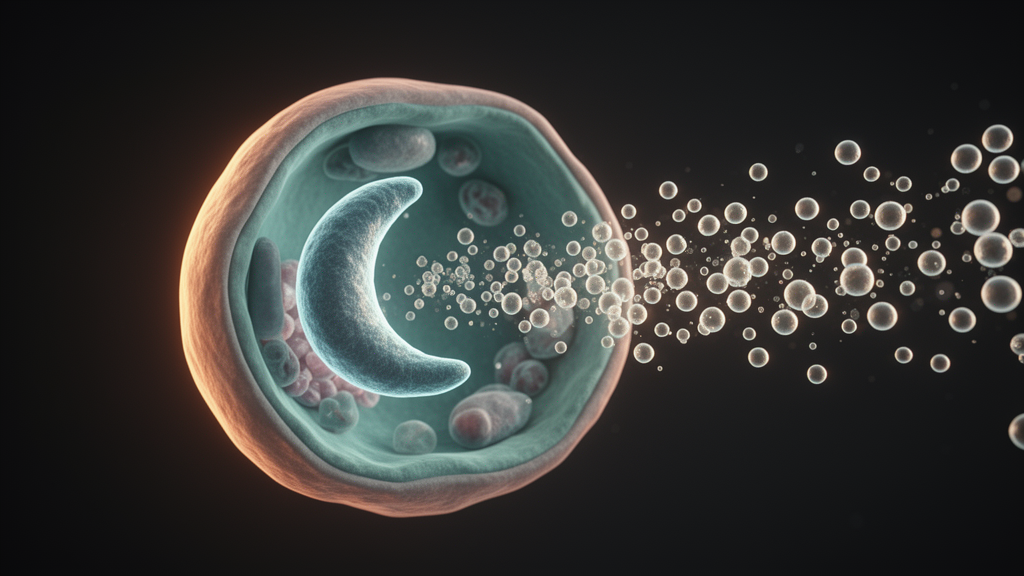
The single-celled parasite Toxoplasma gondii infects an estimated fraction of the global population measured in the billions, yet most of its carriers never know they harbor it. The organism survives for decades inside its host by engaging in an extraordinarily subtle molecular conversation, one that allows it to persist without triggering the full fury of the immune system. For years, researchers focused on the parasite’s canonical secretion apparatus, the apical organelles known as rhoptries, micronemes, and dense granules, which discharge proteins directly into host cells during and after invasion. A new review published in Parasites & Vectors argues that this picture, while accurate, is incomplete. A team led by Erick Fonseca Balbino and Izadora Volpato Rossi of the State University of Londrina, working with colleagues at Brazilian institutions including the Federal University of Uberlândia, the Federal University of Triângulo Mineiro, and the Carlos Chagas Institute of Fiocruz, makes the case that extracellular vesicles, or EVs, deserve recognition as a central pillar of the parasite’s communication strategy rather than an afterthought of infection.
Extracellular vesicles are membrane-bound particles released by virtually all known cells, from bacteria to human neurons. They range from small exosomes, roughly 30 to 150 nanometers in diameter and born inside multivesicular bodies, to larger microvesicles that bud directly from the plasma membrane. Far from being cellular debris, these particles act as couriers: they carry proteins, lipids, and nucleic acids between cells, and their cargo can reprogram the recipient’s behavior. In the context of T. gondii, the review frames EVs as an extension of the parasite’s secretory arsenal, a parallel channel of communication that operates alongside, and sometimes in concert with, the classical apical secretion systems that parasitologists have studied for decades.
The technical foundations of this field rest on a growing toolkit for isolating and characterizing vesicles. The review catalogs the methods that have defined the state of the art: ultracentrifugation and size-exclusion chromatography for separation, nanoparticle tracking analysis and dynamic light scattering for sizing vesicle populations, transmission and scanning electron microscopy for direct visualization, and Western blotting, mass spectrometry, and immunocytochemistry for identifying the proteins that vesicles carry. Lipid composition is probed with techniques such as Fourier transform infrared spectroscopy, revealing envelopes enriched in phosphatidylcholine, phosphatidylethanolamine, sphingomyelins, ceramides, and triacylglycerols. Each method carries its own biases and limitations, and the authors emphasize that careful, standardized characterization is essential if the field is to distinguish genuine biological signaling from artifacts of preparation.
Biogenesis is where the story becomes mechanistically rich. Parasite-derived vesicles appear to draw on conserved eukaryotic machinery, including the endosomal sorting complexes required for transport, the ESCRT apparatus, and SNARE-mediated membrane fusion, pathways that T. gondii shares with its hosts despite being separated by more than a billion years of evolution. Multivesicular bodies within the parasite can package cargo into intraluminal vesicles that are released when these compartments fuse with the parasite’s surface. The result is a population of vesicles whose membrane composition and internal cargo reflect the physiology of the cell that made them, whether that cell is the parasite itself or the host cell it has commandeered. This dual origin is one of the review’s central conceptual points: the vesicles circulating in the blood or tissues of an infected animal are a mixture, some born of the parasite and some of the infected host, and both populations carry messages.
The cargo of T. gondii-associated vesicles reads like an inventory of the parasite’s most important virulence tools. Proteomic analyses have detected proteins associated with invasion and intracellular survival, including members of the rhoptry protein, rhoptry neck protein, microneme protein, dense granule protein, and surface antigen families, the very molecules the parasite uses to attach to, penetrate, and remodel host cells. Alongside these proteins travel regulatory microRNAs, small RNA molecules capable of silencing host genes, and bioactive lipids that can themselves trigger signaling cascades. The packaging of such a diverse molecular repertoire into a single nanoscale delivery vehicle positions EVs, in the authors’ framing, as multilayered effectors, capable of acting simultaneously on protein receptors, gene expression, and membrane biochemistry in the cells they encounter.
Functionally, the review organizes the evidence around three themes: infection priming, immune modulation, and neural reprogramming. Infection priming refers to the observation that vesicles released by the parasite or by infected cells can prepare host tissues for invasion, altering the local environment before the parasite itself arrives. Immune modulation is the better-documented phenomenon: vesicle cargo can shift the balance of inflammatory signaling, dampening the Th1-type responses that would otherwise clear the parasite and encouraging states of immune tolerance that permit long-term persistence. Because T. gondii establishes lifelong infection precisely by walking this immunological tightrope, vesicle-mediated modulation offers a compelling explanation for how the parasite sustains its delicate equilibrium with the host immune system over decades.
The neural dimension is perhaps the most provocative. T. gondii is unusual among parasites in its ability to form tissue cysts in the brain, and behavioral changes in infected rodents, including a curious loss of aversion to cat odor, have fascinated researchers for years. The review highlights evidence that vesicles can influence neural cells, carrying microRNAs and other regulatory molecules capable of reshaping gene expression in neurons and glia. The authors are careful to frame this as an emerging area: the mechanistic chain from vesicle uptake to altered neural circuitry remains incompletely mapped, and the field has not yet demonstrated a complete causal pathway from a specific vesicle cargo to a specific behavioral change. Even so, the possibility that a parasite can package gene-regulatory messages into vesicles that cross into neural tissue opens a research agenda with implications far beyond toxoplasmosis.
What elevates the review beyond a catalog of mechanisms is its translational argument. The same vesicles that mediate immune evasion could serve as diagnostic biomarkers: because their cargo reflects the presence and activity of the parasite, detecting parasite-associated vesicles or their molecular signatures in patient samples, through methods such as enzyme-linked immunosorbent assays, could offer a window into infection status that conventional serology cannot provide. As vaccine platforms, vesicles present a natural display of parasite antigens in a membrane context that mimics infection, potentially stimulating immunity without requiring live organisms. And as therapeutic delivery vehicles, they offer a biocompatible nanoscale capsule that could, in principle, be engineered to carry drugs or immunomodulatory molecules across biological barriers that defeat conventional formulations, including the blood-brain barrier that shields the parasite’s chronic cysts from most treatments.
The authors also confront the field’s growing pains honestly. EV research across all of biology suffers from reproducibility challenges: isolation methods yield heterogeneous populations, quantification is inconsistent between laboratories, and distinguishing parasite-derived vesicles from host-derived ones in infected samples is technically demanding. The review’s emphasis on standardized characterization, combining orthogonal techniques such as electron microscopy, nanoparticle tracking, and proteomic validation, reflects a maturing discipline recognizing that its boldest claims will only survive if its methods do. The mixture of vesicle origins in infected hosts means that attributing a biological effect to the parasite, rather than to the host’s own response, requires careful experimental design, often involving purified parasite cultures and comparison with vesicles from uninfected host cells.
Taken together, the review makes a persuasive case for a conceptual shift. Extracellular vesicles in T. gondii are not metabolic exhaust, not incidental shedding from a busy cell, but strategic molecular messengers that operate at the interface between parasite and host, shaping infection from its earliest moments to its lifelong persistence. The work, published open access under a Creative Commons license with support from Brazil’s CAPES system, synthesizes mechanistic biology with translational ambition, and it arrives at a moment when vesicle biology is exploding across medicine, from cancer to neurodegeneration. For a parasite that infects such a vast share of humanity, understanding how it whispers to its host, through packets far too small to see, may prove as important as understanding how it invades. The conversation between Toxoplasma and its host, it turns out, has been conducted partly in a language scientists are only now learning to read.
Subject of Research: Extracellular vesicle-mediated host–parasite communication in Toxoplasma gondii infection
Article Title: Extracellular vesicles in Toxoplasma gondii: molecular messengers at the host–parasite interface
Article References: Balbino, E. F., Buso, L. S., de Oliveira, M. M., de Souza Martins, M. A. F., Bovolin, M. F., de Freitas Barbosa, B., Oliveira Gomes, A., Ramirez, M. I., Costa, I. N., & Rossi, I. V. (2026). Extracellular vesicles in Toxoplasma gondii: molecular messengers at the host–parasite interface. Parasites & Vectors. https://doi.org/10.1186/s13071-026-07622-8
Image Credits: AI Generated
DOI: 10.1186/s13071-026-07622-8
Keywords: Toxoplasma gondii, extracellular vesicles, exosomes, host–parasite interaction, immunomodulation, microRNAs, vesicle biogenesis, proteomics, biomarkers, vaccine platforms, drug delivery, toxoplasmosis
Cite Scienmag News
Kristina Jarvis. (October 9, 2026). Tiny Vesicles Reveal How Toxoplasma gondii Quietly Rewires Its Host. Scienmag. https://scienmag.com/tiny-vesicles-reveal-how-toxoplasma-gondii-quietly-rewires-its-host/
Kristina Jarvis. "Tiny Vesicles Reveal How Toxoplasma gondii Quietly Rewires Its Host." Scienmag, 9 October 2026, https://scienmag.com/tiny-vesicles-reveal-how-toxoplasma-gondii-quietly-rewires-its-host/. Accessed 9 October 2026.
Kristina Jarvis. "Tiny Vesicles Reveal How Toxoplasma gondii Quietly Rewires Its Host." Scienmag. October 9, 2026. https://scienmag.com/tiny-vesicles-reveal-how-toxoplasma-gondii-quietly-rewires-its-host/


