


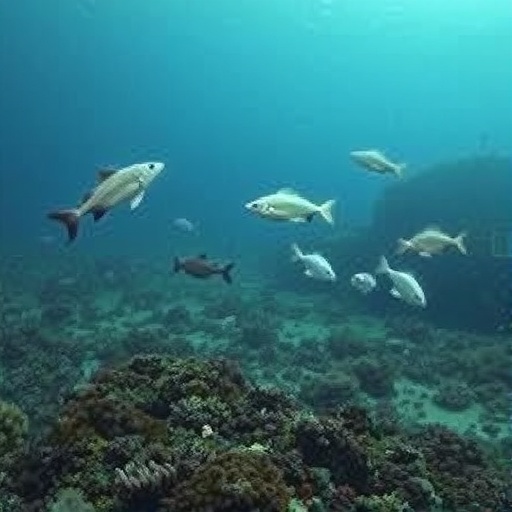
In recent years, global environmental initiatives have aggressively advanced the establishment of no-take marine reserves (NTRs) as a cornerstone for marine biodiversity conservation. The ambitious “30×30” target, aiming to protect 30% of the planet’s oceans by 2030, has driven an unparalleled expansion of these protected areas. NTRs, by prohibiting extractive activities such as fishing, have showcased marked ecological benefits: fish populations within these reserves demonstrate significant growth in biomass, increased average body size, and the restoration of complex trophic interactions. However, emerging research indicates that these ecological triumphs may conceal an insidious challenge, one that intertwines biological success with environmental contamination in what researchers now term the “protection-pollution paradox.”
This paradox, elucidated in a thought-provoking perspective piece in the journal Water & Ecology, stems from the paradoxical reality that the very traits driving conservation success simultaneously amplify vulnerability to legacy pollutants—specifically, polychlorinated biphenyls (PCBs). PCBs, persistent organic pollutants banned decades ago yet enduring in marine sediments and biota, bioaccumulate and biomagnify through food webs, posing severe toxicity risks. Huan Zhong of Nanjing University and Chengjun Li of Guangzhou University present compelling evidence that apex predators and long-lived species within marine reserves accumulate some of the highest concentrations of these contaminants, as their extended lifespans and increased body sizes facilitate greater pollutant load.
The ecological mechanisms underpinning this phenomenon are grounded in classical bioaccumulation and biomagnification principles. As protective measures within NTRs halt fishing pressure, individual fish and predators live longer and attain larger sizes. These traits are strongly correlated with elevated contaminant concentrations: for instance, data indicate that for every centimeter increase in fish length, there is approximately a 2.3% increase in PCB-118 concentration. Additionally, the resurgence of apex predators restores elongated food chains, inherently intensifying trophic transfer of PCBs. In pelagic ecosystems, the concentration of certain congeners such as PCB-153 magnifies by an average factor exceeding six per trophic level, thereby amplifying the toxic burden borne by these recovered food webs relative to degraded or simplified systems outside reserves.
Compounding this toxicological challenge is the accelerating influence of global climate change. Elevated sea temperatures and more frequent extreme weather events destabilize sediments that serve as huge reservoirs for these legacy contaminants—estimated to store about 75% of anthropogenic PCBs. Storm-induced sediment resuspension facilitates PCB remobilization into the water column, increasing bioavailability. Simultaneously, rising temperatures intensify metabolic rates in ectothermic organisms, enhancing respiratory and uptake rates of dissolved pollutants. This dual impact of environmental exposure and physiological acceleration subjects protected populations to heightened toxic stress, undermining their recovery and resilience.
Zhong and Li highlight the multifaceted consequences this convergence of protection and pollution introduces. Although no-take policies foster biological recovery, they inadvertently place key species at the confluence of increased contaminant exposure and climate-induced stressors. This multi-stressor setting—where warming, acidification, and legacy pollution co-occur—depletes immune function and diverts energy from growth and reproduction towards coping mechanisms for toxic insult. Such intricate ecological feedback loops challenge traditional conservation metrics focused solely on population abundance or biomass.
Addressing this paradox demands reimagined frameworks for marine conservation and spatial management. The authors argue for dynamic, climate-smart ocean management strategies that transcend static reserve boundaries. This integration seeks to identify “toxicological refugia,” areas where pollutant exposure is minimized despite biological recovery. Additionally, they advocate for advanced biomonitoring methodologies employing biomarker-based indices that detect and quantify PCB-responsive pathways. These precision tools enable targeted interventions, ensuring that toxicological risks are actively managed rather than passively accepted.
Innovative remediation techniques form another pillar of the proposed response. In-situ activated carbon capping, a technology designed to isolate contaminated sediments by adsorbing pollutants, can effectively curtail PCB bioavailability. When strategically applied within or adjacent to marine reserves, such remediation mitigates contaminant fluxes, complementing biological protection efforts. Together with adaptive spatial planning, these approaches hold promise to transform NTRs into genuinely safe and resilient sanctuaries amid escalating environmental challenges.
Ultimately, Zhong and Li call for a fundamental paradigm shift in evaluating marine protected area success. They contend that conservation effectiveness must evolve beyond superficial parameters like protected area coverage or mere biomass recovery. Instead, metrics should encompass holistic indicators of ecosystem health, explicitly integrating pollution exposure levels and physiological resilience of key species. Marine sanctuaries, they emphasize, cannot be static polygons on charts but living, adaptive systems that sustain functional biodiversity and safeguard food security under complex environmental pressures.
This emerging recognition of the “toxic trap” phenomenon underscores the intricate interplay between biological recovery and legacy pollution in modern marine conservation. As global efforts aspire to ambitious biodiversity targets amid climate uncertainty, safeguarding the health of protected populations necessitates integrating toxicological and climatic dimensions within spatial planning. Only through such comprehensive stewardship can no-take marine reserves fulfill their promise as resilient bastions of marine life for generations to come.
Cite Scienmag News
Violet Maxwell. (April 9, 2026). When Ocean Sanctuaries Backfire: The Unexpected Threat of Toxic Pollution. Scienmag. https://scienmag.com/when-ocean-sanctuaries-backfire-the-unexpected-threat-of-toxic-pollution/
Violet Maxwell. "When Ocean Sanctuaries Backfire: The Unexpected Threat of Toxic Pollution." Scienmag, 9 April 2026, https://scienmag.com/when-ocean-sanctuaries-backfire-the-unexpected-threat-of-toxic-pollution/. Accessed 4 September 2026.
Violet Maxwell. "When Ocean Sanctuaries Backfire: The Unexpected Threat of Toxic Pollution." Scienmag. April 9, 2026. https://scienmag.com/when-ocean-sanctuaries-backfire-the-unexpected-threat-of-toxic-pollution/


