


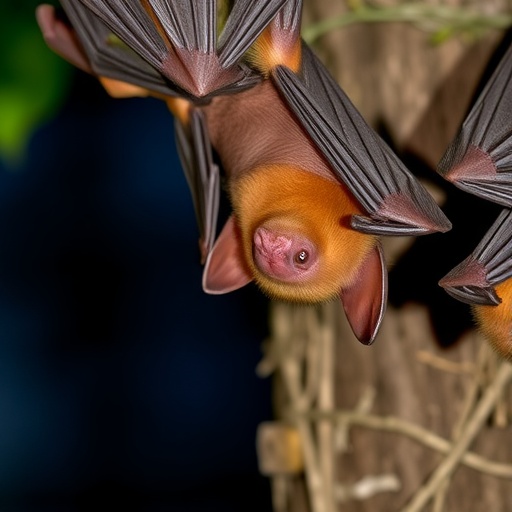
In recent years, the conservation of bat populations has emerged as a critical environmental challenge demanding urgent scientific and community attention. New research from Murdoch University’s School of Environmental and Conservation Sciences unequivocally illustrates that community engagement—known as citizen science—is no longer a supplementary benefit but a foundational necessity for large-scale bat monitoring and safeguarding vulnerable species. This paradigm shift arises amid increasing recognition that successful conservation strategies require integrative collaborations involving academic institutions, nonprofits, governmental agencies, and importantly, the active participation of local communities.
Bats, which encapsulate roughly one-quarter of all mammalian species, serve indispensable ecological functions spanning pest regulation, pollination, and seed dispersal. Despite their ecological significance, these nocturnal mammals frequently suffer from misconceptions and fear, which fuel persecution and impede conservation efforts. The research underscores how citizen science, through diverse data collection methodologies, enhances the spatial and temporal scope of bat ecology studies, providing rich datasets critical for habitat conservation and adaptive management policies.
The innovative review conducted by Murdoch University analyzed global citizen science projects, revealing a broad spectrum of research techniques employed to study bat populations. Among these, bioacoustic monitoring stands out as the dominant method—leveraging advanced ultrasonic detectors to capture echolocation calls that allow species identification and activity pattern analysis without disturbing natural behaviors. The integration of acoustic data with traditional observation techniques, such as roost emergence counts, elevates data accuracy and resolution, enabling conservationists to detect subtle changes in population dynamics.
Moreover, this research highlights the synergistic role of technology and citizen involvement in ecological data collection. Initiatives utilizing platforms such as iNaturalist empower participants to contribute observational data, while questionnaires and interviews augment understanding of human-bat interactions and local attitudes. The meticulous structure of surveys, enforced through stringent permits and expert supervision, ensures the scientific validity of community-generated data—a crucial factor when informing policy decisions that affect land use and biodiversity conservation.
Anthropogenic threats loom large over bat populations globally. Habitat fragmentation from land clearing, collision mortality linked to expanding wind energy infrastructure, and social stigma-induced persecution collectively impose serious risks. The research stresses that overcoming these threats hinges on public education and constructive coexistence strategies, particularly given bats’ tendency to inhabit human structures like roofs and chimneys. By disseminating best practice guidelines—such as maintaining unobstructed exit routes and reducing artificial lighting—communities can mitigate conflict while preserving the ecological services bats provide.
Central to the study’s findings is the acknowledgment that citizen science transcends data collection; it acts as a conduit for transforming public perception and galvanizing conservation action. By fostering a more informed and engaged citizenry, these programs diffuse knowledge and dispel myths, nurturing coexistence between humans and bats. This dual role enhances the effectiveness of conservation policies and promotes sustainable environmental stewardship.
The review also emphasizes the expanding geographical reach of citizen science projects in bat conservation, marking a significant progression from localized studies to international scale efforts. Technological advancements in portable acoustic equipment and standardized data protocols have democratized research participation, making scientific contribution feasible beyond conventional academic circles. This democratization is vital for tracking migratory patterns and ecosystem shifts that unfold over broad landscapes and extended timeframes.
Critical to the success of these collaborative models is the integration of interdisciplinary expertise—from ecology to information technology—which enhances data processing and ecological interpretation. Sound analysis software, machine learning algorithms for call classification, and GIS mapping tools collectively enable nuanced insights into bat behavior and environmental threats. The research from Murdoch University advocates for continuous refinement of these tools within citizen science frameworks to maximize conservation impact.
The study further illuminates the pathways through which data derived from citizen science shape conservation practices. Large-scale acoustic datasets inform habitat preservation priorities, guide adaptive land-use planning, and facilitate early detection of population declines, ultimately enabling timely intervention measures. Such evidence-based policymaking is essential in mitigating the accelerating threats spawned by habitat loss and climate change.
Notwithstanding the scientific progress, the research reminds us that not all community members can directly engage in formal citizen science programs. However, it encourages broader public participation through education and awareness campaigns accessible via platforms like the Australian Bat Society. These resources provide critical support for those encountering bats and promote understanding of how to assist these animals safely, fostering a community culture that values biodiversity.
Emphasizing safety and ethical interaction, the study offers pragmatic advice for individuals who find bats in their homes—urging calmness, avoidance of direct handling, and creation of safe exit pathways. Such guidelines reflect a compassionate and scientifically sound approach to human-wildlife coexistence, which is vital for reducing fear-based negative behaviors and enhancing bat welfare.
In conclusion, the research conducted by Murdoch University highlights that the future of bat conservation relies significantly on the mobilization of community-driven science supported by robust interdisciplinary collaboration. The fusion of citizen enthusiasm with scientific rigor represents a powerful catalyst for advancing global bat research, fostering ecological resilience, and shaping effective conservation policies. As bat populations face mounting threats worldwide, leveraging citizen science emerges as not merely beneficial, but essential to securing their survival and the health of the ecosystems they sustain.
Cite Scienmag News
Margaret Porter. (April 23, 2026). Vital Habitat for Native Bats: A Community Essential for Their Survival. Scienmag. https://scienmag.com/vital-habitat-for-native-bats-a-community-essential-for-their-survival/
Margaret Porter. "Vital Habitat for Native Bats: A Community Essential for Their Survival." Scienmag, 23 April 2026, https://scienmag.com/vital-habitat-for-native-bats-a-community-essential-for-their-survival/. Accessed 3 September 2026.
Margaret Porter. "Vital Habitat for Native Bats: A Community Essential for Their Survival." Scienmag. April 23, 2026. https://scienmag.com/vital-habitat-for-native-bats-a-community-essential-for-their-survival/


