


In a groundbreaking development that reshapes our understanding of microbial genetics, a recent study unveils a sophisticated bacterial defense mechanism that curtails the transfer of beneficial genes among neighboring cells. This discovery challenges the entrenched paradigm that bacteria engage in unrestrained horizontal gene transfer, revealing instead a highly competitive microbial ecosystem where genetic exchange is tightly regulated. The consequences of this revelation are profound, offering new perspectives on microbial evolution, the spread of antibiotic resistance, and potential strategies to thwart bacterial adaptability.
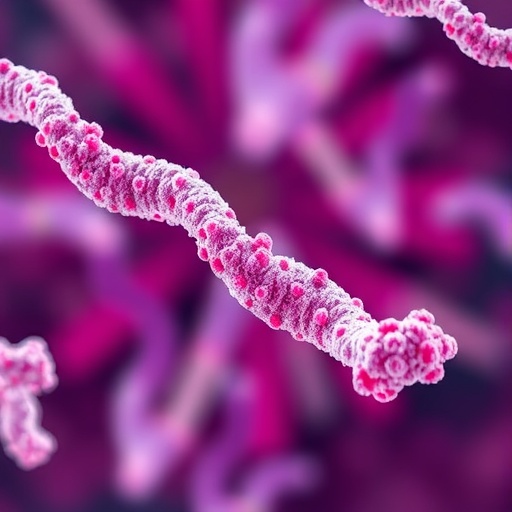
At the core of this research, conducted by Professors Sigal Ben-Yehuda and Ilan Rosenshine at the Hebrew University-Hadassah Medical Center and published in Nature Microbiology, lies an intricate process of bacterial gene exchange facilitated by minute conduits known as nanotubes. These nanotubes, microscopic tubular structures connecting adjacent bacterial cells, function as conduits for the direct transfer of plasmids—small, independently replicating DNA molecules frequently harboring genes that confer antibiotic resistance or other survival advantages.
Unlike traditional modes of horizontal gene transfer such as conjugation, transformation, or transduction, which implicate specific machinery or extracellular DNA uptake, nanotube-mediated transfer operates through physical intercellular contact, fostering a bi-directional exchange of plasmids. This means that both donor and recipient cells are active participants — the donor can provide genetic material, but recipients also exhibit agency in acquiring new DNA, suggesting a dynamic, responsive genetic network within bacterial communities.
However, the study reveals that this plasmid exchange via nanotubes is not as free-flowing as previously assumed. The researchers identified a molecular “gatekeeper” protein named YokF, an endonuclease enzyme that selectively degrades DNA during the transfer process. YokF’s catalytic degradation of DNA strands acts as a stringent checkpoint, preventing the unauthorized acquisition of plasmids by neighboring bacteria. This enzymatic activity functions as a molecular firewall, preserving the genetic self-interest of bacterial cells by restricting the dissemination of advantageous genes.
This finding introduces a paradigm shift, painting bacterial populations not as cooperative gene-sharing collectives but as fiercely competitive entities where gene flow is subject to intricate regulatory mechanisms. In densely populated microbial environments, where resources are scarce and survival pressures intense, the ability to monopolize beneficial genetic traits via YokF-mediated inhibition bestows a critical evolutionary edge, curbing the rapid spread of traits like antibiotic resistance that could otherwise level the playing field.
The implications extend far beyond fundamental microbiology. Antibiotic resistance, a mounting global health crisis, is often fueled by horizontal gene transfer, particularly through plasmids that shuttle resistance genes between diverse bacterial species. By elucidating a natural mechanism that limits plasmid transfer, this study opens a promising avenue for engineering novel antimicrobial strategies, possibly by mimicking or enhancing the action of YokF-like proteins to contain or reverse the proliferation of resistance traits.
Moreover, further bioinformatic and phylogenetic analyses revealed that YokF homologs are widespread among Gram-positive bacteria, indicating that this inhibition of plasmid exchange through nanotube pathways is a conserved, evolutionarily advantageous trait rather than an isolated anomaly. This pervasive distribution signifies a universal microbial strategy to balance gene sharing with competitive exclusion, underscoring the complex social interactions that govern microbial evolution.
Technically, YokF belongs to a family of endonucleases that possess DNA-cleaving activities, and its expression appears finely tuned to respond to environmental cues and community contexts. By selectively degrading extracellular or transient plasmid DNA during intercellular transfer, YokF effectively filters the influx of foreign genetic material, ensuring that only self-beneficial genes are retained. This molecular sieving system exemplifies an elegant biological control that maintains genomic integrity amidst the chaos of horizontal gene flow.
The discovery of the nanotube-mediated plasmid exchange pathway itself was a significant leap in understanding previously uncharted genetic communication routes. These nanotubes form transient or stable connections bridging bacterial membranes, permitting the direct cytoplasmic transfer of large DNA molecules, metabolites, and even proteins. Unlike extracellular DNA uptake in transformation, this direct intracellular passage grants a higher fidelity and security level to genetic transactions, albeit now known to be under YokF surveillance.
Importantly, the study distinguishes the nanotube-based plasmid exchange from other gene-transfer mechanisms by its contact dependence and bidirectionality. This has profound consequences for microbial population dynamics, as it facilitates rapid, reciprocal sharing in close-knit communities but also permits selective silencing through molecular gatekeepers like YokF. The selective suppression of plasmid transfer infers a level of microbial “decision-making” and regulatory sophistication previously unattributed to prokaryotic life.
These insights also prompt reconsideration of how bacterial communities adapt and evolve in natural and clinical settings. By managing gene flow, bacteria may regulate the distribution of traits that influence virulence, metabolism, and environmental resilience. Consequently, therapeutic interventions could target the regulatory proteins governing nanotube-mediated transfer, offering precision tools that disrupt harmful gene dissemination without wholesale microbial eradication, thus preserving beneficial microbiota.
In conclusion, this study rewrites a fundamental chapter in microbial biology by unveiling a molecular apparatus that enforces selective gene sharing among bacteria. The characterization of YokF as a DNA-degrading gatekeeper that restricts plasmid exchange through nanotubes enriches our understanding of microbial competition, cooperation, and evolution. Beyond theoretical insights, these findings bear immense practical significance in the global fight against antibiotic resistance, suggesting that the future of antimicrobial strategies may lie in manipulating the very mechanisms bacteria use to govern their genetic fate.
Cite Scienmag News
Juliet Wilcox. (April 23, 2026). New Study Reveals Bacteria Actively Regulate DNA Exchange, Challenging Gene-Sharing Myth. Scienmag. https://scienmag.com/new-study-reveals-bacteria-actively-regulate-dna-exchange-challenging-gene-sharing-myth/
Juliet Wilcox. "New Study Reveals Bacteria Actively Regulate DNA Exchange, Challenging Gene-Sharing Myth." Scienmag, 23 April 2026, https://scienmag.com/new-study-reveals-bacteria-actively-regulate-dna-exchange-challenging-gene-sharing-myth/. Accessed 5 September 2026.
Juliet Wilcox. "New Study Reveals Bacteria Actively Regulate DNA Exchange, Challenging Gene-Sharing Myth." Scienmag. April 23, 2026. https://scienmag.com/new-study-reveals-bacteria-actively-regulate-dna-exchange-challenging-gene-sharing-myth/


