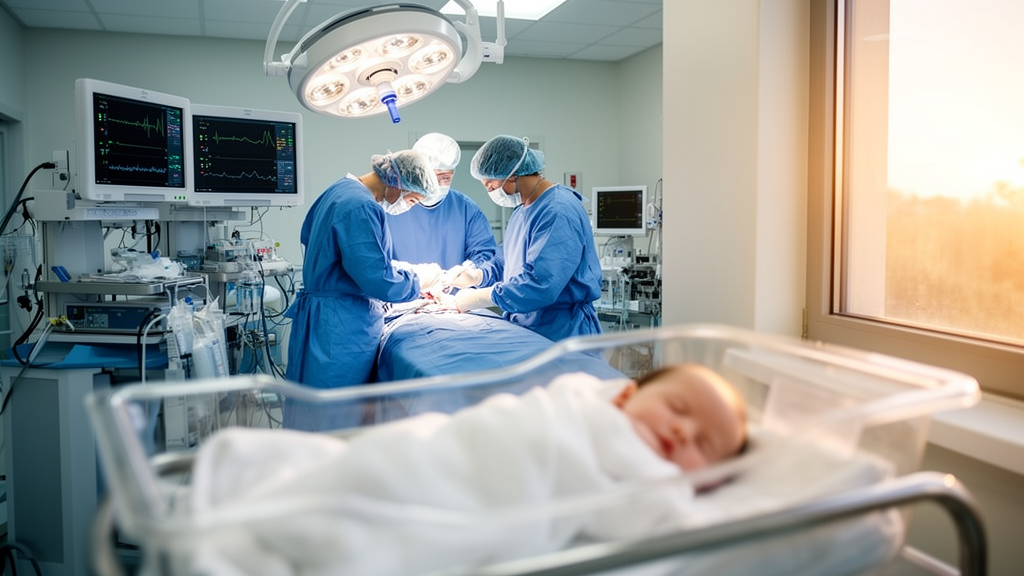
A decade after the first successful uterus transplant births in the United States, a comprehensive national review led by researchers at the Perelman School of Medicine at the University of Pennsylvania has confirmed that the once-experimental procedure has matured into a reliable clinical therapy. The analysis, published in Obstetrics & Gynecology, found that 70 percent of uterus transplant recipients achieved at least one live birth or were still pregnant beyond 20 weeks when the study closed. The findings represent nearly the entire American experience with uterus transplantation and offer the strongest evidence yet that women born without a uterus, or whose uteruses cannot sustain pregnancy, can now carry and deliver healthy children through this remarkable surgical intervention.
The research team summarized outcomes from 60 uterus transplants performed between 2016 and 2025 at the four U.S. centers that have offered the procedure. Unlike smaller single-center reports, this analysis captured surgical, reproductive, neonatal, and early childhood developmental data across the full national cohort, providing an unusually complete picture of how the technique has evolved since its American debut. The results demonstrate a steep learning curve: as surgeons refined their methods and perioperative care improved, both graft survival and live birth rates climbed steadily over the ten-year window.
Senior study author Kathleen E. O’Neill, MD, MSTR, an assistant professor of Obstetrics and Gynecology at Penn and director of the Penn Uterus Transplant Program, said the data speak directly to patients weighing their options. One of the reasons she went into obstetrics, she explained, was to help give more women opportunities to start a family, and she expressed pride in the work her colleagues have done at Penn to advance the treatment. According to O’Neill, the analysis shows that uterus transplant is an effective way for women to achieve pregnancy and have children, and it should be part of the conversation alongside adoption and gestational surrogacy, giving patients and their doctors the information they need to decide whether it is the right path for them.
The medical need is substantial. Absolute uterine factor infertility—the absence of a uterus either from birth or following hysterectomy—affects roughly 3 percent of women. Most transplant recipients in the study had Mayer-Rokitansky-Küster-Hauser syndrome, a congenital condition in which the uterus does not develop, while others had undergone hysterectomy or carried a uterus unable to support pregnancy. Before transplantation became viable, these patients had no biological path to carrying a child; their only routes to parenthood were adoption or gestational surrogacy, both of which carry legal, financial, and emotional complexities of their own.
Penn Medicine has played a central role in the field’s development. Under O’Neill’s leadership, Penn’s first birth from a uterus transplant occurred in November 2019 with the arrival of baby Benjamin Gobrecht, whose mother had been born without a uterus and received her new organ from a deceased donor through the Gift of Life program as part of Penn’s UNTIL uterus transplant trial. Since that landmark delivery, Penn has recorded eight babies born from seven transplants, most of them sourced from living donors. Notably, three of those transplant recipients, all of whom have already delivered a healthy baby, are now trying to become pregnant again, a testament to the durability of the transplanted organs and the possibility of repeated successful pregnancies.
The quantitative gains documented in the review are striking. Researchers found that 51 of the 60 transplanted uteruses survived beyond the critical first 30 days after surgery, the period during which vascular complications and immune rejection most often claim the graft. Among the women who received those surviving organs, more than 82 percent ultimately achieved at least one live birth or were still pregnant at 20 weeks or later when the study closed. Even more telling is the trajectory of surgical failure: since 2020, only one graft failure has occurred among 31 transplants performed nationwide, reflecting major improvements in surgical technique, donor selection, and postoperative management that have transformed the procedure’s risk profile.
Cumulatively, 48 babies were born to uterus transplant recipients in the United States across the study period. Nine recipients delivered two children each, demonstrating that a single transplanted uterus can support multiple full pregnancies before the organ is removed. This pattern matters clinically because the procedure is intentionally temporary: recipients typically keep the graft only long enough to complete their family, after which the uterus is removed to allow discontinuation of immunosuppressive drugs. The ability to achieve repeated pregnancies within that window multiplies the value of each transplant and reduces the total immunological burden on the patient.
Donor safety has improved in parallel with recipient outcomes. Among living donors, major complications requiring additional intervention declined from 33 percent in 2016 and 2017 to just 8 percent in 2024 and 2025, a dramatic reduction over the study period. Across the entire cohort, no recipient and no living donor experienced a life-threatening complication or death related to the procedure. These figures address one of the most serious ethical concerns surrounding uterus transplantation from the outset, namely the exposure of healthy donors to major abdominal surgery for the benefit of another person, and they strengthen the case for expanding the practice under carefully monitored protocols.
Reproductive success, however, has not eliminated the obstetric challenges inherent to pregnancy with a transplanted organ. More than half of the babies, 58 percent, were born prematurely, and complications such as preeclampsia, gestational diabetes, and hypertension were relatively common among recipients. Researchers also tracked the health and development of the children born after transplantation. All children demonstrated normal development at hospital discharge and at six months of age. Among 29 children evaluated at age 3, investigators observed normal growth and no cases of failure to thrive. Two children had been diagnosed with autism spectrum disorder, while no other developmental disorders were identified. O’Neill said both recipients and babies will continue to be followed, and research is underway to better understand why the pregnancy complications are occurring, work that could eventually inform strategies to reduce preterm birth and hypertensive disorders in this population.
Despite the encouraging outcomes, the authors identified access as the field’s greatest remaining barrier. Uterus transplantation is available at only a handful of centers nationwide, including Penn, and it is generally not covered by insurance, leaving the treatment financially out of reach for many eligible patients. O’Neill expressed hope that the analysis will show insurance companies, and those who can invest in making the procedure more widely available, that there is now a technique allowing more women to become mothers, adding that women deserve access and options when it comes to how to start a family. As the decade of data continues to accumulate, uterus transplantation stands poised to move from a pioneering handful of programs toward a recognized standard of care for absolute uterine factor infertility, provided that the systems of coverage and referral catch up with the science.
Subject of Research: Outcomes of uterus transplantation for absolute uterine factor infertility in the United States
Article Title: New analysis shows that uterus transplants help women achieve successful pregnancies
Article References: New analysis shows that uterus transplants help women achieve successful pregnancies. (n.d.). Original publication
Image Credits: AI Generated
DOI: Not provided
Keywords: uterus transplant, uterine factor infertility, MRKH syndrome, Penn Medicine, live birth outcomes, organ transplantation, preterm birth, living donors, immunosuppression, reproductive medicine, preeclampsia, Obstetrics and Gynecology
Cite Scienmag News
Harold Sullivan. (October 18, 2026). Uterus Transplants Reach 70 Percent Live Birth Rate in Decade of U.S. Progress. Scienmag. https://scienmag.com/uterus-transplants-reach-70-percent-live-birth-rate-in-decade-of-u-s-progress/
Harold Sullivan. "Uterus Transplants Reach 70 Percent Live Birth Rate in Decade of U.S. Progress." Scienmag, 18 October 2026, https://scienmag.com/uterus-transplants-reach-70-percent-live-birth-rate-in-decade-of-u-s-progress/. Accessed 18 October 2026.
Harold Sullivan. "Uterus Transplants Reach 70 Percent Live Birth Rate in Decade of U.S. Progress." Scienmag. October 18, 2026. https://scienmag.com/uterus-transplants-reach-70-percent-live-birth-rate-in-decade-of-u-s-progress/