


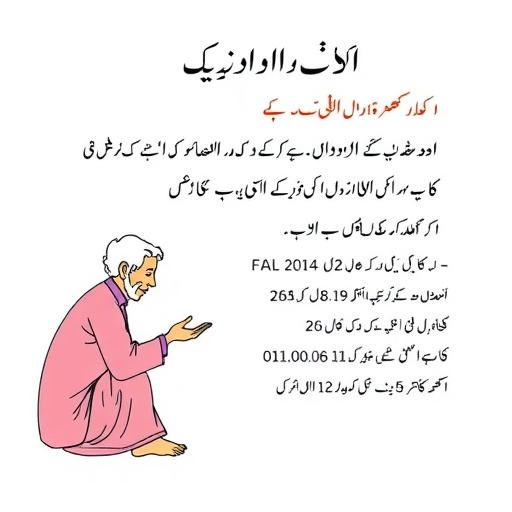
As the global population ages, the incidence of falls among older adults continues to pose a significant public health challenge. Falls are a leading cause of injury-related morbidity and mortality in the elderly, often resulting in fractures, hospitalizations, and a decline in functional independence. Addressing fall risk awareness in this demographic has therefore become a critical focus for researchers and healthcare providers alike. In a groundbreaking development, researchers Naseer and Tantisuwat have undertaken the Urdu translation and cross-cultural adaptation of a fall risk awareness questionnaire specifically designed for older adults. This work, published in BMC Geriatrics in 2026, stands to revolutionize fall prevention strategies in Urdu-speaking communities by providing a culturally relevant, accessible tool for assessing fall risk awareness.
The significance of this adaptation lies in the complexity of cross-cultural questionnaire translation, which extends well beyond a direct linguistic conversion. It requires a nuanced understanding of cultural context, idiomatic expressions, and normative beliefs about health and aging that influence how fall risk information is perceived and internalized. Naseer and Tantisuwat’s approach rigorously follows established protocols for cross-cultural adaptation, including forward and backward translation, expert committee review, and pretesting with target populations. This meticulous methodology ensures that the Urdu version maintains conceptual equivalence with the original instrument while being comprehensible and acceptable to older adults in Pakistan and other Urdu-speaking regions.
Fundamentally, fall risk awareness encapsulates an individual’s cognizance of environmental hazards, personal physical limitations, and preventive strategies that mitigate the likelihood of a fall event. Accurate measurement of this awareness is pivotal for designing tailored interventions. The original questionnaire, validated in English-speaking populations, evaluates domains such as balance confidence, perception of home safety, understanding of medication effects, and knowledge of exercise benefits. By adapting this tool for Urdu speakers, the researchers address a critical gap in geriatric care, as many fall risk assessment instruments have heretofore been unavailable or inadequately adapted for non-Western populations.
The translation process meticulously involved bilingual experts fluent in both English and Urdu, encompassing clinical experts in gerontology, linguists, and representatives from the elderly community. The interdisciplinary nature of the team was essential to capture not only linguistic accuracy but also cultural relevance. For example, certain idiomatic phrases and concepts associated with fear of falling or notions of fragility required careful restructuring to resonate meaningfully within Urdu-speaking older adults’ lived experiences. Cognitive interviews carried out during the pretesting phase uncovered subtle nuances – such as varying interpretations of what constitutes a hazardous home environment – that necessitated adjustments in question phrasing.
Importantly, the researchers employed psychometric validation to ensure the Urdu version’s reliability and validity. This involved administering the questionnaire to a sizable sample of Urdu-speaking older adults and analyzing internal consistency through statistical measures, such as Cronbach’s alpha coefficients. The results demonstrated that the translated instrument reliably captures the multidimensional construct of fall risk awareness, with comparable psychometric properties to the original. In addition, factor analysis confirmed that the underlying theoretical constructs remained intact post-translation, providing confidence that the tool is both robust and applicable for clinical and research use.
This validated Urdu questionnaire has the potential to transform community health initiatives by enabling healthcare providers to identify older adults with low fall-risk awareness who are most in need of targeted education and intervention. Such preventative measures might include home safety modifications, balance training programs, and medication reviews – interventions that can dramatically reduce fall incidence rates. Moreover, the accessible language and culturally tailored content increase the likelihood of engagement and honest responses from participants, enhancing the effectiveness of fall risk assessments conducted in clinical and community settings.
Complementing its clinical utility, the Urdu fall risk awareness questionnaire also offers researchers a powerful instrument for epidemiological studies focused on fall prevention within South Asian geriatric populations. Epidemiological data derived from broad-scale use of the tool can inform public health policies and resource allocation, ensuring that fall prevention programs are data-driven and culturally congruent. Given the demographic trends towards an aging population in many Urdu-speaking countries, this adaptation is timely and strategically significant.
The research addresses a critical barrier to fall prevention in many low- and middle-income countries where language barriers often impede the dissemination and implementation of evidence-based health assessment tools. Without culturally and linguistically adapted instruments, fall risk identification remains suboptimal, perpetuating preventable injuries and disability in vulnerable elderly groups. By filling this void, Naseer and Tantisuwat contribute to the broader global health equity agenda, emphasizing inclusivity and cultural sensitivity in geriatric care research.
Additionally, the adaptation process sheds light on the broader challenges and best practices involved in translating complex health questionnaires across languages that differ structurally from English. Urdu, with its unique script and culturally embedded expressions, presents translation challenges that highlight the necessity of comprehensive adaptation protocols. The researchers’ methodical approach sets a benchmark for future translation endeavors, encouraging rigorous standards that maintain scientific rigor without sacrificing cultural fidelity.
The implications of this research extend beyond immediate fall prevention. Improved awareness of fall risks routinely leads to proactive health behaviors among older adults, fostering broader engagement with preventive health services and enhancing overall quality of life. When older individuals acknowledge their vulnerabilities and understand strategies to mitigate fall hazards, they are empowered to take control of their health journeys. This empowerment also has cascading benefits for caregivers and healthcare systems alike, reducing hospitalization rates and healthcare costs associated with fall-related injuries.
Furthermore, the Urdu fall risk awareness questionnaire could catalyze the development of multimedia educational tools designed explicitly for Urdu-speaking elderly populations. Such tools, ranging from mobile applications to interactive community workshops, could leverage the questionnaire’s domains to create personalized educational content. These initiatives would exemplify how validated assessment tools can serve as foundations for scalable interventions, paving the way for innovative fall prevention models in linguistically diverse settings.
In the context of global aging, the study by Naseer and Tantisuwat exemplifies a critical paradigm shift towards culturally competent health research. Incorporating linguistic diversity and cultural nuance in the development and deployment of health assessment instruments is indispensable for effective intervention design. This study underlines the importance of inclusivity in health surveillance, ensuring that older adults from diverse backgrounds receive equitable attention and care in fall prevention efforts.
In conclusion, the translation and cross-cultural adaptation of the fall risk awareness questionnaire into Urdu stands as a seminal contribution to geriatric health research. The tool’s validated reliability and cultural appropriateness promise to enhance fall prevention strategies in Urdu-speaking older populations, fostering greater safety, autonomy, and well-being. The meticulous methodology employed serves as a model for future translations of health instruments, emphasizing collaborative expertise and person-centered validation. Ultimately, this research represents a pivotal step towards bridging linguistic and cultural gaps in global geriatric care, with profound implications for reducing falls and improving the health trajectories of elderly populations worldwide.
Naseer, R., Tantisuwat, A. Urdu translation and cross-cultural adaptation of fall risk awareness questionnaire for older adults. BMC Geriatr (2026). https://doi.org/10.1186/s12877-026-07629-x
Cite Scienmag News
Phoebe Ingram. (May 10, 2026). Urdu Fall Risk Questionnaire Adapted for Elderly. Scienmag. https://scienmag.com/urdu-fall-risk-questionnaire-adapted-for-elderly/
Phoebe Ingram. "Urdu Fall Risk Questionnaire Adapted for Elderly." Scienmag, 10 May 2026, https://scienmag.com/urdu-fall-risk-questionnaire-adapted-for-elderly/. Accessed 4 September 2026.
Phoebe Ingram. "Urdu Fall Risk Questionnaire Adapted for Elderly." Scienmag. May 10, 2026. https://scienmag.com/urdu-fall-risk-questionnaire-adapted-for-elderly/


