

Thursday, July 30, 2026
Science
No Result
View All Result
  • Login
  • HOME
  • SCIENCE NEWS
  • CONTACT US
  • HOME
  • SCIENCE NEWS
  • CONTACT US
No Result
View All Result
Scienmag
No Result
View All Result
Home Science News Medicine

Unraveling How General Anesthesia Works at the Molecular Level

July 10, 2026
in Medicine
Reading Time: 2 mins read
0
Unraveling How General Anesthesia Works at the Molecular Level

Unraveling How General Anesthesia Works at the Molecular Level

65
SHARES
587
VIEWS
Share on FacebookShare on Twitter
ADVERTISEMENT

Scientists Uncover How Anesthetic Sevoflurane Locks Sodium Channels to Silence Neurons

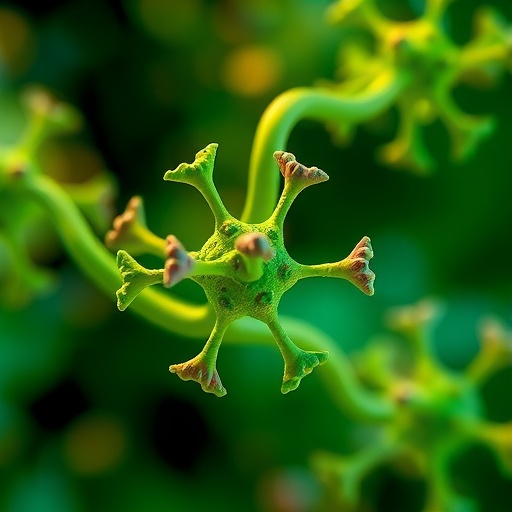
Despite inhaled anesthetics being a cornerstone of surgical practice for nearly two centuries, the precise molecular mechanisms underlying their effects have remained elusive. Now, a collaborative effort between Weill Cornell Medicine and Birkbeck, University of London, has illuminated how the widely used anesthetic sevoflurane interacts with voltage-gated sodium channels, critical proteins that enable neurons to communicate through electrical signaling.

Voltage-gated sodium channels function as gatekeepers, regulating the influx of sodium ions necessary for the initiation and propagation of neuronal action potentials. By modulating these channels, anesthetics reduce neuronal excitability, producing the unconsciousness and immobility essential for surgical procedures. However, detailing this interaction at an atomic level was previously limited by the complexity and size of mammalian sodium channels.

The research team circumvented this obstacle by investigating a bacterial counterpart from the marine bacterium Magnetococcus marinus. These bacterial sodium channels share structural and functional similarities with their mammalian peers but are simpler and amenable to high-resolution X-ray crystallography. Using this approach, the scientists captured vivid snapshots of sevoflurane nestled within a distinct binding pocket at the periphery of the channel’s pore-forming region.

Intriguingly, the anesthetic’s binding site lies apart from the sodium ion conduction pathway. By fitting into this pocket, sevoflurane stabilizes the channel in an inactive conformation, preventing it from opening and thereby dampening the flow of sodium ions. This effectively silences neuronal firing. The team demonstrated the significance of this interaction by showing that a single amino acid modification within the pocket abolishes sevoflurane binding and negates its ability to maintain the channel in an inactive state.

These atomic-level insights mark a substantial advance in the understanding of how volatile anesthetics work. “Our findings provide a blueprint for designing next-generation anesthetics that are more selective and potentially exhibit fewer side effects,” explained Dr. Karl Herold, co-first author of the study. The work also sets the foundation for translating these mechanistic insights to mammalian systems, which could illuminate why individual patients exhibit varying responses to anesthesia.

Further exploration into naturally occurring human mutations affecting anesthetic binding could reveal new dimensions of brain function and consciousness. As Dr. Hugh Hemmings, senior co-leader of the study, noted, “Understanding the molecular targets of anesthesia is critical not only for improving patient safety but also for unraveling the biological underpinnings of unconsciousness.”

This impactful research bridges a longstanding gap in anesthetic pharmacology, moving from empirical observations toward precise molecular explanations. The use of a simpler bacterial system as a model underscores the power of structural biology in decoding complex physiological phenomena, paving the way for innovative therapeutic advancements.


Subject of Research: Molecular interactions between anesthetics and sodium ion channels
Article Title: Demystifying the Molecular Mechanisms of General Anesthesia
News Publication Date: 19-Jun-2026
Web References: https://www.nature.com/articles/s41467-026-74518-7
Image Credits: Karl Herald
Keywords: Anesthesiology, Anesthesia, Sodium Channels, Sevoflurane, Ion Channels, Structural Biology

Tags: anesthesia-induced neuronal silencinganesthetic binding sites on sodium channelsatomic-level drug-channel bindingbacterial sodium channels as models for mammalian channelshigh-resolution X-ray crystallography of ion channelsmarine bacterial sodium channels in biomedical researchmechanism of neuronal excitability modulationmolecular basis of anesthesiamolecular mechanism of general anesthesiarole of sodium channels in neuronal signalingsevoflurane sodium channel interactionvoltage-gated sodium channels structure and function
Share26Tweet16
Previous Post

Ocean Biogeochemical Gradients Boost Seasonal Impacts of Marine Heatwaves

Next Post

Review Finds Soil Carbon Gains from Alternative Grazing Vary by Study Quality

Related Posts

Representations of the intrinsic value of information in mouse orbitofrontal cortex
Medicine

Representations of the intrinsic value of information in mouse orbitofrontal cortex

July 30, 2026
Ferroptotic propagation: from single-cell execution to tissue-scale death programs
Medicine

Ferroptotic propagation: from single-cell execution to tissue-scale death programs

July 30, 2026
Residential proximity to major roadways and prevalent diabetes in older adults: a cross-sectional study based on CLHLS
Medicine

Residential proximity to major roadways and prevalent diabetes in older adults: a cross-sectional study based on CLHLS

July 30, 2026
Overestimations in the cyclization efficiency of small, restriction enzyme-digested DNA fragments
Medicine

Overestimations in the cyclization efficiency of small, restriction enzyme-digested DNA fragments

July 30, 2026
Sulfated polysaccharides target RANK Lys97 to inhibit osteoclast differentiation and reverse osteoporosis
Medicine

Sulfated polysaccharides target RANK Lys97 to inhibit osteoclast differentiation and reverse osteoporosis

July 30, 2026
Regulation of RNA transcript elongation in metazoans and its relevance to disease
Medicine

Regulation of RNA transcript elongation in metazoans and its relevance to disease

July 30, 2026
Next Post
Review Finds Soil Carbon Gains from Alternative Grazing Vary by Study Quality

Review Finds Soil Carbon Gains from Alternative Grazing Vary by Study Quality

  • Mothers who receive childcare support from maternal grandparents show more

    Mothers who receive childcare support from maternal grandparents show more parental warmth, finds NTU Singapore study

    27656 shares
    Share 11059 Tweet 6912
  • University of Seville Breaks 120-Year-Old Mystery, Revises a Key Einstein Concept

    1061 shares
    Share 424 Tweet 265
  • Bee body mass, pathogens and local climate influence heat tolerance

    682 shares
    Share 273 Tweet 171
  • Researchers record first-ever images and data of a shark experiencing a boat strike

    546 shares
    Share 218 Tweet 137
  • Groundbreaking Clinical Trial Reveals Lubiprostone Enhances Kidney Function

    531 shares
    Share 212 Tweet 133
Science

Embark on a thrilling journey of discovery with Scienmag.com—your ultimate source for cutting-edge breakthroughs. Immerse yourself in a world where curiosity knows no limits and tomorrow’s possibilities become today’s reality!

RECENT NEWS

  • Satellite mapping reveals global inequities in lake water quality: over one-third of lakes fail to meet good water quality standards
  • One million euros allocated to six EUniWell study programmes on the way towards the Joint European Degree Label
  • Light’s hidden properties save quantum information from the chaos of bad weather
  • State abortion laws and moral distress in a national sample of obstetrician-gynecologists

Categories

  • Agriculture
  • Anthropology
  • Archaeology
  • Athmospheric
  • Biology
  • Biotechnology
  • Blog
  • Bussines
  • Cancer
  • Chemistry
  • Climate
  • Earth Science
  • Editorial Policy
  • Marine
  • Mathematics
  • Medicine
  • Pediatry
  • Policy
  • Psychology & Psychiatry
  • Science Education
  • Social Science
  • Space
  • Technology and Engineering

Subscribe to Blog via Email

Enter your email address to subscribe to this blog and receive notifications of new posts by email.

Join 5,147 other subscribers

© 2025 Scienmag - Science Magazine

Welcome Back!

Login to your account below

Forgotten Password?

Retrieve your password

Please enter your username or email address to reset your password.

Log In
No Result
View All Result
  • HOME
  • SCIENCE NEWS
  • CONTACT US

© 2025 Scienmag - Science Magazine

Discover more from Science

Subscribe now to keep reading and get access to the full archive.

Continue reading
