


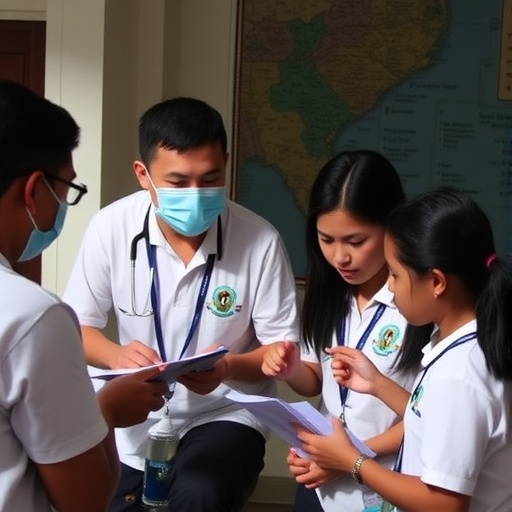
In recent years, the concept of shadow education has garnered significant attention, particularly in the context of upper-secondary education worldwide. This term refers to the array of supplementary educational services that students often pursue outside of their formal schooling, encompassing tutoring, preparatory courses, and other educational programs designed to enhance performance in key examinations. A study conducted by Juan Celis sheds light on this phenomenon as it manifests in Colombia, focusing particularly on the market-driven preparatory courses that students enroll in as they prepare for the Saber 11 exam.
The Saber 11 exam is a pivotal academic milestone in Colombia, serving as a gateway for students wishing to enter higher education institutions. The pressure surrounding this examination has led many students to seek assistance beyond their regular school curricula, thus catalyzing the expansion of shadow education. In Colombia, the influx of universities stepping into this sector reveals a complex interplay between education and market forces, a situation that raises pertinent questions about accessibility, equity, and the broader implications for the educational landscape.
The phenomenon of universities offering preparatory courses for the Saber 11 exam is emblematic of a broader trend where higher education institutions leverage their resources and expertise to tap into the secondary education market. By offering these shadow education services, they not only generate additional revenue but also position themselves as key players in the academic development of students seeking to improve their chances of success in higher education. This practice may also be viewed as a response to increasing competition among universities, as they strive to attract more students by providing value-added educational services.
Unique to Colombia, this situation highlights societal expectations surrounding educational attainment. The pressures to excel on the Saber 11 exam are compounded by the fact that student success in this area is often regarded as a reflection of both personal capability and family investment in education. As such, families may turn to these university-led preparatory courses as a means of ensuring that their children secure a competitive edge in what is often described as a rigorous and unforgiving academic landscape.
The market-driven nature of these preparatory courses also presents significant implications for equity in education. While these courses can offer valuable resources and instruction, access to such options may be skewed in favor of affluent families who can afford to pay for these additional services. Consequently, students from lower socioeconomic backgrounds may find themselves at a disadvantage, perpetuating cycles of inequality in educational attainment. This raises critical questions about how educational policies might need to adapt to ensure that all students have equitable access to resources that can benefit their academic journeys.
Moreover, the increasing commercialization of education can shift the focus from holistic learning and intellectual development to mere performance metrics. As students and parents prioritize scores and outcomes, the educational experience may become narrowed, emphasizing rote learning and test preparation over critical thinking and creative engagement. This trend is alarming, as it runs counter to the fundamental values of education which ideally should encourage curiosity, innovation, and a lifelong love of learning.
In light of these developments, it’s vital to consider the role that educational institutions play in shaping the future of educational access in Colombia. Universities, as providers of shadow education, stand at a crossroads where they can either continue to contribute to existing disparities or take steps to promote a more equitable educational framework. Their involvement in the shadow education market could serve as a catalyst for constructive change, especially if these institutions prioritize inclusivity and actively seek to broaden access to their courses.
In conclusion, the provision of shadow education through market-driven preparatory courses for the Saber 11 exam represents a critical intersection of education, equity, and market dynamics. As students navigate an increasingly complex academic landscape, the role of institutions in their preparation is more important than ever. The conversation surrounding these trends must continue, incorporating perspectives from all stakeholders, including students, educators, policymakers, and researchers. Only through such collaboration can we hope to foster an equitable educational environment where every student has the opportunity to achieve their full potential.
The implications of this study extend beyond Colombian borders, as other countries grapple with similar issues of shadow education and its effects on the educational system. Thus, the findings of Celis not only resonate with the Colombian context but also draw attention to a global phenomenon that merits further exploration and dialogue in the pursuit of equitable educational practices.
Finally, as we consider the role of universities in shadow education, it is essential to recognize that the mission of these institutions goes beyond mere test preparation. They have the potential to be incubators of critical thought, social equity, and innovation, and their influence in the field of education must reflect those aspirational values.
Celis, J. Universities as providers of shadow education at upper-secondary education level: Market-driven preparatory courses for the Saber 11 exam in Colombia.
High Educ (2025). https://doi.org/10.1007/s10734-025-01564-3
Cite Scienmag News
Courtney Benton. (November 27, 2025). Universities as Shadow Educators for Colombia’s Saber 11. Scienmag. https://scienmag.com/universities-as-shadow-educators-for-colombias-saber-11/
Courtney Benton. "Universities as Shadow Educators for Colombia’s Saber 11." Scienmag, 27 November 2025, https://scienmag.com/universities-as-shadow-educators-for-colombias-saber-11/. Accessed 7 September 2026.
Courtney Benton. "Universities as Shadow Educators for Colombia’s Saber 11." Scienmag. November 27, 2025. https://scienmag.com/universities-as-shadow-educators-for-colombias-saber-11/


