


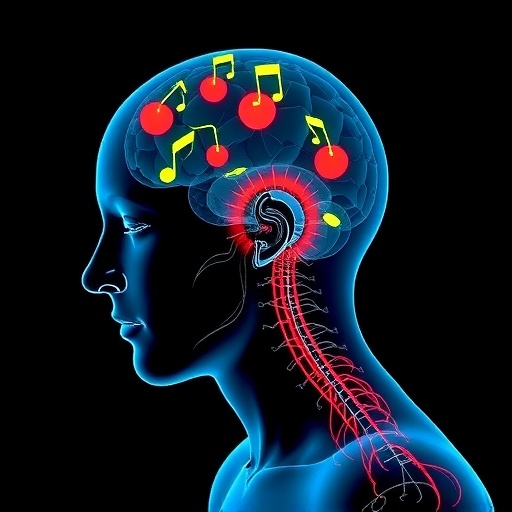
Music has long been dismissed as a pleasant distraction — something to fill an elevator or accompany a workout. But a growing body of scientific evidence suggests something far more remarkable: that music can measurably reduce pain, in some cases rivaling pharmacological approaches for certain conditions. What has remained stubbornly elusive, however, is the answer to a deceptively simple question: why? Now, a comprehensive new review led by researchers at Drexel University has mapped the biological, psychological and social mechanisms that may explain music’s pain-relieving power, while candidly identifying the significant gaps that continue to hamper the field.
The study, published in PAIN Reports and led by Joke Bradt, PhD, a professor in Drexel University’s College of Nursing and Health Professions, represents one of the most systematic attempts to date to understand not just whether music eases pain, but how. Bradt and her collaborators sifted through more than 600 research records in search of studies that investigated mediators, moderators or predictors of music’s effects on pain — the mechanistic fingerprints that reveal what is actually happening inside a person when music dulls their suffering. From that initial pool, 57 studies ultimately emerged as the dataset for the scoping review.
The stakes of this question are far from academic. Chronic pain affects hundreds of millions of people worldwide, and the opioid crisis has made the search for non-pharmacological pain management strategies urgently important. Music-based interventions — which can range from simple patient-initiated listening to structured therapy sessions facilitated by trained music therapists — offer an appealing alternative: effective, low-risk, inexpensive and free of the side effects that accompany many analgesic medications. Many studies have already demonstrated that music can help reduce pain from a variety of conditions, including cancer and osteoarthritis. But without a mechanistic understanding, clinicians have largely been flying blind, unable to optimize interventions or predict who will benefit most.
Bradt’s team found converging evidence for three promising mechanisms that appear to contribute to the effectiveness of music-based interventions. The first is positive emotional valence — essentially, the pleasant emotional state that music induces. Pain and emotion are deeply intertwined in the brain, and music’s capacity to shift mood may directly modulate how nociceptive signals are processed and perceived. The second is a sense of control or agency. When patients choose their own music, they regain a degree of autonomy over their situation — a factor long recognized in pain psychology as a powerful buffer against suffering. The third mechanism involves synchronizing movement with music, such as tapping a foot, drumming along, or swaying to the rhythm. This active engagement appears to amplify music’s analgesic effects beyond what passive listening alone can achieve.
These findings carry immediate practical implications, and Bradt is direct about them. The evidence suggests that people should select their own music — music they genuinely enjoy — rather than accepting whatever a healthcare provider happens to provide, and that they should actively engage with that music by tapping, playing or moving along with it when using it for pain management. In other words, the hospital playlist piped into a patient’s room may be far less effective than the patient’s own carefully curated selection, especially when combined with physical engagement.
The review also surfaced findings that push the science further. One study showed that singing along is more effective than simply listening to music — a striking result that underscores the role of active participation. Brain imaging studies, meanwhile, have revealed that music may influence both early pain processing in the brain and the higher-level cognitive and emotional responses to pain. This dual action is scientifically significant. It suggests that music is not merely distracting attention away from pain after the fact, but may actually modulate nociceptive signaling at relatively early stages of processing, while simultaneously reshaping the emotional appraisal that transforms raw sensation into subjective suffering.
By understanding these mechanisms, Bradt explained, clinicians and researchers can develop more targeted, personalized and effective music-based interventions for people experiencing acute or chronic pain. But the review is equally notable for what it found missing. Despite the accumulating evidence, the field remains riddled with gaps, and the study emphasizes the need for more rigorous mechanistic research.
“Researching how music affects pain may sound simple, but it is actually very challenging because of the complexity of music and the complexity of pain,” Bradt said. The observation captures a fundamental methodological dilemma. Music is not a single intervention but an infinitely variable one — differing in tempo, mode, familiarity, emotional associations, cultural context and personal significance. Pain, too, is not a monolith; acute postoperative pain and chronic neuropathic pain involve fundamentally different neurobiology. Any study attempting to connect the two must navigate this layered complexity.
Among the most significant gaps the review identified is the near-total absence of mechanistic research in people living with chronic pain. Most existing studies have been conducted with healthy adults, often using experimentally induced pain — the infamous cold pressor test or heat pain paradigms of laboratory research. But pain processing in individuals with chronic pain differs profoundly from pain processing in healthy individuals, involving central sensitization, altered brain connectivity and emotional comorbidities. Bradt suggests that an important next step would be to determine whether findings from studies with healthy adults can actually be generalized to individuals with chronic pain — an assumption the field has quietly made without adequate justification.
A second major gap involves the distinction between music listening and active music-making. There is a striking mismatch between what researchers study and what clinicians actually do. In many clinical practices, music therapists mainly use active music-making — singing, vocal improvisation and instrument playing. Bradt, drawing on her own clinical experience, reports that she mostly uses active music-making precisely because she has found it much more effective for chronic pain than merely listening to music. Yet the mechanistic research base is overwhelmingly weighted toward listening studies, leaving therapists without a scientific account of why their primary tools work.
The reason for this imbalance is methodological, and Bradt is candid about it. Researching the mechanisms underlying active music-making is far more challenging than studying music listening. Brain imaging studies, for example, are much easier to conduct with passive listening: participants can be asked to sit still, the music stimulus can be standardized so that everybody hears the same piece, and confounding variables can be tightly controlled. Active music-making resists all of this. A person improvising on a drum or vocalizing freely generates motor activity, social interaction and self-generated sound simultaneously — a tangle of variables that imaging protocols struggle to disentangle. The result is a scientific blind spot precisely where clinical practice suggests the greatest therapeutic potency lies.
Bradt leads the Music4Pain Research Network, a National Center for Complementary and Integrative Health-funded, multidisciplinary initiative designed to advance music and pain mechanistic research. The network structure reflects a recognition that solving these puzzles will require expertise spanning neuroscience, psychology, music therapy and clinical medicine. The review itself was a collaborative effort, drawing on researchers from collaborating music and pain research networks ENSEMBLE and audioanalgesia, with authors from Indiana University, the University of Washington, McGill University, the University of Memphis, the University of California-Irvine, the University of California San Diego, the University of Padova and The Ohio State University Wexner Medical Center.
For now, the practical takeaways are clear enough for patients and clinicians alike. Choose music you love, not music someone else assigns. Engage with it actively — sing, tap, drum, move. Recognize that the sense of agency this provides is not a placebo flourish but a mechanism in its own right. And understand that when music eases pain, something real is happening in the brain, at both the earliest stages of pain processing and in the higher cognitive circuits that give suffering its emotional weight. What the Drexel-led review offers is a map — imperfect, with vast uncharted regions, but a map nonetheless — of the terrain scientists must now explore to turn an ancient human practice into precision medicine. The research was supported by the National Center for Complementary and Integrative Health, the Office of Behavioral and Social Sciences Research and the Office of the Director of the National Institutes of Health, as well as the National Endowment for the Arts.
Cite Scienmag News
Courtney Benton. (September 7, 2026). Drexel researchers map evidence on how music relieves pain. Scienmag. https://scienmag.com/drexel-researchers-map-evidence-on-how-music-relieves-pain/
Courtney Benton. "Drexel researchers map evidence on how music relieves pain." Scienmag, 7 September 2026, https://scienmag.com/drexel-researchers-map-evidence-on-how-music-relieves-pain/. Accessed 7 September 2026.
Courtney Benton. "Drexel researchers map evidence on how music relieves pain." Scienmag. September 7, 2026. https://scienmag.com/drexel-researchers-map-evidence-on-how-music-relieves-pain/


