


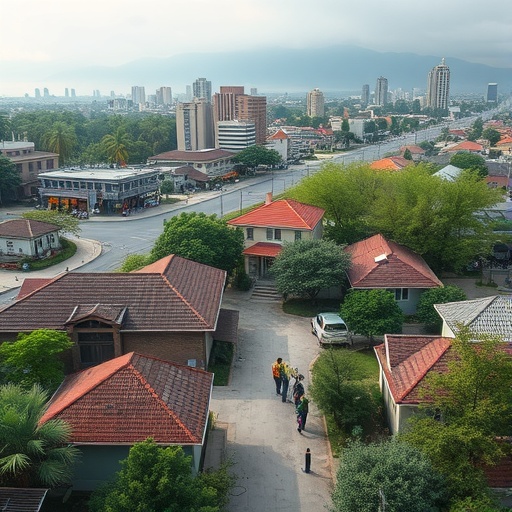
On the night of April 6, 2009, a magnitude 6.29 earthquake struck the Italian city of L’Aquila in the Abruzzo region, killing more than 300 people, injuring 1,500, damaging 60,000 buildings and leaving over 67,000 residents homeless. In the years that followed, the city’s reconstruction became a testing ground not only for engineering and housing policy but for a far less conventional idea: that a university—a doctoral school of advanced studies—could serve as an engine of long-term recovery. That idea, formalized in the establishment of the Gran Sasso Science Institute (GSSI) in 2012, has now been examined through the eyes of the people it was meant to serve. A new study published in the journal Natural Hazards offers the first systematic evaluation of a knowledge-driven post-disaster recovery policy based on the perceptions of the affected community itself, and its findings carry lessons for disaster-struck cities around the world.
The research, conducted by Paolo Bottero and Giulia Urso of the Gran Sasso Science Institute and Martina Dal Molin of Vilnius University, drew on primary data collected in 2019—ten years after the earthquake—through an independent survey of L’Aquila residents. The survey was administered by Mètis Community Solutions, an external local organization specialized in citizen engagement, using trained interviewers who conducted live face-to-face interviews supplemented by a limited number of telephone interviews. Respondents were randomly selected across different locations and time slots, including morning, afternoon and evening shifts, to ensure sample heterogeneity. A pilot test preceded the main data collection to refine the questionnaire, and the perceived-impact items measuring economic, social and cultural effects showed good internal consistency, with a Cronbach’s alpha of 0.805.
The final dataset comprised 423 observations, roughly 0.61 percent of L’Aquila’s 2019 resident population of 69,478, exceeding the minimum sample size required by the standard finite-population formula of Krejcie and Morgan. Of these respondents, 72.34 percent—306 people—knew of the GSSI. The researchers then built a binary logistic regression model to identify which factors significantly influenced whether residents judged the creation of the institute to be beneficial for their city. The dependent variable took the value of one if a respondent considered the policy beneficial and zero otherwise, and the probability was modeled through the standard logistic function. Independent variables were organized into four conceptual groups: the respondent’s level of knowledge of the GSSI, the perceived characteristics of the policy, the expected impacts on the city, and social capital indicators, with demographic controls for origin, age and gender added in nested specifications. The full model, which maximized both the log-likelihood and the pseudo R-squared, was accompanied by average marginal effects to aid interpretation.
The results are striking in several respects. People who knew the exact location of the institute were 12.8 percent more likely to view its creation favorably, and each additional known GSSI member increased the probability of a positive opinion by 3.4 percent. But the single strongest driver of approval was interpretive rather than informational: residents who understood the institute’s founding as part of the earthquake reconstruction strategy were 19.9 percent more likely to consider it beneficial. Perceived benefits related to attracting new people—researchers, students and tourists—raised the likelihood of approval by 19.6 percent, while those who believed the GSSI enhanced the city’s image and branding were 14.2 percent more likely to endorse it. Notably, perceived economic impact played no statistically significant role, and neither did perceived social impact. What mattered instead was culture: each unit increase in the belief that the GSSI had enriched the city’s cultural life corresponded to a 5 percent higher probability of judging the policy a success.
The role of social capital, a concept that dominates much of the post-disaster recovery literature, proved surprisingly marginal. Only one indicator—volunteering in cultural, environmental or social activities—showed a significant effect, with volunteers being 9.9 percent more likely to approve of the institute. The authors suggest this reflects the specific nature of their research question: rather than asking how social capital enables recovery, they asked whether individual social capital shapes the perception of a particular policy. In that frame, citizens’ evaluations depended far more on their understanding of a policy’s objectives and its perceived contribution to the city’s future than on their network ties or civic habits. The study also measured whether respondents felt like citizens of L’Aquila or “citizens of the world,” finding tentative evidence that stronger local attachment predicted greater approval, though this effect faded in the full specification.
One of the most intriguing findings concerns residents’ intentions to stay. People who planned to remain in L’Aquila for the next five years were actually 12 percent less likely to view the GSSI as useful for urban life. The researchers interpret this as evidence of higher expectations among those with a long-term stake in the city: residents building their futures in L’Aquila may assess recovery interventions more critically, demanding direct improvements in everyday living conditions rather than being satisfied with the strategic, indirect benefits of image-building and talent attraction. Demographic differences were largely absent, with one telling exception—respondents aged 26 to 30, the age group closest to that of the typical doctoral student, were 11 percent more likely to hold a positive view of the institution.
The context behind these numbers is essential to understanding their significance. Before the earthquake, L’Aquila was historically known as a “university city,” its economy substantially sustained by students of the University of L’Aquila. The disaster devastated this ecosystem, and the proportion of resident students dropped by 20 percent in the aftermath. The recovery unfolded in three recognizable phases: an emergency phase marked by evacuation of the historic center, an intermediate phase in which the national government rehoused displaced residents in a complex of new anti-seismic buildings known as the CASE project, and a long-run strategy informed by a 2013 Organisation for Economic Co-operation and Development (OECD) report. That strategy rested on four interconnected visions—L’Aquila as a knowledge-driven city, a smart city, a creative city, and an open and inclusive city—with the first pillar directly inspiring the creation of the GSSI. Crucially, the idea enjoyed genuine grassroots support: in an OECD-University of Groningen community survey, 68.5 percent of residents chose “knowledge-driven city” as the slogan they would pick to rebrand L’Aquila.
The institute itself has grown remarkably since its founding. Established in 2012 as a curiosity-driven science centre, embedded within the existing ecosystem of the University of L’Aquila and the Gran Sasso National Laboratories of Italy’s National Institute for Nuclear Physics, the GSSI was granted full university status in 2016, becoming one of Italy’s seven Schools of Advanced Studies. Enrollment of doctoral students grew from 43 in 2016 to 226 in 2025, while the academic staff nearly quadrupled from 25 professors and researchers in 2018 to 92 in 2025. Beyond research and teaching, the institute has actively engaged with local communities, companies, public authorities and other universities through its so-called Third Mission activities, hosting events open to the whole of society.
The authors are careful to acknowledge the limits of a perception-based approach. Measuring the objective causal impact of the GSSI on recovery would require counterfactual designs that are extremely difficult to implement in a context marked by multiple overlapping reconstruction policies and broader recovery dynamics. Yet they argue that perception matters in its own right: a community’s approval or rejection of a policy can shape its final outcomes and its legitimacy, even when formal outputs are achieved. This is particularly true in post-disaster settings, where emotional distress and, in L’Aquila’s early years, a sense of exclusion from decision-making—compounded by the diaspora of displaced residents—undermined social participation in the recovery process. The GSSI itself, the study notes, emerged from bottom-up proposals by local actors in community meetings, which may help explain why it became one of the most successfully implemented elements of the OECD’s strategic guidance.
The broader implications of the study extend well beyond a single Italian city. The literature on universities and regional development has long recognized institutions of higher education as key drivers of socio-economic growth, particularly in peripheral and lagging regions, through mechanisms ranging from human capital creation and knowledge transfer to innovation and city branding. But the role of universities as deliberate, ex-post drivers of recovery after catastrophic shocks has received scant empirical attention—most disaster scholarship concentrates on mitigation, preparedness and emergency response rather than on the long arc of reconstruction. Precedents exist: the International School for Advanced Studies in Trieste and the University of Udine were established after the 1976 Friuli earthquake, and the University of Basilicata grew from the rubble of the 1980 Irpinia earthquake. By providing a template for evaluating such knowledge-driven policies ex-post and for assessing the feasibility of future implementations ex-ante, the L’Aquila study opens a new frontier in recovery science. Its central message is deceptively simple: no policy, however well conceived, can take root and produce transformative effects unless it is grounded in a community’s understanding of its goals, transparent communication of its vision, and a widespread sense of belonging to the place it is meant to rebuild. For cities facing an increasing frequency and intensity of disasters, that insight may prove as valuable as any seismic retrofit.
Cite Scienmag News
Courtney Benton. (September 6, 2026). Perceptions shape knowledge-driven policies for post-disaster recovery efforts. Scienmag. https://scienmag.com/perceptions-shape-knowledge-driven-policies-for-post-disaster-recovery-efforts/
Courtney Benton. "Perceptions shape knowledge-driven policies for post-disaster recovery efforts." Scienmag, 6 September 2026, https://scienmag.com/perceptions-shape-knowledge-driven-policies-for-post-disaster-recovery-efforts/. Accessed 6 September 2026.
Courtney Benton. "Perceptions shape knowledge-driven policies for post-disaster recovery efforts." Scienmag. September 6, 2026. https://scienmag.com/perceptions-shape-knowledge-driven-policies-for-post-disaster-recovery-efforts/


