


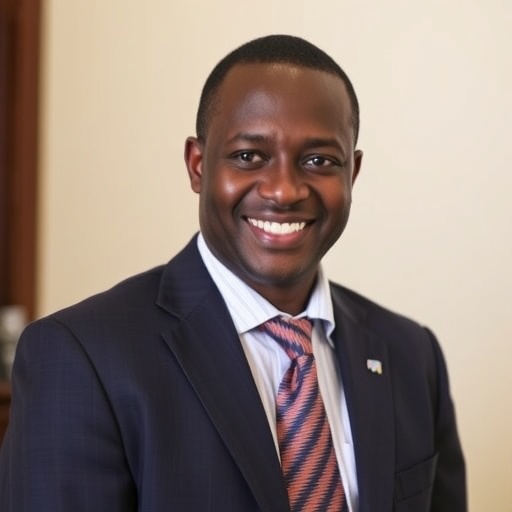
Frank Mugisha, Executive Director of Sexual Minorities Uganda (SMUG), has emerged as a formidable global advocate for human rights, with a career devoted to the defense and promotion of equality on a global scale. His tireless activism in one of the world’s most challenging environments exemplifies the intersection of ethical leadership and grassroots mobilization that defines contemporary human rights movements. Mugisha’s recognition includes prestigious honors such as the Robert F. Kennedy Human Rights Award and the Thorolf Rafto Memorial Prize, acknowledging his courageous efforts to confront deeply entrenched societal and legal homophobia in Uganda. In 2026, Mugisha will add another distinguished accolade to his portfolio by receiving the Inamori Ethics Prize from Case Western Reserve University, an award reserved for leaders who have significantly improved human conditions worldwide.
This award recognizes not only Mugisha’s personal bravery but also the systemic and sustained advocacy he has spearheaded through SMUG, an umbrella organization comprising over forty groups dedicated to LGBTI rights and health. SMUG’s work includes establishing Uganda’s first and only LGBTI health center, providing vital medical and psychological services that counteract the pervasive stigma and discrimination faced by sexual minorities. Through his leadership, Mugisha has managed to negotiate partial legislative reforms with the Ugandan Parliament, successfully advocating for the removal of some of the most draconian measures from the Anti-Homosexuality Act of 2024. This Act, notorious for codifying extreme penalties including the death sentence for same-sex conduct, represents a brutal legal framework that Mugisha continues to challenge both domestically and through international courts.
Mugisha’s journey in human rights activism began during his university years with the founding of Icebreakers Uganda in 2004. This organization was designed as a support network for individuals grappling with their sexual identity amidst a hostile social and legal environment. Icebreakers Uganda encompasses counseling, suicide prevention, and public education efforts, all essential to protecting and empowering sexual minorities in a society where their very identity is criminalized. Mugisha’s personal narrative, including his courageous decision to disclose his sexual orientation within a conservative Catholic family in Kampala at the age of 14, underscores the profound personal risks inherent in his activism.
Legally, Uganda’s Anti-Homosexuality Act imposed severe restrictions including criminalizing the renting of premises to LGBTI individuals and mandating the reporting of suspected same-sex activity, measures that compounded systemic exclusion and violence. Mugisha’s advocacy has been instrumental in repealing some of these restrictions, particularly those hindering healthcare accessibility for LGBTI people, underscoring the critical interdependence of legal frameworks and public health outcomes. These efforts testify to the complex interplay between legal rights, social acceptance, and public health in the fight for LGBTI dignity, where each breakthrough represents a vital step toward dismantling institutionalized prejudice.
The global significance of Mugisha’s work is further highlighted by his inclusion in Fortune magazine’s 2017 list of the World’s Greatest Leaders and TIME magazine’s 2024 compilation of the 100 Most Influential People. These accolades recognize not only his ethical leadership but also the strategic impact of his activism across borders, shedding light on the universal relevance of human rights advocacy in contexts marked by repression. His nomination for the Nobel Peace Prize in 2014 further cements his legacy as a transformative figure whose work exemplifies moral courage and global consciousness.
The Inamori Ethics Prize ceremony scheduled for September 17-18, 2026, at Case Western Reserve University will provide a platform for Mugisha to share insights from his extensive experience leading ethical activism in one of the most perilous environments for sexual minorities. The event, including a public lecture and panel discussions, will foster dialogue around the ethical imperatives and challenges of human rights advocacy. This gathering will serve both as an acknowledgment of Mugisha’s exceptional contributions and as a beacon encouraging continued global commitment to defending dignity and equality against formidable political and social resistance.
Case Western Reserve University’s decision to honor Frank Mugisha through the Inamori Ethics Prize symbolizes the academic community’s recognition of the critical role of ethical leadership in enacting social change. Through this prize, the university underscores its commitment to supporting individuals whose work transcends national boundaries and propels ethical standards forward in global human rights discourse. The university’s extensive research initiatives and community engagement mirror the principled activism embodied by Mugisha, creating a powerful synergy between education, ethics, and social justice.
Mugisha’s leadership in challenging the Anti-Homosexuality Act also illuminates the legal intricacies involved in human rights advocacy within authoritarian and deeply traditional regimes. His strategy incorporates litigation in the Ugandan Supreme Court as well as in international legal arenas, setting a precedent for how local activism can be amplified through global legal frameworks. This dual approach leverages local legitimacy and international pressure, highlighting a sophisticated understanding of legal mechanisms in the fight for social reform and the protection of vulnerable populations.
Moreover, Mugisha’s advocacy illustrates the vital importance of community-building and support networks in sustaining human rights movements under extreme duress. His establishment of Icebreakers Uganda and the expansion of SMUG’s reach demonstrate how social infrastructure can provide resilience, psychological safety, and political mobilization for marginalized groups. This example offers a model for how grassroots organizations can navigate hostile environments while scaling their influence to engage with national and international stakeholders.
The ongoing struggle against Uganda’s anti-LGBTI legislation reveals the broader global human rights dilemma: the persistence of laws that criminalize identity and expression in spite of international human rights norms. Mugisha’s work compellingly challenges the ethical legitimacy of such statutes, advocating for the recognition that legal systems must evolve to reflect universal human dignity and equality. His efforts underscore the urgent need for sustained international support and intervention to protect fundamental rights in jurisdictions where legal repression continues unabated.
Frank Mugisha’s story is not only a testament to individual bravery but also a profound illustration of how ethical leadership, grounded in human dignity and moral courage, can catalyze transformative change. His journey from a teenager navigating the perils of coming out to a global human rights icon exemplifies the intersection of personal risk and global impact that defines the most effective social justice movements of the 21st century. As he prepares to accept the Inamori Ethics Prize, Mugisha’s work stands as a powerful beacon for activists, scholars, and policymakers committed to the relentless pursuit of equity and the ethical treatment of all humanity.
News Publication Date:
2024
Web References:
https://smuginternational.org/
https://case.edu/inamori/
https://case.edu/
Cite Scienmag News
Courtney Benton. (April 17, 2026). Ugandan Human Rights Leader Frank Mugisha to Receive 2026 Inamori Ethics Prize. Scienmag. https://scienmag.com/ugandan-human-rights-leader-frank-mugisha-to-receive-2026-inamori-ethics-prize/
Courtney Benton. "Ugandan Human Rights Leader Frank Mugisha to Receive 2026 Inamori Ethics Prize." Scienmag, 17 April 2026, https://scienmag.com/ugandan-human-rights-leader-frank-mugisha-to-receive-2026-inamori-ethics-prize/. Accessed 3 September 2026.
Courtney Benton. "Ugandan Human Rights Leader Frank Mugisha to Receive 2026 Inamori Ethics Prize." Scienmag. April 17, 2026. https://scienmag.com/ugandan-human-rights-leader-frank-mugisha-to-receive-2026-inamori-ethics-prize/


