


Researchers at the University of Toronto have found naturally occurring compounds in the gut that can be harnessed to reduce inflammation and other symptoms of digestive issues. This can be achieved by binding the compounds to an important, but poorly understood, nuclear receptor.

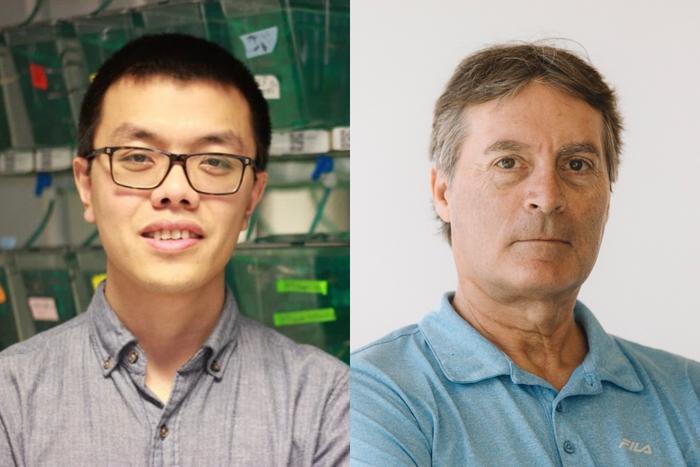
Credit: University of Toronto, Donnelly Centre for Cellular and Biomolecular Research
Researchers at the University of Toronto have found naturally occurring compounds in the gut that can be harnessed to reduce inflammation and other symptoms of digestive issues. This can be achieved by binding the compounds to an important, but poorly understood, nuclear receptor.
The gut microbiome hosts bacteria that produce compounds as by-products of feeding on our digestive remnants. The compounds can bind to nuclear receptors, which help transcribe DNA to produce proteins and non-coding RNA segments.
By identifying which microbial by-products can be leveraged to regulate receptors, researchers hope to tap into their potential to treat disease.
“We conducted an unbiased screen of small molecules across the human gut microbiome,” said Jiabao Liu, first author on the study and research associate at U of T’s Donnelly Centre for Cellular and Biomolecular Research. “We found that these molecules act similarly to artificial compounds that are currently being used to regulate the constitutive androstane receptor, otherwise known as CAR. This makes them viable candidates for drug development.”
The study was recently published in the journal Nature Communications.
CAR plays a critical role in regulating the breakdown, uptake and removal of foreign substances in the liver, including drugs. It is also involved in intestinal inflammation.
“One of the challenges with studying CAR is that there isn’t a useful compound that binds to both the human and mouse versions of the receptor – the latter being necessary for research and disease modeling prior to testing on people,” said Henry Krause, principal investigator on the study and professor of molecular genetics at the Donnelly Centre and the Temerty Faculty of Medicine. “Prior efforts focused on developing molecules with strong binding and activation capability. This has resulted in synthetic regulators that over-activate the receptor, which can lead to unintended outcomes. The natural compounds that we discovered don’t cause this issue.”
Two of the compounds found in the metabolite screen were diindolylmethane (DIM) and diindolylethane (DIE). While DIM has been previously identified from sampling the human gut, DIE has not. This study is the first time DIE has been detected in the human microbiome.
The two compounds regulated CAR in both the human and mouse liver. They were also found to match the effectiveness of an artificial human CAR regulator called CITCO.
A promising finding for future research on CAR regulation was that neither compound produced side effects, like liver enlargement, in mice. This means that DIM and DIE can be used to study CAR function and regulation in mice, where the findings can be applied to humans.
“This receptor plays a role in diabetes, fatty liver disease and small intestine ulcerative colitis,” said Liu. “We could potentially treat all of these issues with the two natural compounds we found that already exist in the human gut.”
This research was supported by the Agence Nationale de la Recherche, the American Cancer Society, the Canadian Institutes of Health Research, the National Institutes of Health, the Natural Sciences and Engineering Research Council of Canada and the New Frontiers in Research Fund.
Journal
Nature Communications
Article Title
Diindoles produced from commensal microbiota metabolites function as endogenous CAR/Nr1i3 ligands
Article Publication Date
22-Mar-2024
Cite Scienmag News
Morgan Morrow. (May 3, 2024). U of T researchers discover compounds produced by gut bacteria that can treat inflammation. Scienmag. https://scienmag.com/u-of-t-researchers-discover-compounds-produced-by-gut-bacteria-that-can-treat-inflammation/
Morgan Morrow. "U of T researchers discover compounds produced by gut bacteria that can treat inflammation." Scienmag, 3 May 2024, https://scienmag.com/u-of-t-researchers-discover-compounds-produced-by-gut-bacteria-that-can-treat-inflammation/. Accessed 3 September 2026.
Morgan Morrow. "U of T researchers discover compounds produced by gut bacteria that can treat inflammation." Scienmag. May 3, 2024. https://scienmag.com/u-of-t-researchers-discover-compounds-produced-by-gut-bacteria-that-can-treat-inflammation/

