


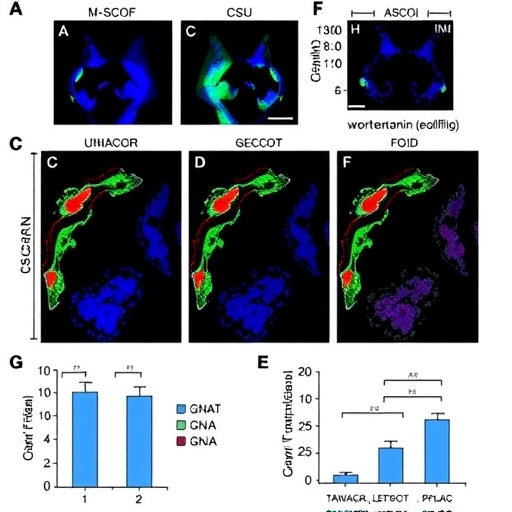
Arginine vasopressin, a peptide hormone better known for regulating water balance in the body, appears to help kill triple-negative breast cancer cells when combined with drugs that disrupt cellular trafficking, according to a new study published in Medical Oncology. The research, led by Samar Sami AlKafaas and colleagues at Tanta University and the National Cancer Institute in Cairo, found that the hormone triggered apoptosis in roughly 20 percent of treated MDA-MB-231 cells, and that this figure climbed to 28 percent when vasopressin was paired with dynasore, a selective inhibitor of the Dynamin 2 GTPase enzyme. The work adds to a growing body of evidence that vasopressin signaling, which is ectopically expressed in breast cancer tissue, may be exploitable for therapeutic purposes rather than simply serving as a marker of disease.
Vasopressin, also called antidiuretic hormone, is produced by the hypothalamus and released from the posterior pituitary gland. In its classical physiological role, it binds V2 receptors in the kidney to promote water reabsorption and acts on V1 receptors in vascular smooth muscle to regulate blood pressure. Over the past two decades, however, researchers have documented that vasopressin receptors are also found on a range of tissues where they have no obvious role in fluid homeostasis, including certain tumors. In breast cancer in particular, the aberrant presence of vasopressin and its receptors has attracted interest as both a potential biomarker and a potential point of therapeutic attack, a framing that the new study takes up directly.
Triple-negative breast cancer, which lacks the estrogen receptor, progesterone receptor, and HER2 amplification that define other breast cancer subtypes, remains one of the most difficult malignancies to treat because it responds poorly to hormonal therapies and targeted agents that have transformed outcomes for other patient groups. While patients with hormone receptor-positive disease can often be managed for years with endocrine therapies, and HER2-positive disease is now treated effectively with antibodies and kinase inhibitors against that target, triple-negative tumors offer few such molecular handles. Treatment has therefore relied largely on chemotherapy, and although immunotherapy has recently expanded the options for some patients, the outlook for many with triple-negative disease remains worse than for other subtypes. This unmet need drives continued interest in identifying new vulnerabilities in these tumors.
The MDA-MB-231 cell line used in this study is a standard laboratory model of invasive, triple-negative disease, widely used because it recapitulates key features of aggressive tumors, including their motility, invasiveness, and resistance to many conventional agents. The researchers chose it in part because these cells express the V1A subtype of the vasopressin receptor, a G protein-coupled receptor that sits in the cell membrane and initiates multiple downstream signaling cascades when activated by the hormone. Like many G protein-coupled receptors, the V1A receptor does not simply remain at the cell surface: after ligand binding, it is drawn into the cell interior through clathrin-mediated endocytosis, a process by which the plasma membrane folds inward, pinches off, and delivers the receptor-ligand complex into intracellular vesicles. This internalization is not merely housekeeping; it shapes the duration, intensity, and location of the signaling that follows receptor activation.
The experimental design centered on a simple but clinically relevant question: if vasopressin binding to its receptor drives both mitogenic signaling and the internalization of that receptor through clathrin-mediated endocytosis, could blocking the endocytic machinery alter the hormone's effects on cancer cell survival? Dynamin 2, a large GTPase enzyme, is an integral component of the membrane scission step during receptor endocytosis, and dynasore is a well-characterized, cell-permeable small molecule that halts its GTPase activity. The team exposed the cells to 100 nanomolar vasopressin for 24 hours, either alone or in combination with dynasore, and compared the results against untreated controls and against cells treated with wortmannin, a selective inhibitor of phosphoinositide 3-kinase that shuts down the PI3K/AKT survival pathway.
The PI3K/AKT axis is one of the most heavily studied survival circuits in cancer biology. When growth factor receptors are active, PI3K generates lipid second messengers at the inner face of the membrane, which recruit AKT to the membrane where it is activated and then promotes cell survival, growth, and proliferation through a cascade of downstream effectors including mTOR. Hyperactivation of this pathway is common across many cancers and is associated with resistance to chemotherapy and other treatments. Wortmannin, by blocking the catalytic activity of PI3K, prevents the production of these lipid messengers and thereby starves the survival pathway of its triggering input.
The researchers assessed a battery of cellular outcomes, including cytotoxicity, apoptosis, autophagy-mediated cell death, cell cycle progression, cell migration and invasion, and the expression of genes associated with drug resistance. Apoptosis was measured alongside the expression of key regulators of programmed cell death, while autophagy was tracked through the microtubule-associated protein LC3II and Beclin1 messenger RNA levels, both of which are standard markers of autophagic flux. Cell cycle distribution was analyzed to determine whether the treatments arrested cells at a particular checkpoint, and migration assays were used to probe the invasive behavior that makes triple-negative breast cancer particularly dangerous in patients.
The results revealed a clear pattern of cooperation between vasopressin and the endocytic inhibitor. Vasopressin alone induced apoptosis in approximately 20 percent of the cells, a modest but measurable effect. When dynasore was added to the culture alongside the hormone, the apoptotic fraction rose to 28 percent, indicating that blocking Dynamin 2 potentiated the cell-killing effect of vasopressin signaling. This increase in cell death was accompanied at the molecular level by overexpression of Bax, a pro-apoptotic member of the Bcl-2 family, and Caspase-3, the executioner enzyme that carries out the final dismantling of the cell during apoptosis. Together, these findings suggest that the combination pushed cells more decisively down the intrinsic apoptotic pathway than either agent could achieve on its own.
Parallel experiments with wortmannin, which targets the PI3K/AKT axis rather than the endocytic machinery, produced comparable results. Wortmannin alone induced apoptosis in 29 percent of cells, and when combined with dynasore, that figure rose to 35 percent, the highest apoptotic fraction observed in the study. The fact that dynasore enhanced the cytotoxicity of both vasopressin and wortmannin suggests that Dynamin 2 inhibition may act as a general sensitizer of triple-negative breast cancer cells to agents that disrupt survival signaling, rather than as a partner specific to one particular drug or pathway.
Autophagy, the cellular recycling process that can either protect cells from stress or contribute to their demise depending on context, behaved differently depending on the treatment. In cells exposed to vasopressin, either alone or with dynasore, the autophagy markers LC3II and Beclin1 mRNA increased, indicating that the hormone pushed cells toward autophagy-associated cell death. In contrast, cells treated with wortmannin, alone or with dynasore, showed decreased levels of these markers, suggesting that PI3K inhibition suppresses rather than stimulates autophagic activity in this cellular context. This divergence highlights that vasopressin and wortmannin, despite both ultimately killing the cells, appear to engage partially distinct death programs. The distinction matters for translational work, because autophagy can either facilitate or frustrate cell death depending on the drug combination, and knowing which death program a treatment engages can inform rational pairing with other agents.
Beyond cell death, the combination treatments produced effects on other hallmarks of cancer aggressiveness. Cells receiving the dual treatments of vasopressin plus dynasore, or wortmannin plus dynasore, showed decreased activation of AKT, the central kinase of the PI3K survival pathway, and downregulation of the multidrug resistance gene MDR1, which encodes a membrane pump responsible for expelling chemotherapeutic drugs from cells and is a major contributor to treatment failure in many cancers. Reducing MDR1 expression could, in principle, restore sensitivity to standard chemotherapy agents that these pumps would otherwise export. The treated cells also accumulated in the G0/G1 phase of the cell cycle, indicating that the combinations halted progression through the cell cycle before DNA replication could begin. Migration and invasion, the cellular behaviors that underlie metastatic spread, were regressed by the treatments as well, a notable finding given that metastasis is the principal cause of death in triple-negative breast cancer patients.
The mechanistic picture that emerges from these findings is one in which vasopressin binding to the V1A receptor normally triggers both clathrin-mediated endocytosis of the hormone-receptor complex and downstream intracellular signaling through diacylglycerol and cyclic AMP-dependent pathways. When dynasore halts the GTPase activity of Dynamin 2 and disrupts its PIP2-mediated oligomerization, receptor internalization is impaired, and the endocytic block itself appears to contribute cytotoxic stress. In parallel, wortmannin selectively inhibits the conversion of PIP2 to PIP3 by PI3K, thereby shutting down the PI3K/AKT/mTOR survival pathway. The convergence of these two modes of disruption on AKT inactivation and MDR1 downregulation provides a plausible explanation for why the combinations outperformed single-agent treatments.
The study builds on earlier work by the same group, published in 2022, which examined the effects of vasopressin and dynamin 2 or PI3K/AKT inhibition in luminal A breast cancer cells. In that earlier model, vasopressin induced apoptosis but did not enhance the antiproliferative effect of dynamin 2 or PI3K/AKT inhibition, a contrast that suggests the hormone's therapeutic potential may depend on the molecular subtype of the tumor. The V1A receptor expression in the triple-negative cells used in the current study may be a key variable, and the authors' findings raise the possibility that vasopressin receptor status could serve as a biomarker for selecting patients who might benefit from combination strategies involving endocytic or PI3K pathway inhibition.
Several important limitations temper the clinical significance of these results. The experiments were conducted entirely in a single cell line over a 24-hour treatment window, and the concentrations used, while pharmacologically relevant in vitro, do not address questions of drug delivery, toxicity to normal tissues, or pharmacokinetics in a living organism. Vasopressin itself has potent cardiovascular effects through its role in regulating blood pressure and fluid balance, and any therapeutic application would likely require analogues engineered to minimize these systemic actions, an approach already explored with desmopressin derivatives in preclinical breast cancer models. Dynasore, while a valuable research tool, is known to have dynamin-independent effects on cellular membranes, and the authors note that some of the cytotoxic events observed may arise from such off-target actions rather than from Dynamin 2 inhibition alone. Validation in additional cell lines, in animal models, and with more clinically suitable inhibitors would be necessary before these findings could inform treatment strategies.
Nevertheless, the study contributes a mechanistically grounded rationale for exploring combinations that pair vasopressin receptor signaling with disruption of endocytic trafficking or PI3K survival signaling in triple-negative breast cancer.
Cite Scienmag News
Nathaniel Bowman. (August 31, 2026). Vasopressin boosts the antiproliferative effect of dynasore and wortmannin in triple-negative breast cancer cells. Scienmag. https://scienmag.com/vasopressin-boosts-the-antiproliferative-effect-of-dynasore-and-wortmannin-in-triple-negative-breast-cancer-cells/
Nathaniel Bowman. "Vasopressin boosts the antiproliferative effect of dynasore and wortmannin in triple-negative breast cancer cells." Scienmag, 31 August 2026, https://scienmag.com/vasopressin-boosts-the-antiproliferative-effect-of-dynasore-and-wortmannin-in-triple-negative-breast-cancer-cells/. Accessed 3 September 2026.
Nathaniel Bowman. "Vasopressin boosts the antiproliferative effect of dynasore and wortmannin in triple-negative breast cancer cells." Scienmag. August 31, 2026. https://scienmag.com/vasopressin-boosts-the-antiproliferative-effect-of-dynasore-and-wortmannin-in-triple-negative-breast-cancer-cells/


