


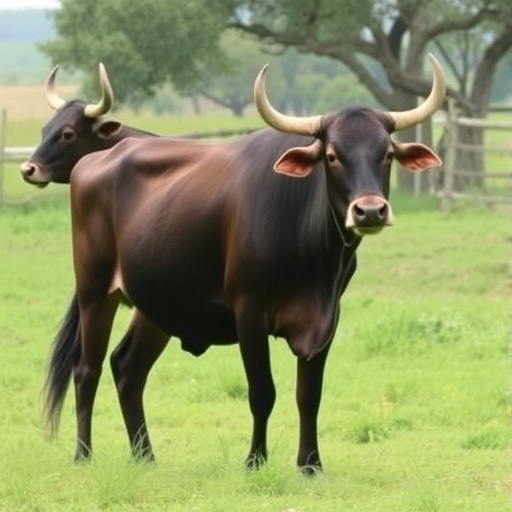
Nearly one in three cattle and water buffaloes in Pakistan's Malakand Division carries gastrointestinal parasites, with the blood-feeding worm Haemonchus contortus emerging as the single dominant species, according to a year-long survey published in Acta Parasitologica. The study, which analyzed 972 fecal samples from nine districts of Khyber Pakhtunkhwa province, found an overall parasite prevalence of 31.8 percent, with cattle significantly more affected than buffaloes. For a region where cattle and buffaloes are the backbone of smallholder dairy production, the findings offer both a warning and a practical roadmap for control.
The research, led by Tawseef Khan and colleagues at Abdul Wali Khan University Mardan in collaboration with institutions in Saudi Arabia, France, and Tunisia, was conducted from January to December 2022. It represents one of the most comprehensive epidemiological assessments of livestock parasitism in this mountainous northern region of Pakistan, where detailed data on cattle and buffalo health had previously been scarce despite the central role these animals play in smallholder agriculture. Across much of rural Khyber Pakhtunkhwa, a household's cattle and buffalo serve simultaneously as a source of milk and income, a form of savings, and a source of draft power, which means that subclinical parasitic losses—reduced weight gain, lowered milk output, and slower reproduction—can quietly erode livelihoods long before animals become visibly ill.
The team collected fecal samples from 496 cattle and 476 water buffaloes across the division and examined them using three complementary laboratory techniques: flotation, sedimentation, and the McMaster counting method. Flotation and sedimentation concentrate parasite eggs from fecal material so they can be identified under a microscope; flotation exploits differences in density to float lighter nematode eggs away from fecal debris, while sedimentation is better suited to heavier eggs, such as those of trematodes. The McMaster technique quantifies the number of eggs per gram of feces, abbreviated EPG, providing a measure of infection intensity rather than just presence or absence. Combining qualitative and quantitative approaches in this way is considered best practice in coprological surveys, since it guards against missing parasite groups that a single method would overlook.
The results showed that 36.5 percent of cattle were infected compared with 26.9 percent of water buffaloes, a statistically significant difference. Across both species, H. contortus was by far the most common parasite, detected in 23.3 percent of all sampled animals. It was followed by Cooperia species and Oesophagostomum species, two genera of gastrointestinal nematodes that, while generally less pathogenic than Haemonchus, contribute to subclinical production losses and often co-circulate in the same grazing systems. Haemonchus also produced the highest egg counts among the parasites identified, a finding the authors interpret as an indication of strong transmission potential in the region, since heavily shedding animals contaminate pastures more rapidly and sustain the cycle of reinfection.
H. contortus, commonly known as the barber's pole worm—a name derived from the striking spiral appearance of the egg-laying female, whose white reproductive tract winds around the red, blood-filled gut—is one of the most economically damaging parasites of ruminants worldwide. It attaches to the lining of the abomasum, the fourth stomach compartment, and feeds on blood, causing anemia, weight loss, reduced milk yield, and in severe cases death, particularly in young animals. Because a single female worm can produce thousands of eggs per day, and because the parasite thrives in warm climates with reliable moisture, it is especially problematic in tropical and subtropical livestock systems such as those of South Asia. Its dominance in the Malakand survey aligns with patterns reported elsewhere in Pakistan and across the region, where warm, humid conditions favor the survival and development of its free-living larval stages on pasture.
Age emerged as one of the clearest risk factors in the study. Animals younger than two years showed significantly higher prevalence than animals older than seven years, a difference the authors reported as highly significant. This pattern is consistent with the biology of gastrointestinal nematodes: young livestock have not yet developed acquired immunity to parasites and therefore tend to harbor heavier and more detectable infections, whereas older animals that have survived repeated exposure typically mount effective immune responses that suppress worm establishment and egg output. The immune protection that develops with age is never fully sterile, however, which is why even adult animals can continue to shed eggs and serve as a reservoir of pasture contamination.
Sex also influenced infection risk, but in a way that differed between the two host species. Female cattle showed higher prevalence than males, while the reverse was true for buffaloes, where males were more frequently infected. The authors note that sex-associated hormones are known to modulate immunity to parasitic infections in mammals, and that pregnancy and lactation in females can temporarily dampen immune defenses—a phenomenon sometimes called the periparturient rise in worm egg output, well described in dairy animals around the world. They also point to management and labor dynamics as a possible contributor, citing research on gender and social patterns in livestock keeping in South Asia, where the daily care of dairy animals, which are predominantly female, often falls to household members whose husbandry practices may shape exposure.
Seasonality mattered at the population level. Prevalence was significantly higher in spring and summer than in other seasons, a result consistent with the ecology of parasite transmission, since warmth and moisture accelerate the hatching of eggs passed in feces and the development of infective third-stage larvae on grazing land. In regions with pronounced seasonal cycles, these peaks in larval availability translate directly into peaks in new infections among grazing animals, making the warm months the natural window for intensified monitoring and treatment. By contrast, geographic variation among the nine districts was not statistically significant, suggesting that the broad environmental conditions of the Malakand Division are relatively uniform with respect to parasite risk, at least at the resolution of this survey.
One management factor stood out for buffaloes specifically: the source of drinking water. Water source was significantly associated with infection status in this species. The authors situate this finding in a wider literature on waterborne parasite transmission, noting that shared or contaminated water sources can serve as focal points for the spread of parasite eggs and cysts among livestock, and in some cases pose zoonotic concerns as well. For buffaloes, which often wallow and drink from communal ponds and streams, exposure through water may be an especially important route, and improving water provision emerges as a low-technology intervention that could complement drug-based control.
Beyond the epidemiological survey, the team undertook molecular characterization of H. contortus to confirm the morphological identification. They extracted DNA from parasite isolates and used the polymerase chain reaction to amplify the internal transcribed spacer 1, or ITS-1, region of the ribosomal DNA, a genetic marker widely used for species-level identification of parasitic nematodes because it evolves quickly enough to distinguish closely related species while remaining easy to amplify. The amplified products were then sequenced and analyzed by constructing a Maximum Likelihood phylogenetic tree, a method that infers evolutionary relationships among DNA sequences and places new isolates in context relative to known reference sequences from around the world.
The molecular analysis confirmed the identity of the worms as H. contortus. Sequences from Pakistani isolates showed similarity to one another of up to 100 percent, indicating a high degree of genetic uniformity among the local samples, while comparison with sequences from other parts of the world revealed moderate variation, with similarity of approximately 98.6 percent. Three representative ITS-1 sequences have been deposited in the public database GenBank under accession numbers PV599769, PV621844, and PV621845, making them available to other researchers for comparison and future phylogenetic work.
The authors are careful to frame the molecular component as preliminary. Only three isolates were sequenced, and they state that broader sequencing of representative isolates is needed to better characterize parasite diversity and population structure in the region. This caveat matters because genetic data on parasite populations can inform practical questions, such as whether parasite populations are moving between areas with livestock trade, and whether the local worms may be developing resistance to the anthelmintic drugs on which farmers depend. Drug resistance in H. contortus is a well-documented global problem, with resistance to multiple drug classes reported across several continents, and the study's references include work on refugia-based treatment strategies, an approach designed to slow resistance by leaving a proportion of the worm population unexposed to drugs so that susceptible genes remain in circulation.
Statistically, the team evaluated associations between infection and potential risk factors using formal analysis, reporting confidence intervals, odds ratios, and model comparison by the Akaike information criterion, with variance inflation factors used to check for collinearity among predictor variables. This multivariable framework allows the effect of each factor, such as age or season, to be estimated while accounting for the influence of the others, reducing the risk of spurious associations. The epidemiological data generated in the study are included in the published article itself, supporting transparency and reuse.
The overall picture the study paints is of a moderate but significant parasitic burden in the Malakand Division, one that falls unevenly across the livestock population. The authors conclude that age, host species, sex, season, and water source are the key determinants of infection, and they argue that control efforts should be targeted accordingly: concentrating on young animals, timing treatments to seasonal transmission peaks in spring and summer, and improving management practices such as water provision. This targeted approach contrasts with blanket deworming of entire herds, a practice increasingly discouraged on sustainability grounds because it accelerates the evolution of drug-resistant worms by exposing every parasite in a population to the same selection pressure.
The work also fills a regional gap. Previous Pakistani studies cited by the authors documented gastrointestinal helminths in small ruminants in districts such as Kohat, Dir Upper, and Toba Tek Singh, and in buffaloes in southern Punjab, but comprehensive data for cattle and buffaloes in the Malakand Division had been lacking. By combining classical coprological methods with molecular confirmation, the study provides a baseline against which future changes in parasite prevalence, driven by factors such as climate change and shifting husbandry, can be measured—a point of particular relevance as warming and altered rainfall patterns are expected to reshape the transmission seasons of pasture-borne parasites.
Limitations remain. The cross-sectional design captures a snapshot rather than the dynamics of infection over time within individual animals, and the reliance on fecal egg counts means that light infections or parasites that shed eggs intermittently may be missed. The molecular work, while confirming the dominant species, sampled only a small fraction of the parasites circulating in the region.
Cite Scienmag News
William Thompson. (August 31, 2026). Gastrointestinal Parasitism in Cattle and Water Buffaloes in Pakistan: Prevalence and Associated Risk Factors. Scienmag. https://scienmag.com/gastrointestinal-parasitism-in-cattle-and-water-buffaloes-in-pakistan-prevalence-and-associated-risk-factors/
William Thompson. "Gastrointestinal Parasitism in Cattle and Water Buffaloes in Pakistan: Prevalence and Associated Risk Factors." Scienmag, 31 August 2026, https://scienmag.com/gastrointestinal-parasitism-in-cattle-and-water-buffaloes-in-pakistan-prevalence-and-associated-risk-factors/. Accessed 3 September 2026.
William Thompson. "Gastrointestinal Parasitism in Cattle and Water Buffaloes in Pakistan: Prevalence and Associated Risk Factors." Scienmag. August 31, 2026. https://scienmag.com/gastrointestinal-parasitism-in-cattle-and-water-buffaloes-in-pakistan-prevalence-and-associated-risk-factors/


