


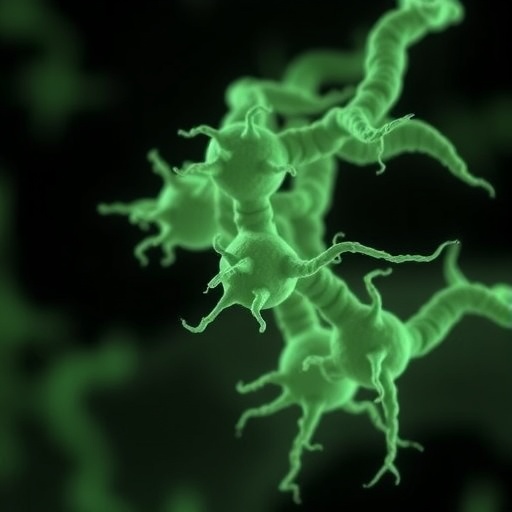
Tuberculosis bacteria exposed to dry conditions suffer significant DNA damage, and the cellular machinery they deploy to repair that damage appears to help strains carrying rifampin-resistance mutations survive transmission, according to a new study published in Nature Microbiology. The findings offer a possible explanation for one of the most persistent puzzles in tuberculosis biology: how resistance to frontline drugs emerges and spreads in a pathogen whose transmission between people has long remained poorly understood at the molecular level.
Mycobacterium tuberculosis, the bacterium responsible for tuberculosis, is an obligate human pathogen, meaning it cannot complete its life cycle outside of people. Its continued existence as a species therefore depends entirely on its ability to spread from one host to another, which it accomplishes when infected individuals release bacteria-laden aerosol droplets into the air through coughing, speaking, or breathing. Yet despite the obvious centrality of transmission to the pathogen’s biology, scientists have lacked detailed knowledge of the specific traits that support it. This gap is notable given the scale of the disease: tuberculosis remains one of the deadliest infectious diseases in the world, killing well over a million people each year, and the rise of drug-resistant strains has complicated control efforts in many countries. The new study addresses the transmission gap by focusing on a physical challenge the bacteria inevitably face during spread: desiccation, or drying out, which occurs as aerosol droplets shrink and evaporate in the air.
The research team, led by Christopher D. Brown and Kyu Y. Rhee of Weill Cornell Medicine along with collaborators including Brendon M. Lee, Hannah M. Liu, Amy M. Wu, and structural biologists Seth A. Darst and Elizabeth A. Campbell of The Rockefeller University, designed a laboratory system to mimic this environmental stress. They mounted M. tuberculosis atop a filter platform and exposed the bacteria to varying degrees of humidity, allowing them to model the drying that aerosolized bacteria would experience in the real world. By then rehydrating the samples, the researchers could study not only how the bacteria respond to drying but also how they recover when moisture returns, a scenario that mirrors what happens when droplets are inhaled and reach the warm, moist environment of a new host’s airways. The approach gave the team a controlled, repeatable way to isolate a single transmission-associated stress, something that is nearly impossible to do in studies of naturally transmitted infections, where the conditions of spread cannot be directly observed.
Using transcriptomic analysis, which measures the activity of thousands of genes simultaneously, and metabolomic profiling, which captures the chemical state of cellular metabolism, the researchers charted the molecular consequences of desiccation and rehydration. The results were striking. Dried bacteria showed elevated levels of oxidative stress, a condition in which reactive molecules damage cellular components. Consistent with that stress, the team detected increased oxidative damage and, critically, an accumulation of double-stranded DNA breaks, among the most dangerous forms of genetic injury a cell can sustain. Double-stranded breaks sever both strands of the DNA helix at once, and if left unrepaired they can be lethal to the cell. In response, the bacteria activated DNA repair programs, indicating that the ability to mend a damaged genome is required for survival through the drying and rehydration cycle.
Among the genes whose expression increased during desiccation was mfd, which encodes a transcription-coupled repair factor. Mfd is a protein that patrols genes as they are being transcribed, flagging DNA damage encountered by the transcription machinery and recruiting repair enzymes to those sites. Because actively transcribed genes are particularly vulnerable to damage, and because unrepaired lesions in transcribed regions can stall the enzymes that read DNA into RNA, transcription-coupled repair provides an efficient first line of defense. Its upregulation under dry conditions suggested that Mfd might play a particularly important role in helping M. tuberculosis cope with the genomic insults of transmission. What the researchers discovered next, however, went beyond simple repair and touched directly on one of the most consequential issues in tuberculosis treatment: antibiotic resistance.
Some mutations in rpoB, the gene encoding a subunit of bacterial RNA polymerase, confer resistance to rifampin, a cornerstone drug of standard tuberculosis therapy. Rifampin is central to the standard multidrug regimen, and resistance to it is a key trigger for classifying a case as multidrug-resistant tuberculosis. These resistance mutations, while advantageous in the presence of the antibiotic, often carry a fitness cost, meaning that bacteria bearing them may grow or survive less well than drug-susceptible counterparts under normal conditions. The team found that mfd expression buffered this fitness cost for specific resistance-conferring rpoB mutations. In other words, the very repair factor induced by the stresses of drying appeared to mask the biological disadvantages that rifampin-resistance mutations would otherwise impose, allowing resistant bacteria to persist more effectively.
To test this idea in a transmission-relevant setting, the researchers silenced mfd during aerosolization of the bacteria. The result was highly specific: strains carrying S450L, the most common rifampin resistance allele found in clinical settings, were disproportionately impaired in their ability to survive the aerosolization process when mfd was absent, while the survival of other strains was less affected. This experiment linked the environmental stress of transmission directly to the differential survival of drug-resistant bacteria, suggesting that the physical journey between hosts is not a neutral event for resistant mutants but a selective filter in which Mfd plays a decisive role.
The epidemiological significance of this laboratory finding was reinforced by an analysis of whole-genome sequences from 51,229 clinically circulating strains of M. tuberculosis. This large-scale survey of real-world bacterial populations provided supporting evidence that the interplay between desiccation responses, DNA repair, and resistance mutations observed in the laboratory is reflected in the patterns of strains actually spreading among patients. Whole-genome sequencing has increasingly been used to track tuberculosis outbreaks and map the spread of resistant lineages, and datasets of this size allow researchers to test whether mechanisms discovered at the bench leave detectable signatures in natural populations. While the study does not establish that desiccation is the sole or even primary driver of rifampin resistance in the clinic, the consistency between the mechanistic experiments and the population-level data strengthens the argument that transmission-associated biology matters for resistance.
Taken together, the studies suggest a provocative reframing of how antibiotic resistance may arise and spread in tuberculosis. Desiccation-induced DNA damage during the generation of aerosol droplets may act as a source of genetic diversification, generating mutations that can, under the right circumstances, potentiate antibiotic resistance. At the same time, the upregulation of Mfd may allow bacteria that have already acquired resistance mutations to survive the rigors of transmission that would otherwise cull them. In this model, the act of spreading between hosts, rather than merely serving as a conduit for pre-existing resistant strains, actively participates in shaping the genetic landscape of the pathogen population. Transmission becomes a bottleneck with evolutionary consequences: only bacteria equipped to withstand drying, and to repair the damage drying causes, pass through it successfully.
The work builds on decades of research into DNA repair systems in bacteria. Mfd-dependent transcription-coupled repair is among the most evolutionarily conserved bacterial repair pathways, and it has been studied primarily in model organisms such as Escherichia coli, where it is known to promote both accurate repair and, in some contexts, mutagenesis. That dual character is relevant here: a repair pathway that generates or tolerates mutation while preserving survival can, under antibiotic pressure, inadvertently favor the emergence of resistant variants. The new findings add an ecological and epidemiological dimension to this basic biology, connecting a housekeeping molecular function to the population dynamics of a global pathogen under a stress condition, drying, that is inseparable from how the pathogen moves through the world.
The implications extend to public health strategy. Rifampin-resistant tuberculosis, including multidrug-resistant forms of the disease, requires longer, more toxic, and more expensive treatment regimens, and the continued emergence of resistance threatens the gains made against the epidemic over recent decades. If the biology of transmission contributes to the survival and spread of resistant strains, then interventions that alter transmission conditions, or approaches that target the DNA damage response itself, could in principle complement existing antibiotic strategies. Such strategies would sit alongside established tools such as rapid molecular diagnostics that detect rifampin resistance, airborne infection control in health facilities, and preventive therapy for exposed contacts. The study’s authors suggest that transmission-associated desiccation-induced DNA damage should be considered a potential source of genetic diversification that can potentiate antibiotic resistance, a conclusion that reframes transmission as a bottleneck with evolutionary consequences rather than a passive relay.
Several limitations and open questions remain. The laboratory system used filter-mounted bacteria exposed to controlled humidity, which approximates but does not fully reproduce the complex physical environment of a real aerosol droplet traveling between hosts, where factors such as droplet composition, temperature, light exposure, and air currents all vary. The findings concern a defined set of rpoB mutations, with S450L as the focal allele, and the extent to which Mfd buffers the costs of other resistance mutations, or of resistance to drugs other than rifampin, awaits further study. The epidemiological analysis, while large, is correlational in nature and cannot by itself prove causation. Nonetheless, by identifying a concrete molecular mechanism, Mfd-mediated buffering of resistance-mutation costs during a transmission-relevant stress, and by validating it against a large clinical dataset, the study provides a credible framework for future investigations into how the environment between hosts shapes the evolution of one of humanity’s oldest pathogens.
Future work is likely to explore whether other repair factors contribute to survival during desiccation, whether the DNA damage generated during drying produces specific mutational signatures detectable in circulating strains, and whether pharmacological or environmental interventions could disrupt the desiccation-repair-resistance axis. Answering those questions could help determine whether targeting Mfd or the broader DNA damage response is a realistic avenue for new tuberculosis therapeutics. For now, the study stands as a reminder that the life of a pathogen between its hosts is not a dormant interlude but an active, stressful, and evolutionarily consequential phase of its existence, one that may quietly influence the trajectory of drug resistance worldwide.
Cite Scienmag News
Gavin Prescott. (August 31, 2026). Desiccation promotes DNA damage and rifampin resistance in Mycobacterium tuberculosis. Scienmag. https://scienmag.com/desiccation-promotes-dna-damage-and-rifampin-resistance-in-mycobacterium-tuberculosis/
Gavin Prescott. "Desiccation promotes DNA damage and rifampin resistance in Mycobacterium tuberculosis." Scienmag, 31 August 2026, https://scienmag.com/desiccation-promotes-dna-damage-and-rifampin-resistance-in-mycobacterium-tuberculosis/. Accessed 3 September 2026.
Gavin Prescott. "Desiccation promotes DNA damage and rifampin resistance in Mycobacterium tuberculosis." Scienmag. August 31, 2026. https://scienmag.com/desiccation-promotes-dna-damage-and-rifampin-resistance-in-mycobacterium-tuberculosis/


