


Entomologists have formally described two new species of soldier beetles from the genus Taiwanocantharis, expanding the known biodiversity of the region in Yunnan Province, China. These discoveries, published in the Biodiversity Data Journal, add to the growing list of species within this distinctive genus, which is currently recognized as comprising twenty-one species worldwide. The new species, named Taiwanocantharis flavipes and Taiwanocantharis liangi, were identified through detailed morphological analysis of specimens collected in the Tengchong and Baoshan areas of Yunnan. This research contributes to the taxonomic clarity of the Cantharidae family, a group of beetles often overlooked in broader ecological studies but significant for understanding insect diversity in the Himalayan and Indochina regions.
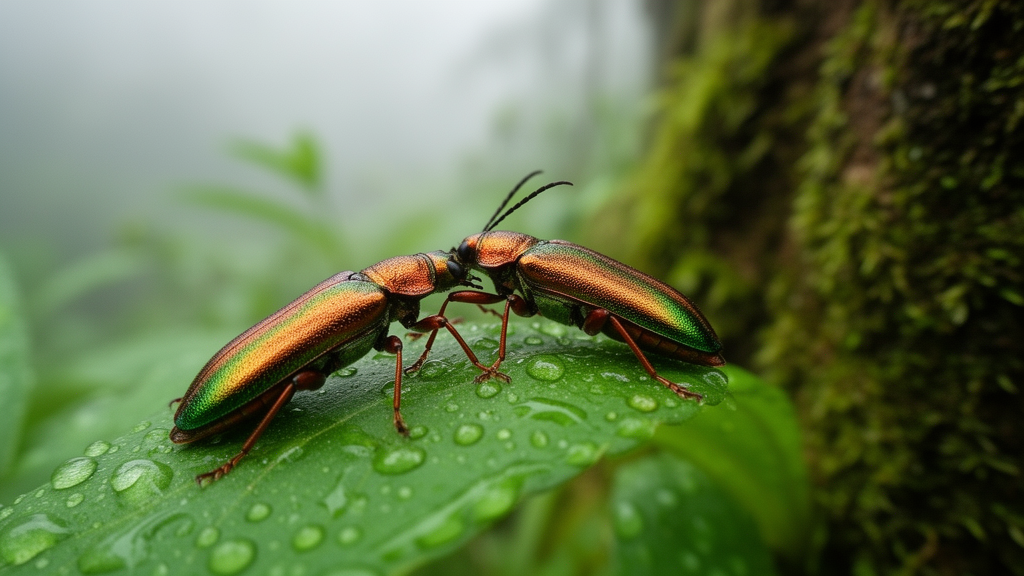
The genus Taiwanocantharis is immediately recognizable by its striking physical characteristics, particularly the metallic green or blue elytra that cover the wings. These beetles possess a medium-sized body and a subrounded pronotum, the shield-like segment behind the head. A defining feature of the genus is the presence of appendiculate outer tarsal claws in both males and females, a trait that helps distinguish them from other soldier beetles. Prior to this study, the genus was known to include nineteen species distributed across the Indochina Peninsula and the Himalayan Region, with most descriptions attributed to researchers such as Wittmer, Švihla, and Yang over the past four decades.
The first newly described species, Taiwanocantharis flavipes, is named for its uniformly yellow legs, a characteristic that sets it apart from its closest relative, T. dedicata. The holotype, a male specimen, was collected in 2006 in Jietou town, Tengchong, at an elevation of 1,850 meters. The beetle measures between 10.8 and 12.4 millimeters in length, with a body that is predominantly yellow, except for the black head and specific black markings on the pronotum. The elytra exhibit a strong metallic green lustre, and the antennae are filiform, extending to the middle of the elytra when inclined. Detailed examination of the male genitalia revealed a conjoint dorsal plate of parameres that is longer than the ventral processes, with laterophyses that are beak-like at the lateroapical angles.
The second species, Taiwanocantharis liangi, is named in honor of Dr. Hongbin Liang, one of the collectors of the type specimens. This species is slightly smaller, with a body length ranging from 9.6 to 10.3 millimeters. The holotype, also a male, was collected in 2006 in Mingguang, Tengchong. Unlike T. flavipes, T. liangi has a brownish-yellow body with legs that are slightly darkened at the apical parts of the femora, tibiae, and tarsi. The pronotum features a large black marking in the center that does not extend to the anterior or posterior margins, a key diagnostic feature that distinguishes it from T. metallipennis. The elytra are green with a strong metallic lustre, and the antennae have narrow, smooth longitudinal grooves along the outer margins of segments IV through XI.
The identification of these species relied heavily on the dissection and analysis of genitalia, a standard practice in beetle taxonomy to distinguish closely related species. The researchers dissected the genitalia of both sexes and the abdominal sternites VIII of females, clearing them in a 10% sodium hydroxide solution. Male genitalia were soaked in a warm 30% sodium hydroxide solution for five to fifteen minutes, depending on their condition, before being cleaned and preserved in glycerol. Female genitalia were stained with haematoxylin to highlight structural details. High-resolution images were captured using a Leica M205A stereomicroscope, and habitus photos were taken with a Canon EOS 80D digital camera. These images were processed using Helicon Focus 7 and Adobe Photoshop CS5 to ensure clarity and detail for scientific documentation.
Morphological comparisons were conducted under a stereomicroscope to measure body dimensions and assess genital structures. Body length was measured from the clypeus to the elytral apex, while width was measured at the widest point of the humeri. For male genitalia, the relative lengths of the dorsal plate and ventral process were evaluated in lateral view to determine if one extended distally beyond the other or if they were subequal in length. These precise measurements and structural analyses allowed the researchers to differentiate the new species from existing ones, such as T. dedicata and T. metallipennis, based on subtle differences in the shape of the aedeagus and the configuration of the laterophyses.
The study also provides an updated key to the worldwide species of Taiwanocantharis, a valuable tool for future taxonomists and entomologists. This key allows for the identification of all twenty-one species in the genus by examining specific morphological traits, such as the shape of the elytra, the pattern of markings on the pronotum, and the structure of the aedeagus. The key begins by distinguishing species based on the slenderness of the elytra, with slender elytra leading to T. pallidithorax and T. tripunctata, while stouter elytra lead to further differentiation based on pronotum markings and genitalia structure. This comprehensive key enhances the taxonomic knowledge of the genus and provides essential reference data for future phylogenetic analyses.
The specimens studied in this research are deposited in two major institutions: the Institute of Zoology, Chinese Academy of Sciences, Beijing, China (IZAS), and the Museum of Hebei University, Baoding, China (MHBU). These collections serve as permanent records of the type specimens, ensuring that the descriptions of the new species are based on verifiable physical evidence. The label data for the type specimens includes detailed information on the collector, date, location, and elevation, providing a clear provenance for each specimen. This rigorous documentation supports the scientific validity of the new species descriptions and facilitates future research on the distribution and ecology of Taiwanocantharis in the Yunnan region.
The discovery of these two new species highlights the ongoing importance of field collections and detailed morphological studies in uncovering hidden biodiversity. Yunnan Province, with its diverse landscapes and elevations, remains a hotspot for entomological discovery, particularly for species in the Cantharidae family. The metallic coloration of Taiwanocantharis beetles not only makes them visually striking but also suggests potential ecological roles, such as camouflage or mate attraction, that may warrant further study. As researchers continue to explore the insect fauna of the Himalayan and Indochina regions, the addition of T. flavipes and T. liangi to the scientific record enriches our understanding of the evolutionary history and biogeography of soldier beetles in this part of the world.
This research underscores the collaborative nature of modern taxonomy, involving collectors, morphologists, and illustrators working together to document and describe new species. The use of advanced imaging techniques and detailed anatomical analysis ensures that the descriptions of T. flavipes and T. liangi are precise and reproducible. By providing a worldwide key to the genus, the authors have created a resource that will aid in the identification of these beetles by other scientists, promoting consistency in taxonomic practice. The publication of these findings in the Biodiversity Data Journal makes the data openly accessible, supporting the global effort to catalog and understand the planet’s biological diversity.
Subject of Research: Taxonomic description of two new species of Taiwanocantharis soldier beetles from Yunnan, China
Article Title: Two new species of Taiwanocantharis from Yunnan Province, China, with a worldwide key to the genus ( Coleoptera , Cantharidae )
Article References: Hua, R., Liu, H., Yang, X., & Yang, Y. (2026). Two new species of Taiwanocantharis from Yunnan Province, China, with a worldwide key to the genus (Coleoptera, Cantharidae). Biodiversity Data Journal, 14, Article e192348. https://doi.org/10.3897/bdj.14.e192348
Image Credits: AI Generated
Keywords: Taiwanocantharis, soldier beetles, Coleoptera, Cantharidae, Yunnan, taxonomy, biodiversity, entomology, new species, morphology, species, Province
Cite Scienmag News
Gavin Prescott. (October 18, 2026). Two New Metallic Soldier Beetles Described in Yunnan. Scienmag. https://scienmag.com/two-new-metallic-soldier-beetles-described-in-yunnan/
Gavin Prescott. "Two New Metallic Soldier Beetles Described in Yunnan." Scienmag, 18 October 2026, https://scienmag.com/two-new-metallic-soldier-beetles-described-in-yunnan/. Accessed 18 October 2026.
Gavin Prescott. "Two New Metallic Soldier Beetles Described in Yunnan." Scienmag. October 18, 2026. https://scienmag.com/two-new-metallic-soldier-beetles-described-in-yunnan/


