


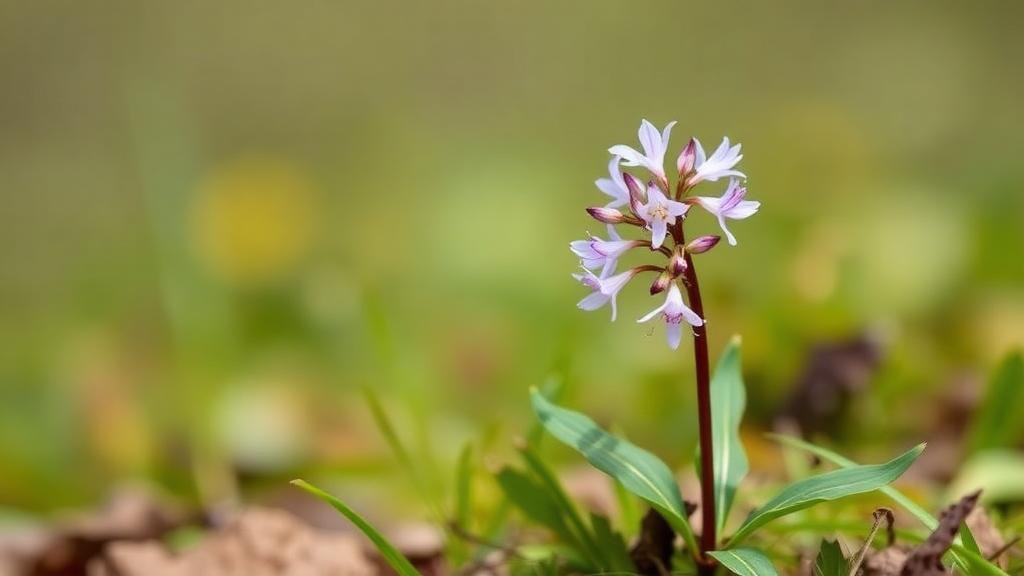
Two new species of gentian, a genus of showy alpine and temperate herbs, have been formally described from the eastern Qinghai-Tibet Plateau in western Sichuan, China. The discoveries, named Gentiana tingnongiana and Gentiana shangwui, bring the number of formally recognized Gentiana species to an estimated 450 worldwide, including roughly 250 in China. Researchers combined detailed comparisons of living plants and herbarium specimens with DNA sequence analysis to determine that the plants represented distinct evolutionary lineages rather than unusual variants of known species. The work offers a rare glimpse of how botanical exploration, quantitative morphology and molecular phylogenetics can converge on the recognition of narrowly distributed mountain plants.
The plants were first encountered in 2014 in the Balang Mountains and Songpan County. Initial observations suggested that two small populations could not be assigned to any species then known to science, but a formal decision required broader comparisons with related gentians. The investigators subsequently examined the shape and size of leaves, flowers and fruits; the color and structure of stems, corollas, calyces and reproductive organs; flowering periods; and seed dimensions. They also checked high-resolution specimen images and compared material housed in multiple herbaria. Because many members of Gentiana look broadly similar, especially when their flowers are viewed from a distance, the study relied on a suite of small but consistent traits rather than a single conspicuous feature.
Gentiana tingnongiana is an annual herb that usually develops an erect main stem, although its stem can occasionally become ascending. Plants range from 5 to 22 centimeters tall and may have purplish-red, pale brown or green stems. Their lower stem leaves are obovate or obovate-elliptic, while the upper leaves become oblong and have ciliate margins. The flowers are 10 to 15 millimeters long and open into a narrow obconic or funnel-shaped corolla. Outside, the corolla bears broad yellowish-green stripes; inside, it is pale purple, pink or nearly white, with a pale yellow-green base. Numerous blackish-purple spots form a conspicuous pattern in the throat and extend onto the folds, known as plicae, between the corolla lobes. Its seeds are unusually small for the species with which it was compared, measuring 0.7 to 1.0 millimeters in diameter.
Several close relatives could be ruled out by specific features. G. tingnongiana generally has a distinct main erect stem, whereas G. filisepala, G. baoxingensis and G. vandellioides have ascending stems that branch from the base. Its oblong upper leaves contrast with the ovate, broadly ovate or subcordate leaves of those species, and it flowers and fruits from April through July, earlier than most of the comparison taxa. It also has a much smaller corolla than G. rubicunda, measuring 0.9 to 1.5 centimeters rather than 1.5 to 6 centimeters, and its filaments are correspondingly shorter. The species was named in honor of the late Tingnong Ho, a taxonomist who made major contributions to the classification of Gentianaceae, and is known in Mandarin as ting nong long dan.
The second discovery, Gentiana shangwui, presents a different combination of features. It is a compact annual, only 2 to 6 centimeters tall, with yellowish-green or purplish-red stems and branches arising from the base. Both the leaves and calyces are densely covered with fine hairs, a trait that helps separate it from several superficially similar plants. Its flowers are 15 to 20 millimeters long and dark blue or blue-purple, with a yellow-white base. The middle portion of the tubular corolla is bright yellow or pale yellow and marked externally with fine blackish-blue streaks. Unlike many related gentians, its throat lacks short striations, although it can carry sparse dark spots or blotches. The stamens are inserted near the top of the corolla tube, and the style is comparatively long, measuring 4 to 6 millimeters.
G. shangwui is especially easily confused with G. nanobella, which can vary considerably in flower color, corolla size, markings and seed size between populations. The new species differs in its hirsute foliage, longer style, narrowly winged capsule apex and finely reticulate seed coat. G. nanobella has a much longer, cylindrical to narrowly ellipsoid capsule, typically 10 to 12 millimeters long and not winged, together with irregular spongy ridges on its seeds. From G. piasezkii, G. shangwui is separated by its smaller, nearly circular stem leaves, shorter corolla lobes, apical stamen insertion and longer style. Its fruits are narrowly obovoid to narrowly ellipsoid, 6 to 6.5 millimeters long, with translucent wings along the sutures near their ends. The species honors the late Shangwu Liu, a specialist in Gentianaceae who generously guided the lead author, and carries the Mandarin name shang wu long dan.
Molecular evidence supplied a second, independent basis for recognizing the plants as separate species. The researchers extracted DNA from dried leaves, amplified portions of the internal transcribed spacer regions ITS1 and ITS4, and analyzed a 630-base-pair alignment containing 462 variable sites. A maximum-likelihood analysis used 79 sequences representing 71 species, including 68 Gentiana taxa and three outgroups, and was supported by 1,000 bootstrap iterations. Both new species emerged as well-supported monophyletic lineages, with 100% bootstrap support. Gentiana tingnongiana was placed as the sister taxon of G. vandellioides with 99% support. G. shangwui clustered with G. asterocalyx and G. bredboensis in a distinct relationship supported at 94%. These placements, together with the new species, fell within the monophyletic section Chondrophyllae sensu lato.
Quantitative analysis reinforced the visual distinctions. For G. tingnongiana and four related species, the researchers tested six traits: leaf length, width and area, leaf-margin hair length, corolla radius and corolla length. Analysis of variance found significant differences in every trait, and principal component analysis separated the five species across the first two components. A parallel comparison involving G. shangwui, G. nanobella, G. piasezkii and G. winchuanensis measured leaf length, width and area, corolla radius and length, and fruit wings. Again, all six traits differed significantly, and the species occupied clearly separated positions in the principal-component space. The study also revised the taxonomy of G. aphrosperma, concluding from its original description and images of the type that the name should be treated as a synonym of G. nanobella.
Conservation assessments reveal sharply different levels of risk. G. tingnongiana has been recorded from ten sites across the Aba Tibetan and Qiang Autonomous Prefecture and Mianyang City, including locations in Songpan, Pingwu, Beichuan and Anzhou. Its extent of occurrence was calculated as 2,675 square kilometers, while its area of occupancy was about 32 square kilometers. The researchers considered habitat conditions good and preliminarily assigned it Vulnerable under the International Union for Conservation of Nature criteria. G. shangwui appears more restricted. It is known only from alpine meadows on Balang Mountain in Wenchuan County and nearby Siguniangshan Town in Xiaojin County, at elevations of about 3,800 to 4,500 meters. Its area of occupancy is estimated at 4 square kilometers, and although it occurs within a well-preserved reserve, the authors assessed it as Endangered.
The discovery illustrates the taxonomic importance of the rugged landscapes along the plateau’s eastern edge. Western Sichuan combines large elevation changes, alpine meadows, mountain valleys and other isolated habitats that can support plant populations restricted to narrow geographic areas. Nearly half of China’s Gentiana species are endemic, so documenting apparently minor differences can reveal biodiversity that would otherwise remain unnamed and unassessed. The two new species also demonstrate why a modern description can be more than a matter of spotting an unusual flower: the naming of G. tingnongiana and G. shangwui rests on coordinated field observation, specimen comparison, statistical analysis of traits, DNA barcoding and phylogenetic reconstruction. Their formal recognition expands the genus from 450 to 452 species while sharpening the known boundaries between the alpine gentians of the eastern Qinghai-Tibet Plateau.
Subject of Research: Taxonomic discovery of two new Gentiana species in western Sichuan, China
Article Title: Gentiana tingnongiana and G. shangwui , two new species of Gentiana ( Gentianaceae ) from the eastern Qinghai-Tibet Plateau, Sichuan province, China
Article References: Cao, H.-F., Ni, L.-H., Cai, J., Ya, J.-D., Li, G., Luo, Y.-Q., Fu, P.-C., & Zhang, L. (2026). Gentiana tingnongiana and G. shangwui, two new species of Gentiana (Gentianaceae) from the eastern Qinghai-Tibet Plateau, Sichuan province, China. PhytoKeys, 275, 97-113. https://doi.org/10.3897/phytokeys.275.190176
Image Credits: AI Generated
DOI: 10.3897/phytokeys.275.190176
Keywords: Gentiana, new species, plant taxonomy, Gentianaceae, Sichuan, Qinghai-Tibet Plateau, alpine meadows, phylogenetics, ITS barcoding, biodiversity, tingnongiana, shangwui
Cite Scienmag News
Margaret Porter. (October 19, 2026). Two New Gentiana Species Discovered in Sichuan’s Mountain Meadows. Scienmag. https://scienmag.com/two-new-gentiana-species-discovered-in-sichuans-mountain-meadows/
Margaret Porter. "Two New Gentiana Species Discovered in Sichuan’s Mountain Meadows." Scienmag, 19 October 2026, https://scienmag.com/two-new-gentiana-species-discovered-in-sichuans-mountain-meadows/. Accessed 19 October 2026.
Margaret Porter. "Two New Gentiana Species Discovered in Sichuan’s Mountain Meadows." Scienmag. October 19, 2026. https://scienmag.com/two-new-gentiana-species-discovered-in-sichuans-mountain-meadows/


