


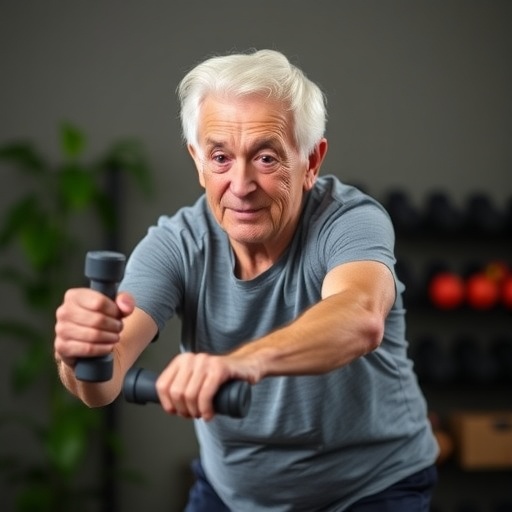
In the rapidly evolving field of geriatric health, the reversal of frailty among older adults has emerged as a pivotal area of scientific inquiry. A groundbreaking multi-center randomized controlled trial recently published in BMC Geriatrics advances this domain by elucidating the efficacy of a novel, TUG-based graded multi-component exercise program tailored for community-dwelling seniors. This rigorous study, conducted by Yan, Lu, Qin, and colleagues, pioneers an integrated approach aimed at mitigating the debilitating impacts of frailty—a complex syndrome characterized by diminished strength, endurance, and physiological function that drastically elevates vulnerability to adverse health outcomes.
Frailty represents a critical challenge within aging populations, often precipitating a cascade of functional decline, increased hospitalization risk, and mortality. Traditional interventions have struggled to deliver consistent, sustainable improvements, largely due to the heterogeneity of frailty’s clinical presentations and the intricate interplay of musculoskeletal, neurological, and cardiovascular factors. The novel intervention detailed in this research harnesses the Timed Up and Go (TUG) test not only as an evaluative metric but as an adaptive framework guiding a multi-component exercise regimen. This strategic integration enables progressive gradation tailored to individual performance, thereby optimizing physiological adaptations over time.
The Timed Up and Go test, a well-validated clinical tool, traditionally serves as a rapid assessment of mobility, balance, and risk of falls in older adults. By repurposing this test as the central axis for grading exercise intensity and complexity, the investigators engineered a dynamic, responsive protocol that aligns with each participant’s evolving capabilities. The multi-component nature of the exercise program is characterized by a synergistic blend of resistance training, balance enhancement, aerobic conditioning, and flexibility exercises. Such comprehensive inclusion addresses the multifactorial etiology of frailty, targeting muscular atrophy, impaired postural control, cardiovascular deconditioning, and joint stiffness, each contributing to the frail phenotype.
Executing this intervention across multiple centers, the study enrolled a substantial cohort of community-dwelling older adults, thereby enhancing the external validity and generalizability of findings. Participants were randomized to receive either the graded multi-component exercise program or standard care, providing a robust comparative framework. The longitudinal design of the trial allowed for meticulous tracking of functional outcomes, alongside frailty indices, over an extended period, illuminating both immediate and sustained impacts of the intervention.
Quantitative analyses revealed statistically significant improvements in TUG test performance, muscular strength, and balance metrics among the intervention group compared to controls. Notably, beyond physiological enhancements, participants demonstrated improved self-reported quality of life indices, underscoring the psychosocial benefits concomitant with physical rehabilitation. These findings substantiate the premise that frailty, often construed as an inexorable consequence of aging, possesses a degree of plasticity, amenable to strategic, personalized exercise interventions.
From a mechanistic perspective, the graded, progressive nature of the program catalyzed favorable neuro-musculoskeletal adaptations. Resistance elements facilitated hypertrophy of type II muscle fibers, typically vulnerable in aged musculature, thereby reinstating explosive strength critical for fall prevention. Simultaneously, balance training likely promoted neuroplasticity within vestibular and proprioceptive pathways, enhancing postural reflexes and equilibrium. Aerobic components contributed to cardiopulmonary endurance, mitigating deconditioning and systemic inflammation that exacerbate frailty. Collectively, these physiological shifts culminated in enhanced functional reserve, integral to resilience against health stressors.
The inclusion of the TUG test as a guiding metric also addressed a perennial challenge in geriatric rehabilitation—individual variability in baseline fitness and progression rates. By calibrating exercise intensity and complexity to TUG performance, the program avoided the pitfalls of one-size-fits-all prescriptions, reducing risks of overexertion or insufficient stimulus. This methodological innovation not only maximized participant adherence through achievable goal-setting but also enhanced safety profiles, crucial when engaging vulnerable populations.
Importantly, the study’s multi-center execution underscores its scalability and applicability across diverse healthcare settings, from urban clinics to rural outreach programs. This versatility is particularly salient given the global demographic trends toward aging populations and the concomitant rise in frailty prevalence. The intervention’s structured yet adaptable design facilitates integration into existing community health frameworks, potentially alleviating healthcare burdens by preventing frailty-associated complications and hospitalizations.
Despite these promising outcomes, the researchers acknowledge limitations warranting further exploration. Notably, long-term maintenance of functional gains post-intervention remains an open question, as adherence to exercise regimens often wanes without sustained support. Additionally, the study population, while geographically and demographically varied, may not fully encapsulate the heterogeneity of frailty phenotypes encountered in broader clinical practice. Future investigations could delve into personalized modifications, incorporating nutritional or pharmacological adjuncts to potentiate exercise benefits.
In the wider context of aging research, this investigation contributes vital evidence supporting a paradigm shift toward proactive, precision-guided exercise interventions. By demonstrating that even entrenched frailty can be modulated through tailored, comprehensive physical activity, the study challenges deterministic views of aging decline. This has profound implications not only for clinical practice but also for public health policy designed to promote healthy aging trajectories and reduce the economic and societal costs associated with frailty.
Psychologically, improvements noted in quality of life metrics may reflect enhanced confidence, autonomy, and social engagement—dimensions often eroded by frailty. This holistic impact reinforces the imperative for interventions that transcend mere physical rehabilitation, fostering a biopsychosocial model of geriatric care. Community-dwelling older adults, by maintaining independence and functional capacity, contribute actively to societal fabric, underscoring the societal dividends of such health-promoting programs.
In conclusion, the study by Yan, Lu, Qin, and colleagues marks a seminal advance in geriatric exercise science, delivering a scientifically substantiated, practical framework for reversing frailty through a TUG-based graded multi-component exercise program. This evidence-backed protocol stands poised to inform clinical guidelines, optimize rehabilitation strategies, and inspire further innovation in the quest to enhance healthspan alongside lifespan. As populations worldwide age inexorably, such research illuminates pathways to empowering older adults to live not only longer but with vigor, resilience, and quality.
Cite Scienmag News
Beatrice Stafford. (May 29, 2026). TUG-Based Exercise Reverses Frailty in Older Adults. Scienmag. https://scienmag.com/tug-based-exercise-reverses-frailty-in-older-adults/
Beatrice Stafford. "TUG-Based Exercise Reverses Frailty in Older Adults." Scienmag, 29 May 2026, https://scienmag.com/tug-based-exercise-reverses-frailty-in-older-adults/. Accessed 4 September 2026.
Beatrice Stafford. "TUG-Based Exercise Reverses Frailty in Older Adults." Scienmag. May 29, 2026. https://scienmag.com/tug-based-exercise-reverses-frailty-in-older-adults/


